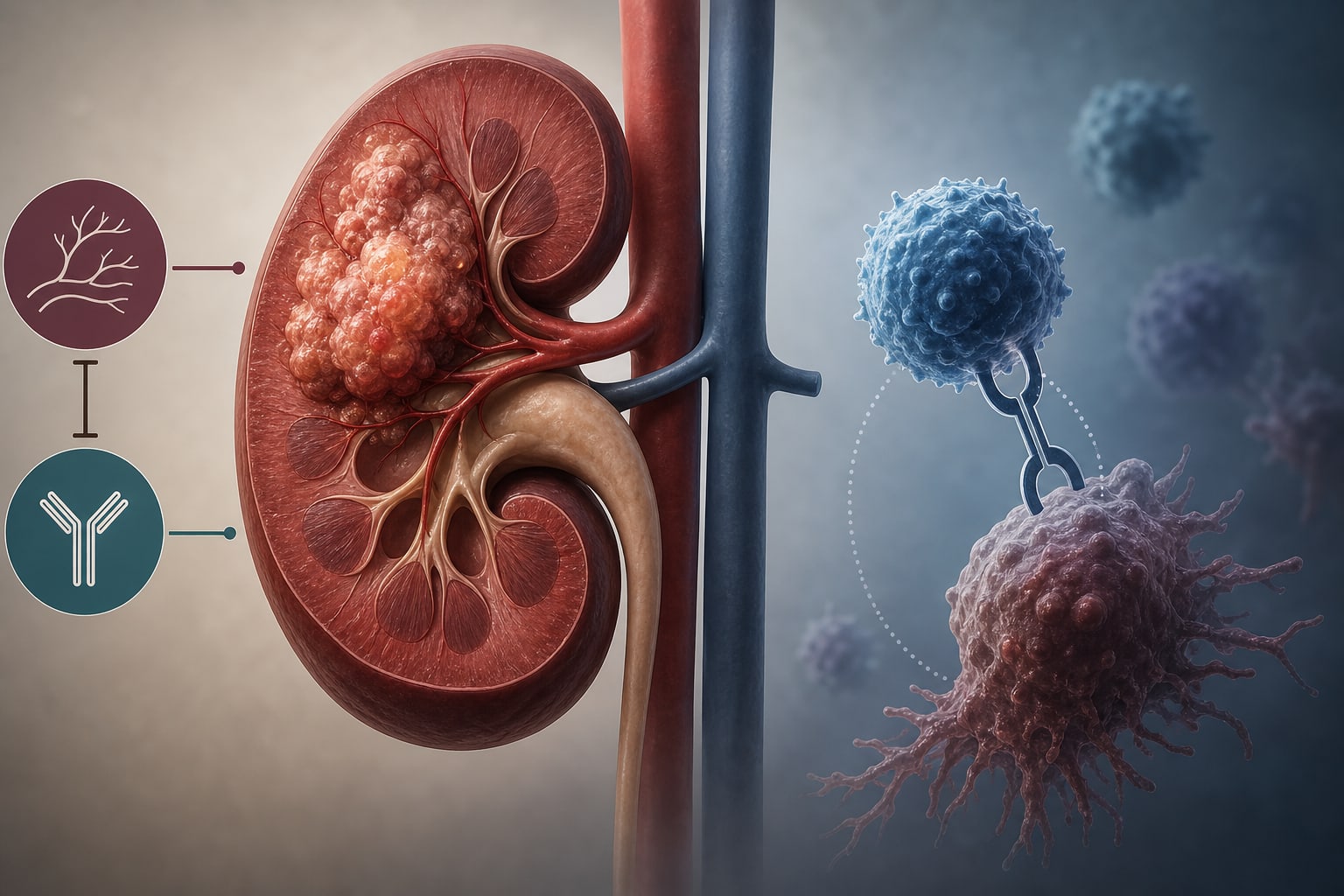
Clinical Scorecard: A Comprehensive Review of Renal Cell Carcinoma Screening Initiatives by the EAU Young Academic Urologists' Working Group on Renal Cancer
At a Glance
Category
Detail
Condition
Renal Cell Carcinoma (RCC)
Key Mechanisms
Increasing incidence linked to risk factors (age, male sex, smoking, hypertension, obesity) and incidental detection; early detection improves survival
Target Population
Adults >18 years, especially those at higher risk due to established factors (age, male gender, family history, smoking, obesity, diabetes, hypertension)
Care Setting
Screening programs in outpatient or community settings using imaging or biomarkers
Key Highlights
RCC incidence is rising globally with high mortality, especially in advanced stages.
Early-stage RCC detection via screening improves survival and quality of life.
Focused renal ultrasound is a cost-effective screening tool; biomarkers and novel imaging lack validation.
Guideline-Based Recommendations
Diagnosis
Use focused renal ultrasound as a primary screening modality for early RCC detection.
Avoid reliance on unvalidated liquid biomarkers or novel imaging techniques outside research settings.
Management
Target screening programs to high-risk populations to improve cost-effectiveness and outcomes.
Timely treatment of early-stage RCC detected through screening to improve survival.
Monitoring & Follow-up
Monitor screening program outcomes including detection rates, cost-effectiveness, and patient-reported outcomes.
Assess potential harms such as overdiagnosis, psychological distress, and financial toxicity.
Risks
Risk of overdiagnosis leading to overtreatment.
Psychological distress and financial burden on patients and healthcare systems from screening.
Patient & Prescribing Data
Adults at increased risk for RCC based on demographic and clinical risk factors.
Early detection through screening enables timely intervention, potentially improving survival and reducing treatment complexity.
Clinical Best Practices
Implement RCC screening programs focused on high-risk individuals to maximize benefit and cost-effectiveness.
Use renal ultrasound as the preferred screening tool given current evidence.
Avoid unvalidated screening tests until further clinical utility is demonstrated.
Balance benefits of early detection with risks of overdiagnosis and patient burden.
Follow systematic review and guideline methodologies to update screening protocols.