The missing microbial link in triclosan toxicity: comment on mechanism of liver fibrosis induced by life-long triclosan exposure in offspring rats - Scorecard - MDSpire
Clinical Scorecard: Uncovering the Microbial Connection to Triclosan-Induced Toxicity: Insights into Liver Fibrosis Mechanisms from Lifelong Exposure in Offspring Rats
At a Glance
Category
Detail
Condition
Triclosan-Induced Liver Fibrosis
Key Mechanisms
TGF-β1 activation and AGEs-RAGE cascade in hepatic stellate cells
Target Population
Offspring rats exposed to triclosan
Care Setting
Toxicology and environmental risk assessment
Key Highlights
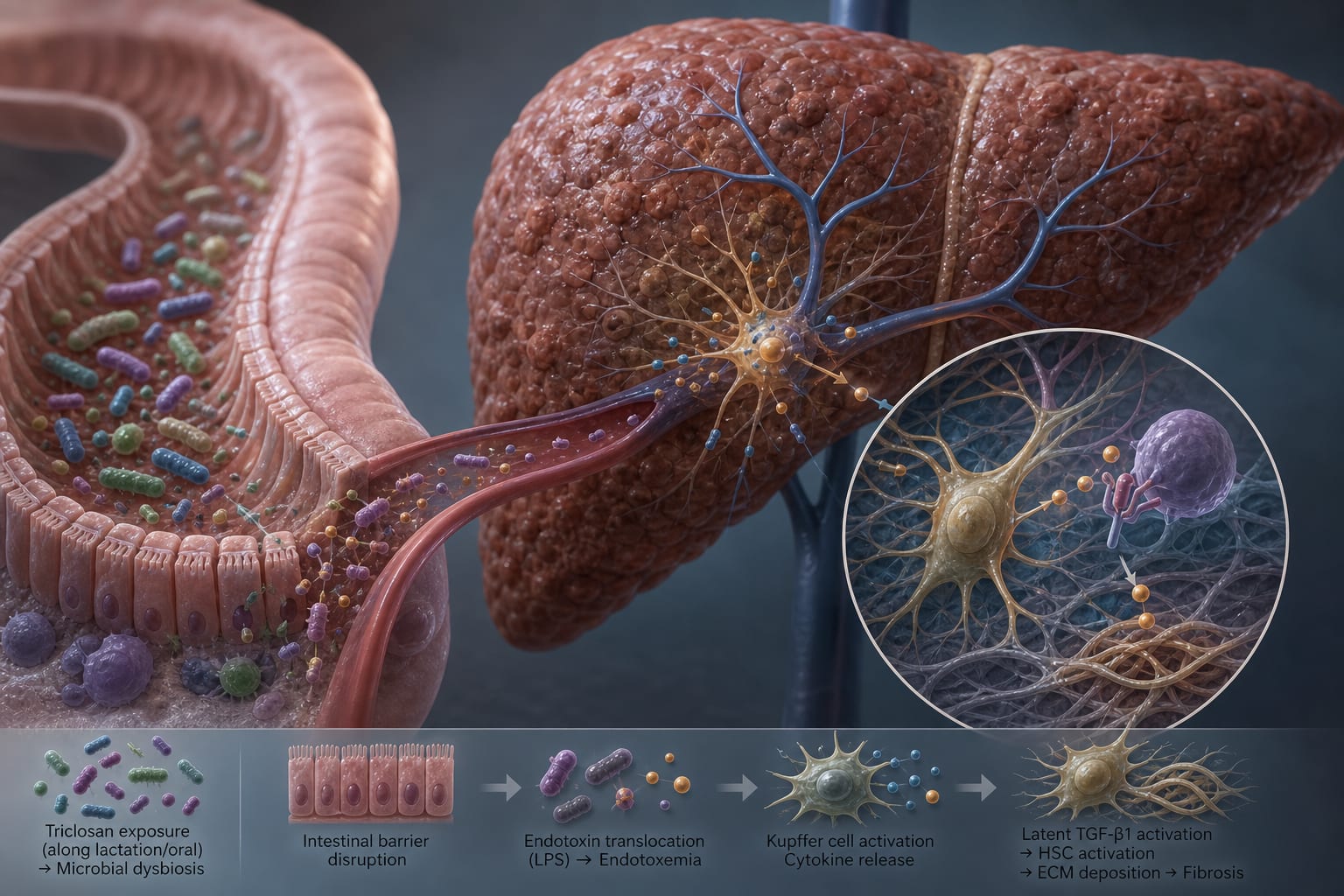
Triclosan exposure leads to liver fibrosis through TGF-β1 and AGEs-RAGE mechanisms.
Microbial dysbiosis disrupts the gut-liver axis, contributing to hepatic toxicity.
Endotoxemia from gut microbiome disruption may precede liver damage.
Guideline-Based Recommendations
Diagnosis
Evaluate liver fibrosis mechanisms in the context of microbial health.
Management
Consider the role of gut microbiome in assessing triclosan toxicity.
Monitoring & Follow-up
Monitor for signs of hepatic stellate cell activation and TGF-β1 levels.
Risks
Assess risks associated with antimicrobial exposure and gut microbiome integrity.
Patient & Prescribing Data
Offspring rats exposed to triclosan via lactation and oral gavage.
Understanding the gut-liver axis is crucial for evaluating triclosan's effects.
Clinical Best Practices
Incorporate microbiome health into environmental risk assessments.
Evaluate the impact of antimicrobial agents on gut integrity.