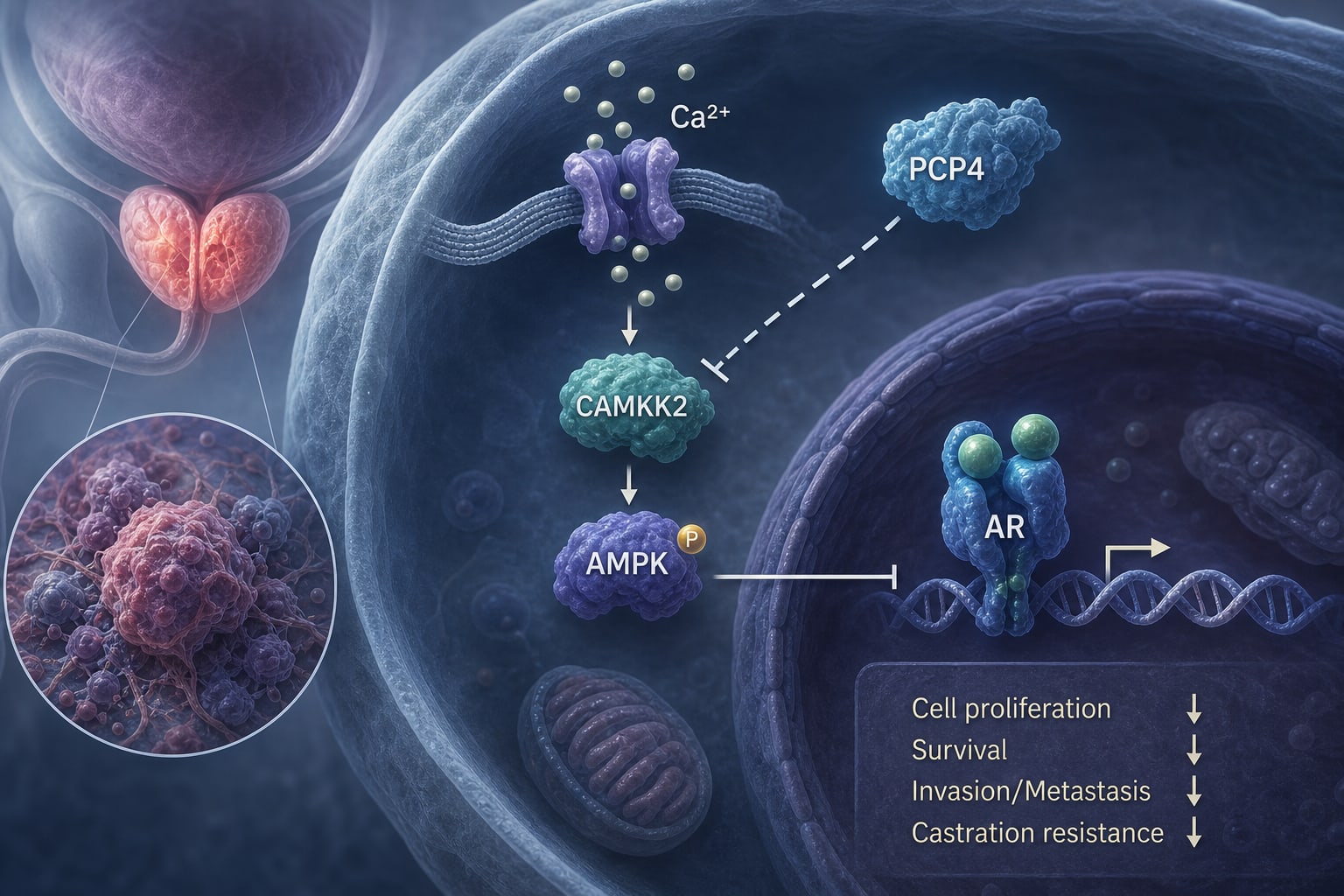
Commentary: PCP4 inhibits the progression of prostate cancer through Ca2+/CAMKK2/AMPK/AR pathway
-
By
-
Wujie Chen
-
Fajiang Qian
-
Fengtong Wang
-
Fuquan Yang
-
Yuqing Shen
-
Mingxia Ding
-
Yuan Liu
-
July 3, 2026
-
Clinical Scorecard: Analysis: The Role of PCP4 in Suppressing Prostate Cancer Progression via the Ca2+/CAMKK2/AMPK/AR Signaling Pathway
At a Glance
| Category | Detail |
|---|
| Condition | Castration-resistant prostate cancer (CRPC) |
| Key Mechanisms | PCP4 downregulation activates the Ca2+/CAMKK2/AMPK/AR signaling axis, promoting cancer progression. |
| Target Population | Patients with castration-resistant prostate cancer (CRPC) |
| Care Setting | Urologic oncology |
Key Highlights
- PCP4 identified as a potential therapeutic target and prognostic marker in CRPC.
- Low PCP4 expression correlates with higher T stage and Gleason score.
- CAMKK2 inhibitor STO-609 reverses effects of PCP4 knockdown.
- PCP4 downregulation enhances transcriptional activity of AMPK and AR.
Guideline-Based Recommendations
Diagnosis
- Assess PCP4 expression levels as part of prognostic evaluation in prostate cancer.
Management
- Consider targeting the PCP4-CAMKK2 axis in therapeutic strategies for PCP4-deficient CRPC.
Monitoring & Follow-up
- Monitor biochemical recurrence and disease-free survival in relation to PCP4 expression.
Risks
- Low PCP4 expression is associated with increased risk of disease progression.
Patient & Prescribing Data
Patients with advanced prostate cancer, particularly CRPC.
Therapeutic strategies targeting the PCP4-CAMKK2 pathway may be beneficial.
Clinical Best Practices
- Utilize multi-dimensional validation systems in research to enhance reliability.
- Integrate RNA expression findings into clinical pathways for precision medicine.
Related Resources & Content