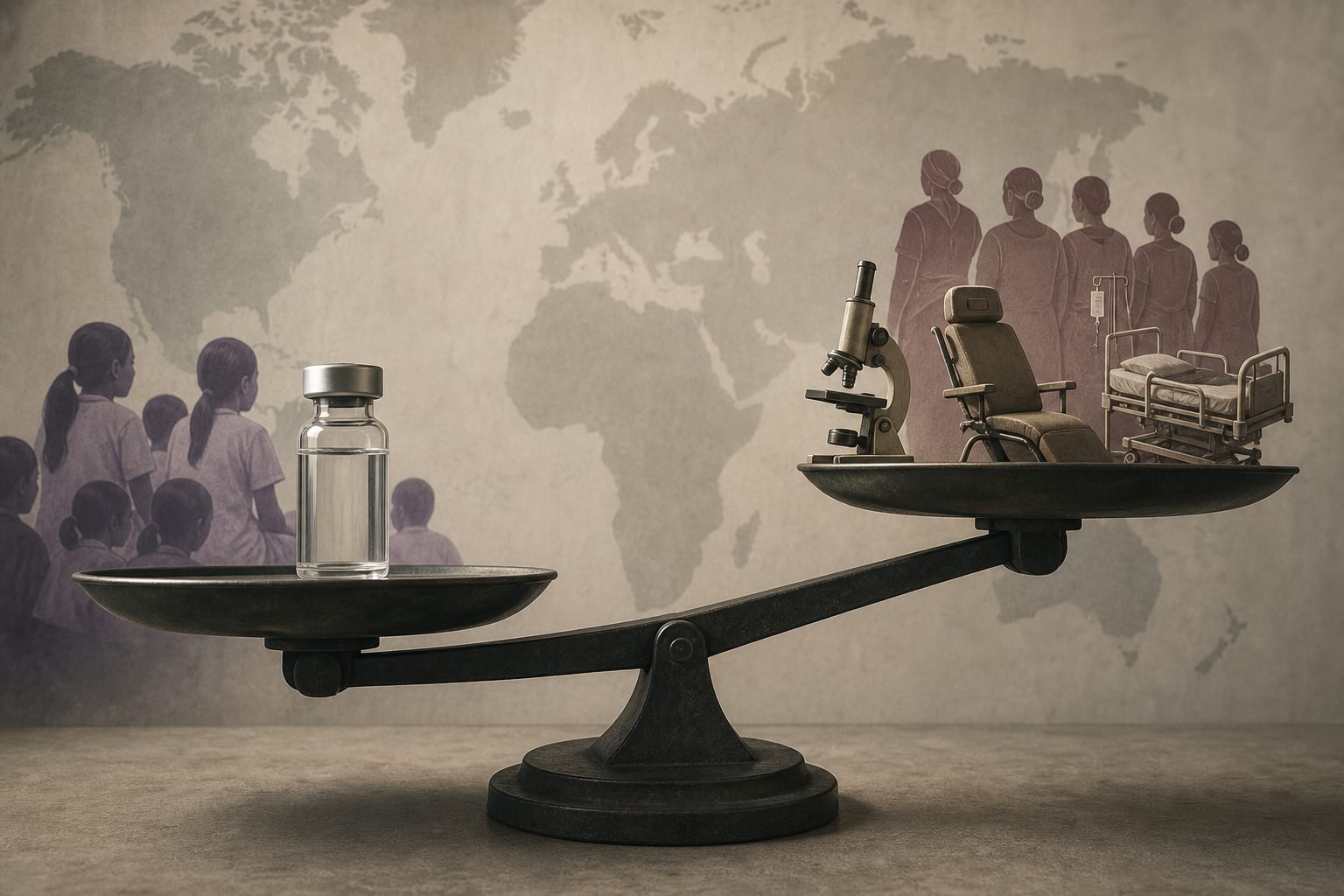
Disparities in Funding for HPV Vaccination and Cervical Cancer Care in Low- and Middle-Income Nations: A Focus on Girls and Women
By
Shyamkumar Sriram
September 15, 2026
Clinical Scorecard: Disparities in Funding for HPV Vaccination and Cervical Cancer Care in Low- and Middle-Income Nations: A Focus on Girls and Women
At a Glance
Category Detail
Condition Cervical Cancer Key Mechanisms Global elimination strategy with targets for vaccination, screening, and treatment. Target Population Girls and women in low- and middle-income countries. Care Setting Public health and national healthcare systems.
Key Highlights
World Health Organization aims to eliminate cervical cancer with specific targets by 2030. Vaccination coverage in Gavi-supported countries increased from 4% in 2019 to 25% in 2024. Two-thirds of women aged 30–49 globally have never undergone cervical cancer screening. Significant disparities exist in funding and access to screening and treatment compared to vaccination. Current financing mechanisms primarily support vaccination, leaving screening and treatment underfunded. Guideline-Based Recommendations
Diagnosis
Screening should be conducted using high-performance tests at ages 35 and 45. Management
Implement a comprehensive approach to cervical cancer care, including screening and treatment. Monitoring & Follow-up
Monitor vaccination coverage and screening rates to meet WHO targets. Risks
Structural inequities in healthcare financing lead to disparities in cervical cancer care. Patient & Prescribing Data
Women at risk of cervical cancer in low- and middle-income countries.
Access to treatment is limited, with significant gaps in radiotherapy and surgical options.
Clinical Best Practices
Ensure equitable access to HPV vaccination for girls. Develop national financing strategies for cervical cancer screening and treatment. Utilize pooled procurement mechanisms to reduce costs of cervical cancer diagnostics and treatments. Related Resources & Content