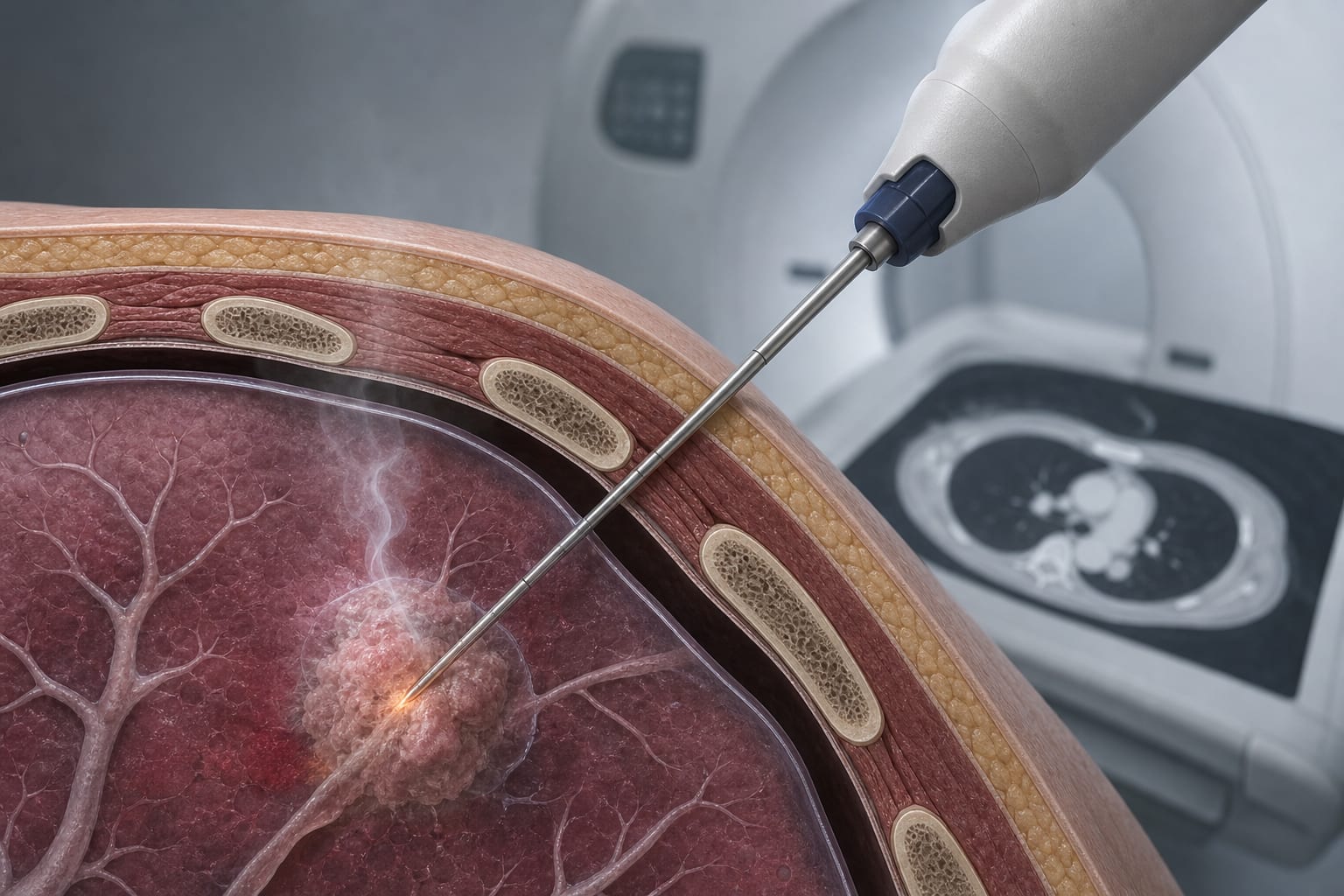
SinglePass electrocautery device for closure of lung and mediastinal biopsy: a case series of 5 patients
By
Tust Techasith
Abhishek Jairam
Benjamin Park
Avinash Mesipam
Christopher Baker
Brian Cristiano
Thomas Velling
Trushar Patel
Behroz Oftadeh
Quan Dang
Lindsey Young
Vincent Nguyen
Kristen Raust
Matthew Roughley
Nathan Nguyen
Yurtizi Chavez
Alexander S. Misono
June 30, 2026
Clinical Scorecard: Utilization of a SinglePass Electrocautery Device for Lung and Mediastinal Biopsy Closure: A Case Series Involving Five Patients
At a Glance
Category Detail
Condition Lung and Mediastinal Biopsy Complications Key Mechanisms Use of SinglePass electrocautery device for hemostasis and pneumothorax control Target Population Patients undergoing percutaneous CT-guided biopsy for lung and mediastinal lesions Care Setting Outpatient imaging-guided biopsy procedures
Key Highlights
Successful biopsy procedures with no complications reported in five cases Absence of post-procedure pneumothorax and bleeding complications confirmed by imaging SinglePass electrocautery device used for hemostasis and tract closure Diagnostic sensitivity of percutaneous CT-guided biopsy reported between 85-95% Complication rates for pneumothorax range from 12 to 45% Guideline-Based Recommendations
Diagnosis
Utilize percutaneous CT-guided coaxial core needle biopsy for thoracic lesions Management
Employ SinglePass electrocautery device for hemostasis and pneumothorax control post-biopsy Monitoring & Follow-up
Monitor for complications such as pneumothorax and hemorrhage via serial imaging Risks
Potential complications include pneumothorax, pulmonary hemorrhage, and air embolism Patient & Prescribing Data
Five patients with lung and mediastinal mass lesions
SinglePass device effectively minimized complications in biopsy procedures
Clinical Best Practices
Implement preventative strategies prior to biopsy procedures Make real-time adjustments during the procedure as needed Ensure early recognition of complications during the post-procedural period Related Resources & Content