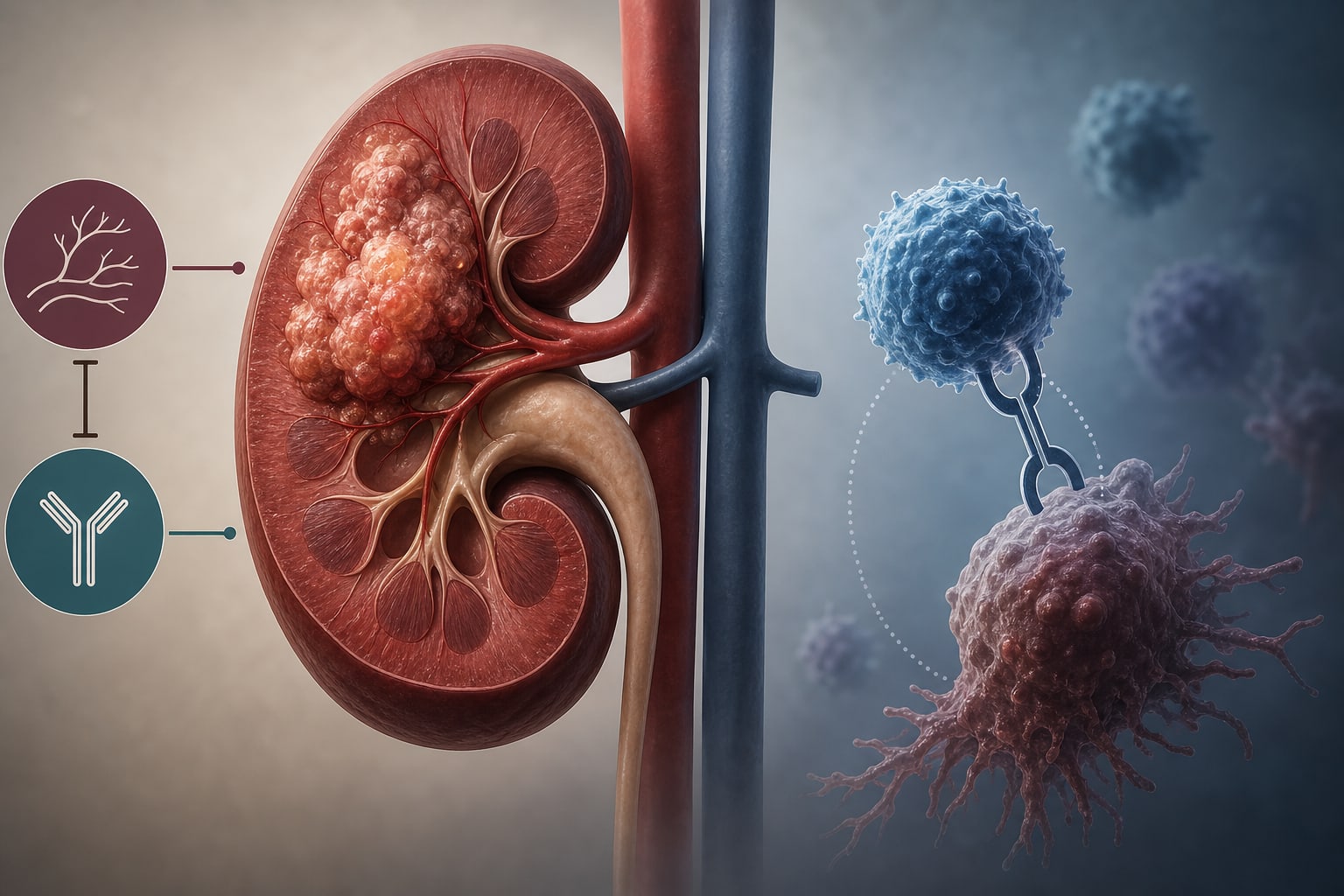
Clinical Scorecard: Association of Preoperative Proteinuria with Postoperative Renal Function Following Partial Nephrectomy for Renal Cell Carcinoma
At a Glance
Category
Detail
Condition
Renal cell carcinoma (RCC) treated with partial nephrectomy (PN)
Key Mechanisms
Impact of preoperative proteinuria on postoperative renal function and chronic kidney disease (CKD) progression
Target Population
Patients undergoing partial nephrectomy for localized RCC
Care Setting
Surgical oncology and nephrology outpatient follow-up
Key Highlights
Preoperative proteinuria is associated with higher baseline CKD stage III or higher but not independently predictive of long-term renal function decline after PN.
Lower baseline estimated glomerular filtration rate (eGFR) is the strongest independent predictor of postoperative CKD stage III or higher.
Patients with preoperative proteinuria have consistently lower mean eGFR postoperatively, but the rate of renal function decline is similar to those without proteinuria.
Guideline-Based Recommendations
Diagnosis
Assess preoperative proteinuria via spot urine dipstick test (>30 mg/dl protein considered significant).
Evaluate baseline renal function using serum creatinine and eGFR (CKD-EPI equation).
Management
Prioritize renal function preservation during partial nephrectomy, especially in patients with baseline renal impairment.
Balance oncological safety with renal function preservation in surgical planning.
Monitoring & Follow-up
Follow standardized postoperative protocol with outpatient visits every 6 months for 3 years, then yearly up to 10 years.
At each visit, perform laboratory tests including serum creatinine, electrolytes, urine examination, and imaging studies.
Risks
Preoperative proteinuria is associated with higher baseline CKD but is not an independent predictor of postoperative CKD progression.
Older age and lower baseline eGFR increase risk of developing postoperative CKD stage III or higher.
Patient & Prescribing Data
Patients undergoing partial nephrectomy for renal cell carcinoma with available preoperative proteinuria data
Preoperative proteinuria presence should be noted but does not independently predict long-term renal function decline; baseline eGFR remains critical for risk stratification.
Clinical Best Practices
Include preoperative proteinuria assessment in pre-surgical evaluation for RCC patients undergoing PN.
Use baseline eGFR as a primary factor to predict postoperative renal outcomes and guide patient counseling.
Implement long-term renal function monitoring post-PN to detect and manage CKD progression.
Consider patient age and comorbidities such as diabetes and hypertension in risk assessment.
Genetic testing may be the most effective way for researchers to distinguish between a rare form of kidney cancer and another that is more common, potentially preventing misdiagnoses, according to a recent study by researchers at Fox Chase Cancer Center and Temple University Hospital.