Integrative and interpretable machine learning framework for early non-invasive detection of clinically significant liver fibrosis - Scorecard - MDSpire

Integrative and interpretable machine learning framework for early non-invasive detection of clinically significant liver fibrosis

  • By

  • Dong Cao

  • Junjie Wang

  • Chenxi Hou

  • Jingyu Zeng

  • Baiyue Tian

  • Yuan Liu

  • Xing Luo

  • Jiaxin Tian

  • Mingbo Zhou

  • Pan Li

  • Huilong Fang

  • Ze Liu

  • Zheng Gong

  • June 23, 2026

  • 0 min

Share

Clinical Scorecard: A Comprehensive and Understandable Machine Learning Approach for the Early Non-Invasive Identification of Clinically Relevant Liver Fibrosis

At a Glance

CategoryDetail
ConditionLiver Fibrosis
Key MechanismsBody mass index (BMI), aspartate aminotransferase (AST), waist circumference (WC)
Target PopulationIndividuals at risk for liver fibrosis
Care SettingPrimary care settings

Key Highlights

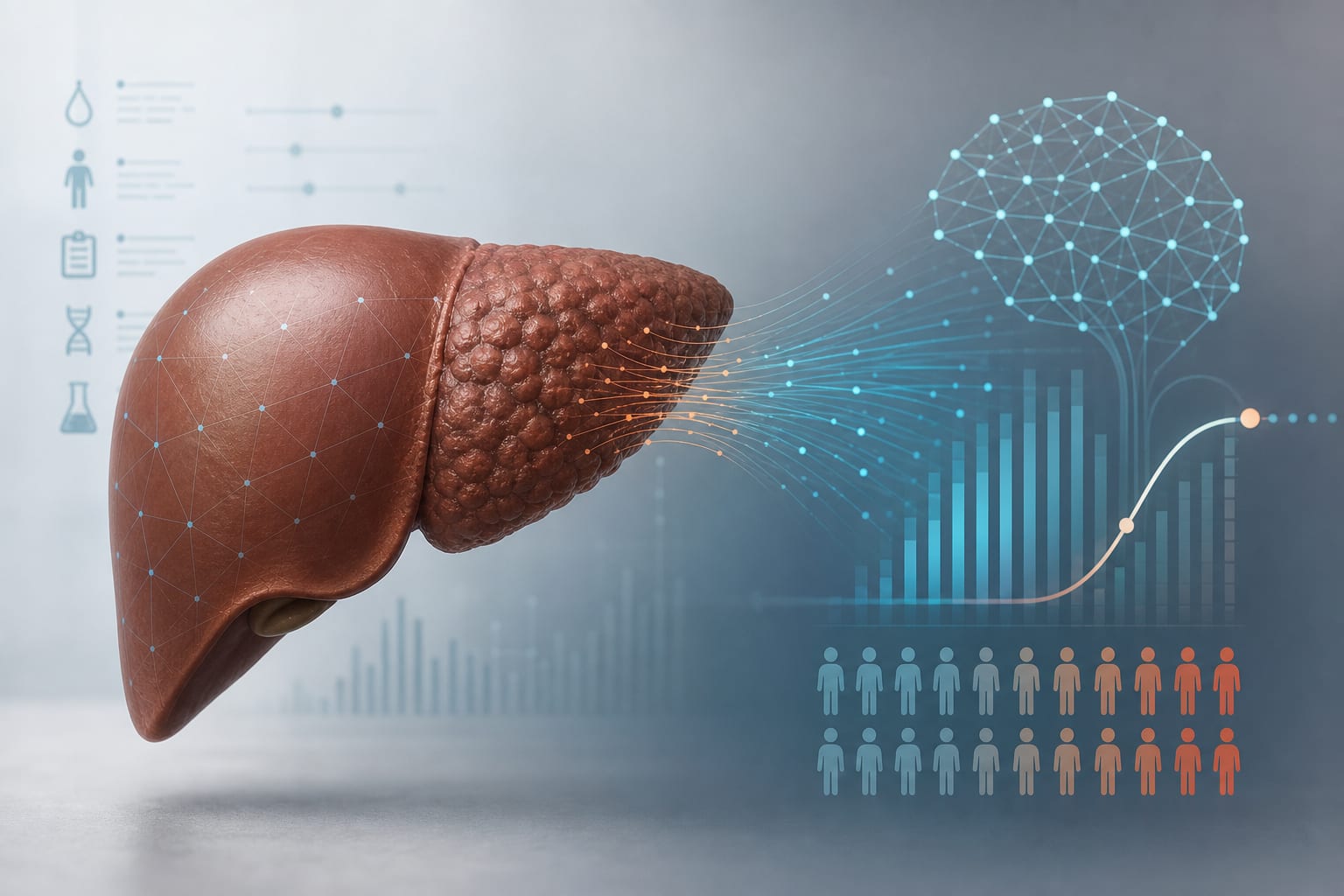
  • Developed a predictive model for early identification of liver fibrosis using machine learning.
  • Model achieved an AUC of 0.824 in training and 0.872 in testing cohorts.
  • Primary predictors include BMI, AST, and waist circumference.
  • Non-invasive method facilitates timely interventions.
  • Addresses limitations of existing invasive diagnostic techniques.

Guideline-Based Recommendations

Diagnosis

  • Utilize machine learning models for early identification of liver fibrosis.

Management

  • Implement lifestyle modifications and consider innovative targeted therapies.

Monitoring & Follow-up

  • Regularly assess risk factors associated with liver fibrosis.

Risks

  • Obesity, chronic infections, and genetic factors contribute to fibrosis progression.

Patient & Prescribing Data

Individuals with risk factors for liver fibrosis.

Lifestyle changes and potential use of anti-fibrotic agents.

Clinical Best Practices

  • Adopt non-invasive diagnostic tools in primary care.
  • Conduct comprehensive risk evaluations for liver fibrosis.

Related Resources & Content

    Original Source(s)

    Related Content