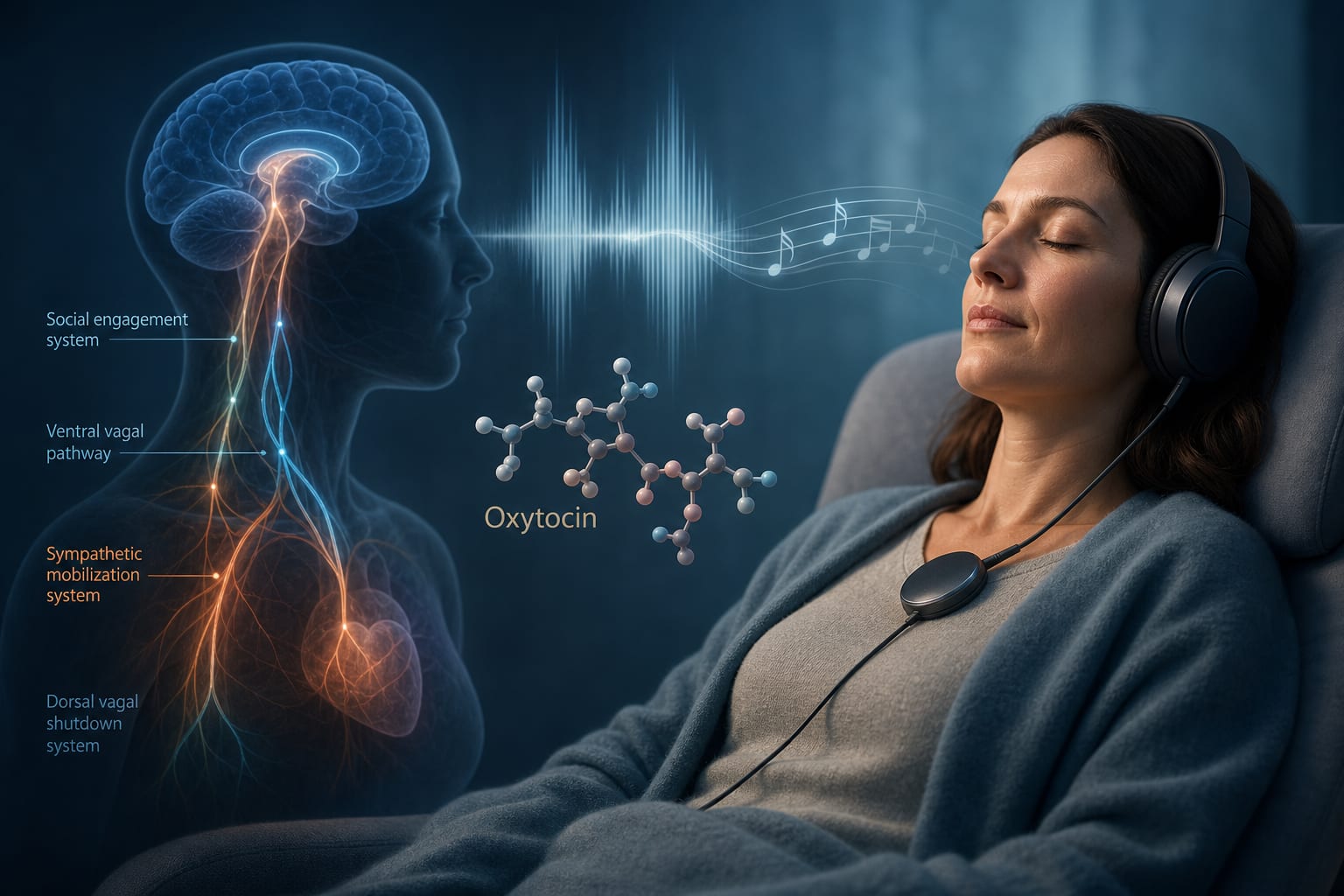
Feasibility study examining the short-term effects of Sonic Augmentation Technology™
By
Lourdes P. Dale
Audrey N. Dana
Carrie E. Lee
Hannah Lamont
Donnalea Van Vleet Goelz
Caitlin V. Dale
Parmida Nazarloo
Mark McIntosh
Steven P. Cuffe
June 8, 2026
Clinical Scorecard: Assessment of the Immediate Impact of Sonic Augmentation Technology™
At a Glance
Category Detail
Condition Autonomic dysregulation and psychiatric difficulties (anxiety and depression) Key Mechanisms Polyvagal-informed probe utilizing acoustic features to enhance autonomic regulation Target Population Individuals with increased autonomic reactivity and anxiety/depression symptoms Care Setting Clinical and research settings
Key Highlights
Significant improvements in self-reported biobehavioral state post-SAT Greater improvements observed in participants with higher baseline anxiety and depression Increases in salivary oxytocin levels noted in participants completing SAT in person SAT is proposed as a low-cost, non-invasive auditory probe for wellbeing Potential benefits for clinical populations experiencing autonomic dysregulation Guideline-Based Recommendations
Diagnosis
Assessment of autonomic reactivity and psychiatric symptomatology through self-report measures Management
Implementation of Sonic Augmentation Technology™ for improving biobehavioral states Monitoring & Follow-up
Evaluation of changes in salivary oxytocin levels pre-and post-intervention Risks
Consideration of individual differences in response to sound-based interventions Patient & Prescribing Data
Individuals with anxiety and depression, particularly those with autonomic dysregulation
SAT may enhance wellbeing through modulation of autonomic states and neuropeptide levels
Clinical Best Practices
Utilize structured sound interventions in therapeutic settings Monitor patient responses to SAT for tailored interventions Incorporate assessments of autonomic reactivity in treatment planning Related Resources & Content