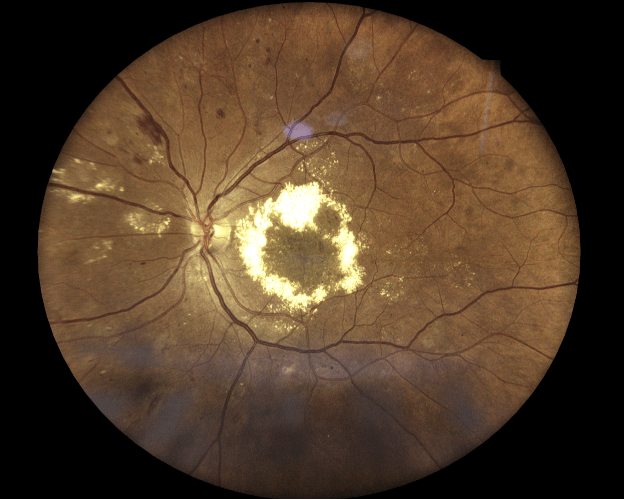
Neo or Not Neo? Widefield OCT-A Reveals Hidden Neovascularization
Utilizing OCT and OCT-A technologies revealed critical insights into a patient’s complex retinopathy, as highlighted by Dr. Julie Rodman.
Clinical Scorecard: Neo or Not Neo? Widefield OCT-A Reveals Hidden Neovascularization
At a Glance
| Category | Detail |
|---|
| Condition | Multifactorial Retinopathy, primarily Diabetic Retinopathy with Sickle Cell Retinopathy |
| Key Mechanisms | Utilization of Widefield OCT and OCT-A to detect neovascularization and macular edema |
| Target Population | Patients with complex retinopathy, particularly those with diabetes and sickle cell trait |
| Care Setting | Ophthalmology clinics utilizing advanced imaging technologies |
Key Highlights
- Widefield OCT-A can uncover occult retinal neovascularization.
- Patient presented with bilateral blurred vision and significant medical history.
- Findings suggest multifactorial retinopathy with diabetic and sickle cell components.
- OCT-A confirmed diagnosis of proliferative diabetic and sickle cell retinopathy.
- Advanced imaging enhances diagnostic accuracy and clinical decision-making.
Guideline-Based Recommendations
Diagnosis
- Use OCT and OCT-A for assessing neovascularization in retinopathy.
Management
- Monitor blood glucose levels and manage diabetes effectively.
Monitoring & Follow-up
- Regular eye examinations for patients with diabetes and sickle cell trait.
Risks
- Increased risk of vision loss due to neovascularization and macular edema.
Patient & Prescribing Data
Patients with diabetes and sickle cell trait experiencing vision changes.
Early detection of neovascularization can lead to timely intervention.
Clinical Best Practices
- Incorporate OCT-A in routine assessments for patients with complex retinopathy.
- Educate patients on the importance of managing systemic conditions like diabetes.
References