Revisiting Mobility: The Role of Virtual Reality in Rehabilitation After Stroke
By
Jenna Congdon
July 13, 2026
Clinical Scorecard: Revisiting Mobility: The Role of Virtual Reality in Rehabilitation After Stroke
At a Glance
Category Detail
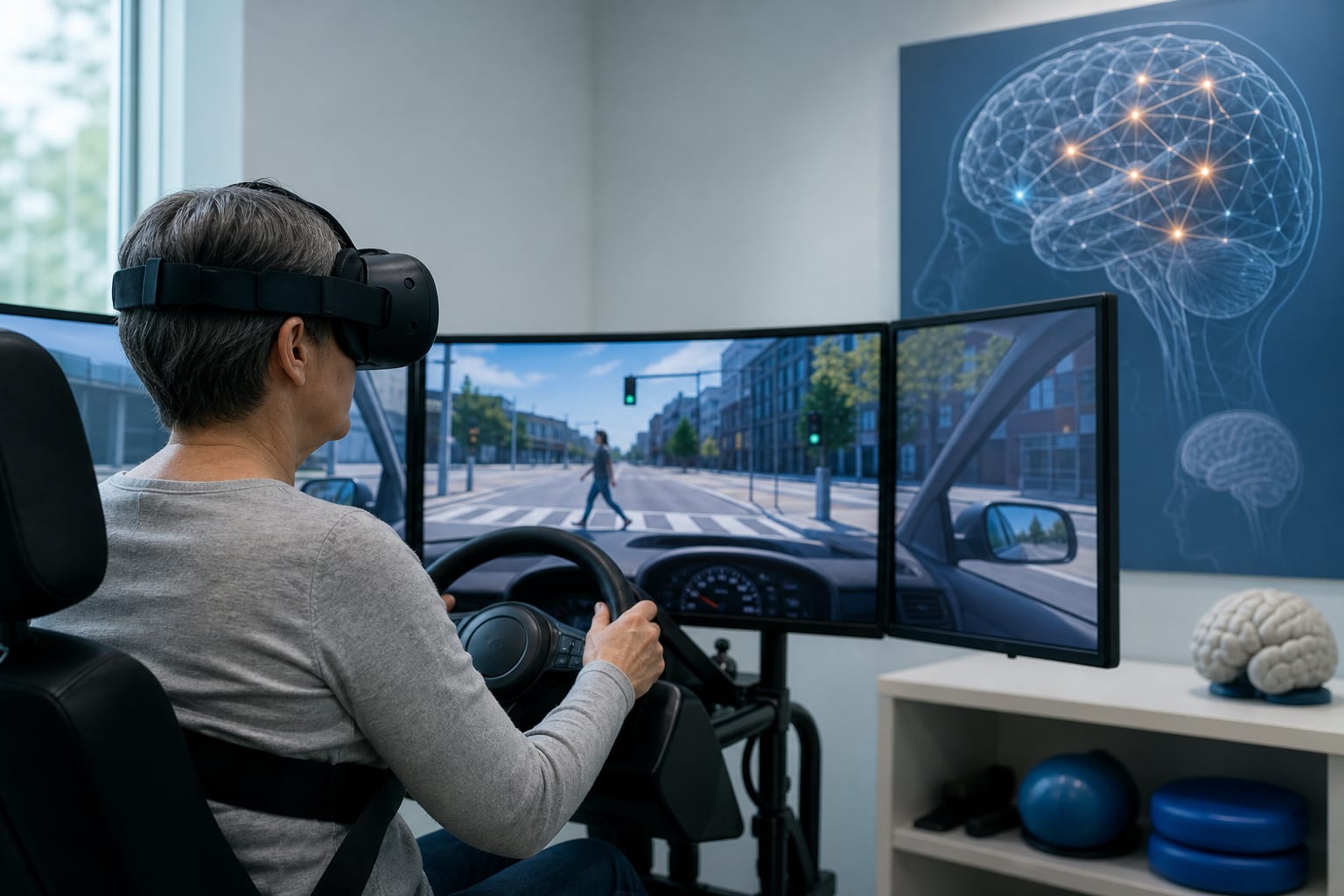
Condition Stroke Rehabilitation Key Mechanisms Neuroplasticity and Hebbian learning through immersive VR simulations. Target Population Stroke and brain injury survivors, patients with disabilities and neurologic disorders. Care Setting Rehabilitation clinics utilizing virtual reality technology.
Key Highlights
VR driving simulators assist in rebuilding cognitive, visual, and motor skills for stroke survivors. Encourages brain to form new pathways through tailored, repeated practice. Access to VR rehabilitation is limited by cost, availability, and insurance coverage. Guideline-Based Recommendations
Diagnosis
Clinical assessment of strength, range of motion, and coordination is essential for determining candidacy for VR rehabilitation. Management
Utilize VR driving simulators for safe practice of driving skills in stroke rehabilitation. Monitoring & Follow-up
Monitor patient progress through repeated practice and adaptive device usage. Risks
Not all stroke survivors are candidates for VR rehabilitation due to cognitive or physical impairments. Patient & Prescribing Data
Stroke survivors and individuals with neurologic disorders seeking to regain driving ability.
VR rehabilitation can facilitate neuroplasticity and improve motor control through immersive practice.
Clinical Best Practices
Incorporate VR technology in rehabilitation settings to enhance patient engagement and skill relearning. Assess individual patient needs and capabilities before initiating VR therapy. Related Resources & Content