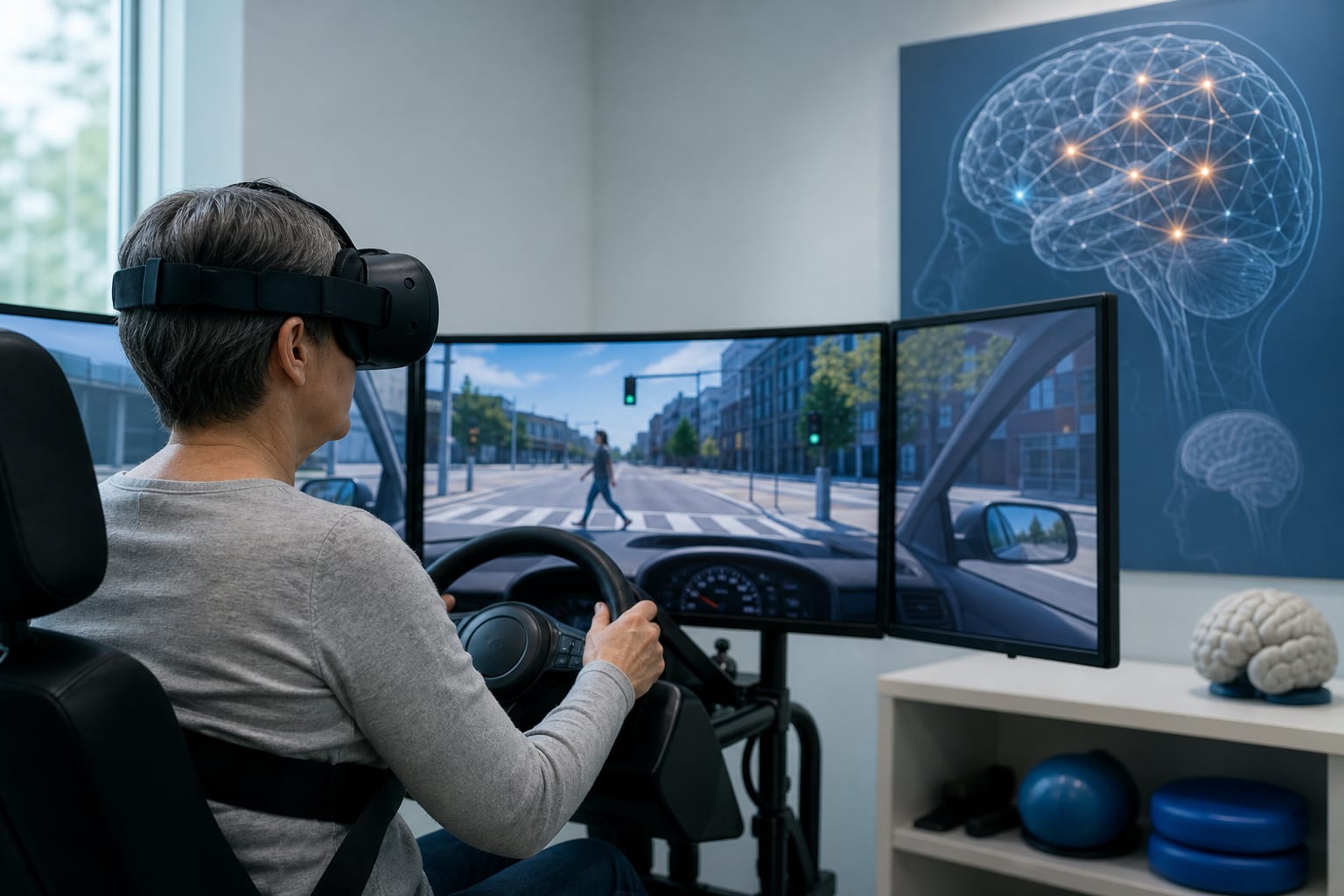
On the Road Again: Virtual Reality for Poststroke Rehabilitation
-
By
-
Jenna Congdon
-
July 13, 2026
Clinical Scorecard: Revisiting Mobility: The Role of Virtual Reality in Rehabilitation After Stroke
At a Glance
| Category | Detail |
|---|
| Condition | Stroke Rehabilitation |
| Key Mechanisms | Neuroplasticity and Hebbian learning through immersive VR simulations. |
| Target Population | Stroke and brain injury survivors, patients with disabilities and neurologic disorders. |
| Care Setting | Rehabilitation clinics utilizing virtual reality technology. |
Key Highlights
- VR driving simulators assist in rebuilding cognitive, visual, and motor skills for stroke survivors.
- Encourages brain to form new pathways through tailored, repeated practice.
- Access to VR rehabilitation is limited by cost, availability, and insurance coverage.
Guideline-Based Recommendations
Diagnosis
- Clinical assessment of strength, range of motion, and coordination is essential for determining candidacy for VR rehabilitation.
Management
- Utilize VR driving simulators for safe practice of driving skills in stroke rehabilitation.
Monitoring & Follow-up
- Monitor patient progress through repeated practice and adaptive device usage.
Risks
- Not all stroke survivors are candidates for VR rehabilitation due to cognitive or physical impairments.
Patient & Prescribing Data
Stroke survivors and individuals with neurologic disorders seeking to regain driving ability.
VR rehabilitation can facilitate neuroplasticity and improve motor control through immersive practice.
Clinical Best Practices
- Incorporate VR technology in rehabilitation settings to enhance patient engagement and skill relearning.
- Assess individual patient needs and capabilities before initiating VR therapy.
Related Resources & Content