Risk factors for thrombosis in tuberculosis patients admitted to a tuberculosis-dedicated intensive care unit: a retrospective cohort study
By
Aifeng Liu
Yuewen Qiu
Hongmei Chen
Xiaohua Ma
June 30, 2026
Clinical Scorecard: Identifying Thrombosis Risk Factors in Tuberculosis Patients in an Intensive Care Setting: A Retrospective Cohort Analysis
At a Glance
Category Detail
Condition Thrombosis in Tuberculosis Patients Key Mechanisms Advanced age, prolonged APTT, and co-infection status contribute to thrombus formation. Target Population Patients with tuberculosis admitted to the ICU Care Setting Intensive Care Unit
Key Highlights
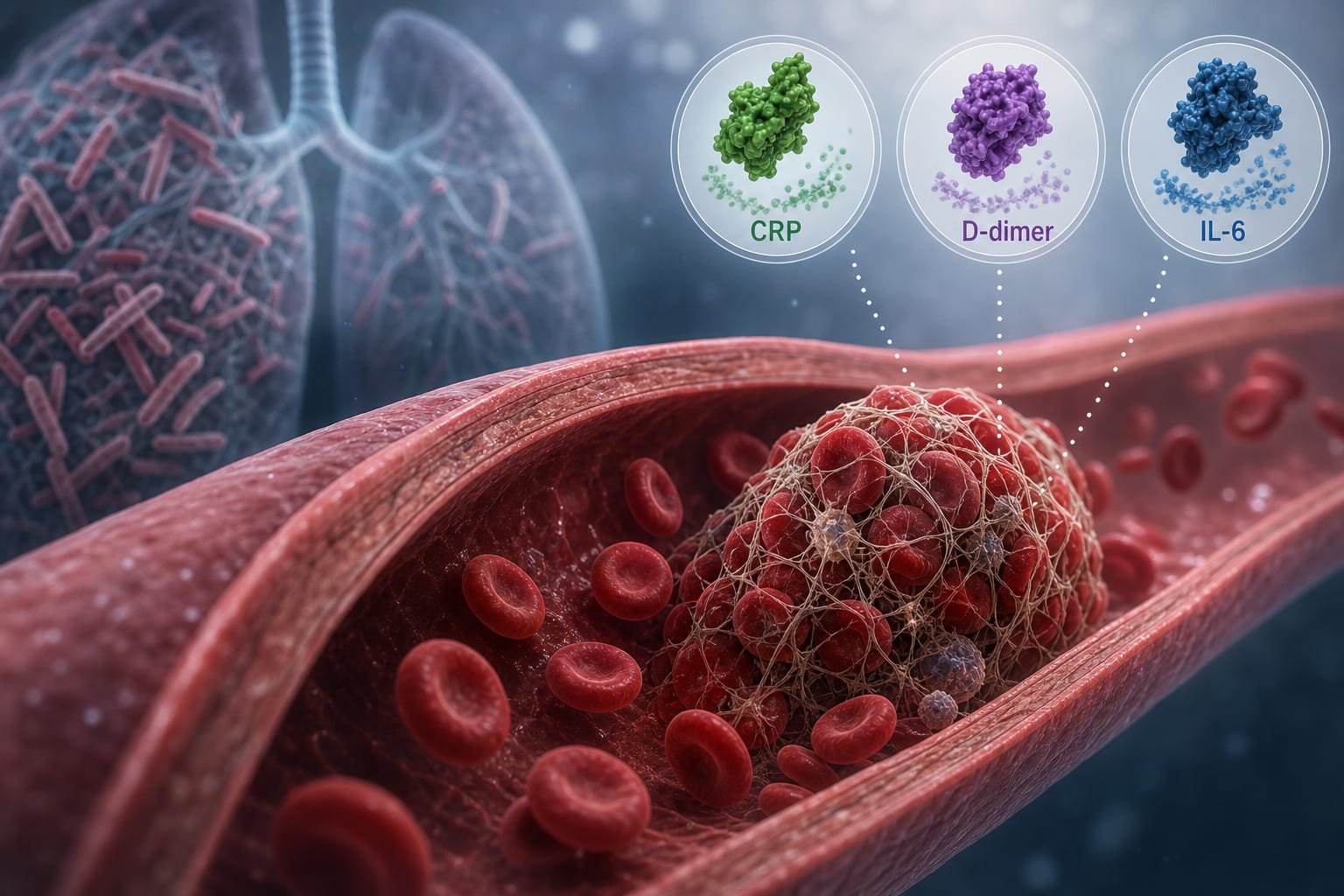
Advanced age and prolonged APTT are independent predictors of thrombus formation. Fungal co-infection increases thrombotic risk, while non-TB bacterial co-infection may have a protective effect. CRP is a reliable surrogate marker for IL-6-driven inflammation in this population. The base predictive model achieved an AUC of 0.753. Incorporation of CRP, DDR, or IL-6 did not significantly improve predictive performance. Guideline-Based Recommendations
Diagnosis
Confirm pulmonary tuberculosis based on clinical signs, imaging features, and positive laboratory tests. Management
Monitor thrombotic risk factors such as age, APTT, and co-infection status in ICU patients. Monitoring & Follow-up
Regularly assess inflammatory biomarkers like CRP and IL-6 in critically ill tuberculosis patients. Risks
Thrombotic events can prolong hospital stays and elevate mortality risk. Patient & Prescribing Data
Patients aged 18 years or older with confirmed pulmonary tuberculosis.
Consider the impact of co-infections on thrombotic risk when managing tuberculosis patients.
Clinical Best Practices
Utilize a predictive model incorporating age, APTT, and co-infection status for thrombus risk assessment. Evaluate the necessity of prophylactic strategies for thrombosis in high-risk tuberculosis patients. Related Resources & Content