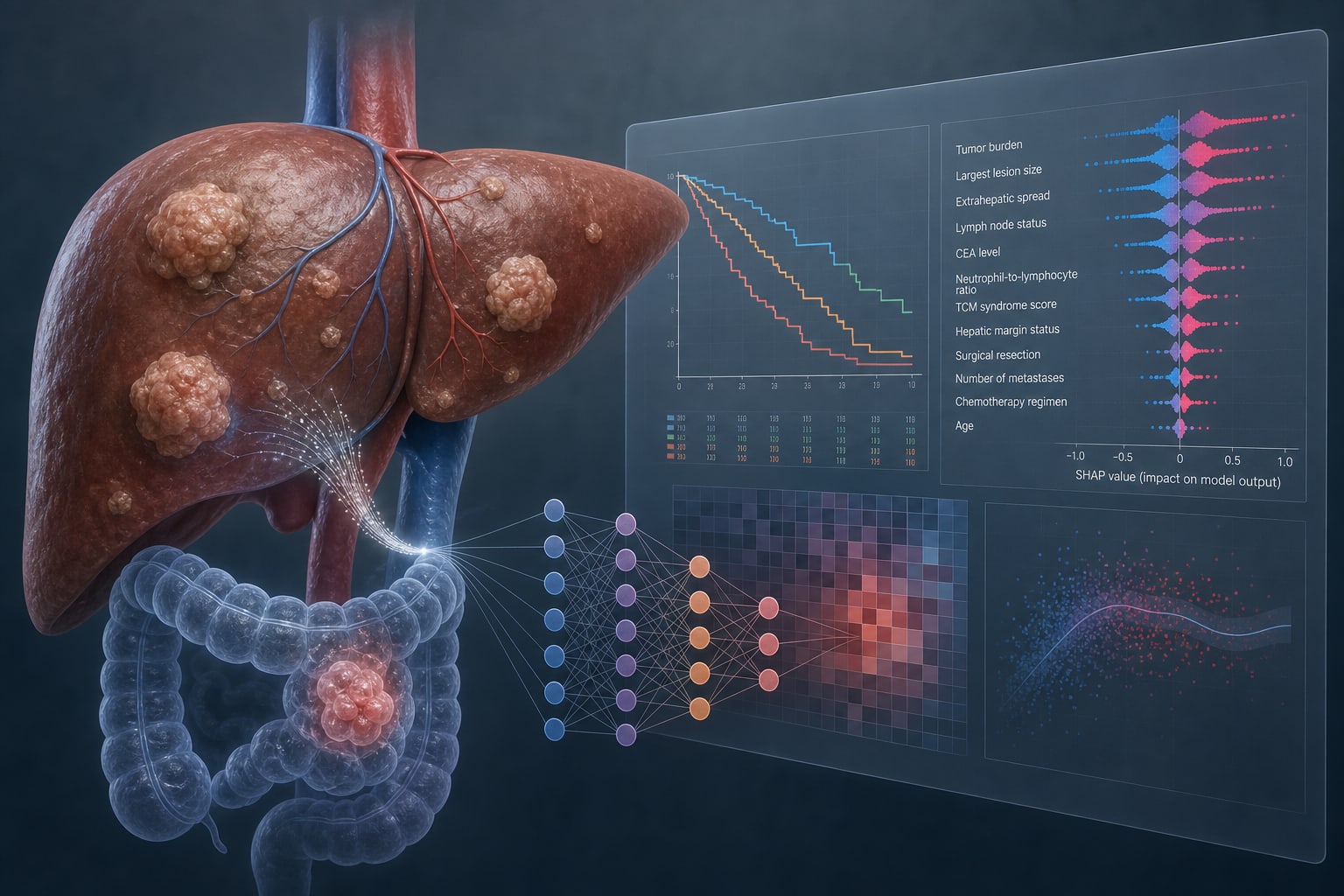
Clinical Scorecard: Predicting Survival Outcomes in Liver Metastases from Colorectal Cancer Through Machine Learning with SHAP Interpretation Techniques
At a Glance
Category
Detail
Condition
Colorectal cancer liver metastasis (CRLM)
Key Mechanisms
Machine learning algorithms for survival prediction and Traditional Chinese Medicine (TCM) intervention
Target Population
Patients with colorectal cancer liver metastasis
Care Setting
Clinical decision-support tool
Key Highlights
Developed an interpretable machine learning model for predicting long-term survival in CRLM patients.
Optimized XGBoost algorithm demonstrated superior predictive performance with AUC of 0.891 for 36-month survival.
TCM intervention showed a protective association with survival probability in a dose-dependent pattern.
Model validated using temporal datasets to assess generalizability.
Web-based tool allows clinicians to input patient parameters for dynamic risk estimates.
Guideline-Based Recommendations
Diagnosis
Incorporate clinical, pathological, and treatment-related variables for prognostic assessment.
Management
Utilize machine learning models to inform individualized therapeutic decisions.
Monitoring & Follow-up
Regularly assess patient outcomes using validated predictive models.
Risks
Consider the impact of tumor burden, anatomical distribution, and timing of metastasis on prognosis.
Patient & Prescribing Data
861 patients with colorectal cancer liver metastasis
TCM exposure characteristics were systematically collected and analyzed.
Clinical Best Practices
Employ machine learning for complex prognostic stratification.
Integrate TCM interventions into treatment planning where applicable.
Utilize web-based tools for real-time risk stratification.