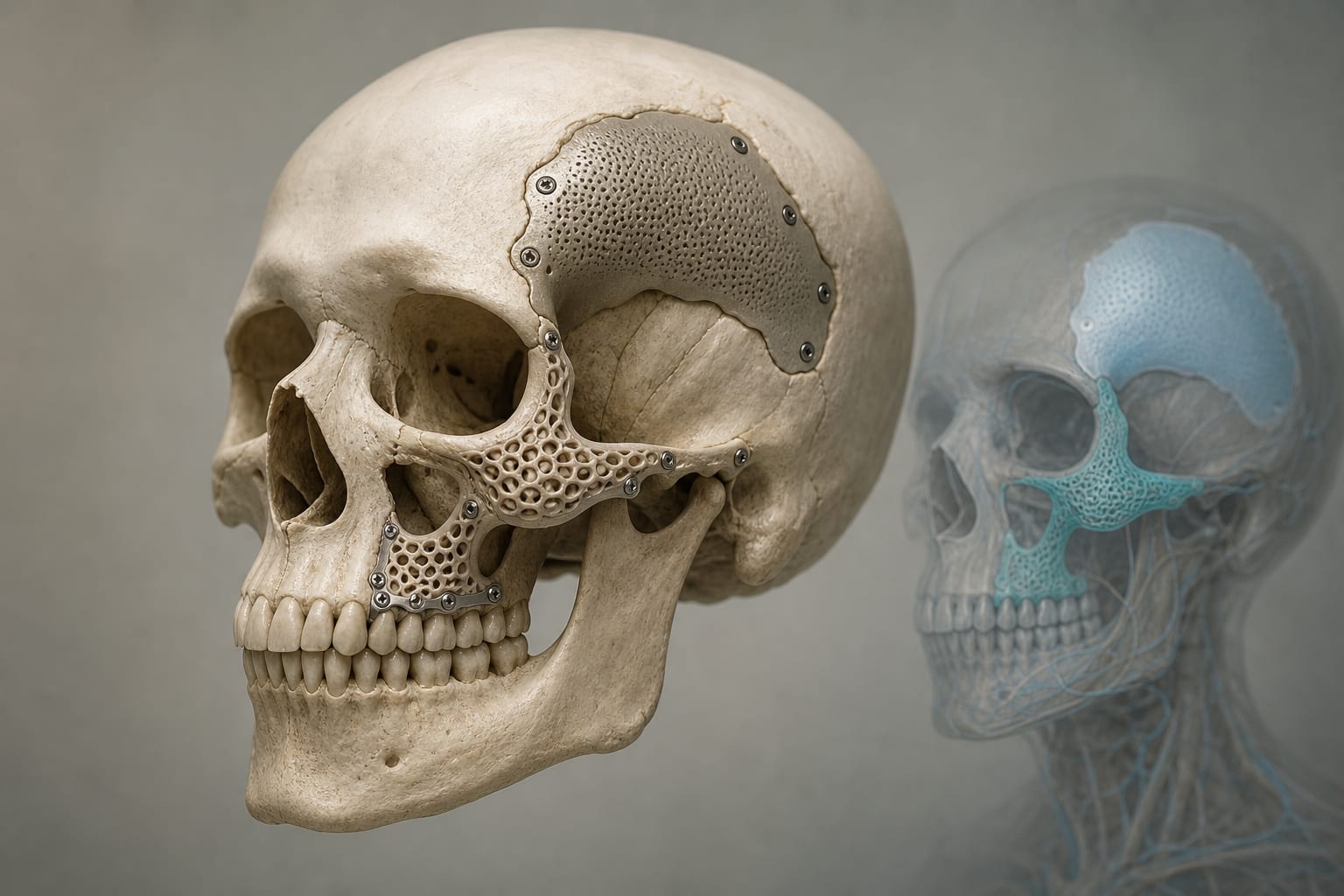
Editorial: Advances in Craniomaxillofacial Reconstruction and Regeneration Surgery
-
By
-
Raphael Capelli Guerra
-
Jeremie Oliver Piña
-
Robert Alexander Sader
-
Bianca Pulino
-
May 29, 2026
Clinical Scorecard: Advances in Craniomaxillofacial Reconstruction and Regeneration Surgery
At a Glance
| Category | Detail |
|---|
| Condition | Craniofacial defects |
| Key Mechanisms | Integration of anatomy, imaging, biomaterials, microsurgery, and regenerative strategies |
| Target Population | Patients with craniofacial defects due to trauma, oncologic resection, congenital deformity, or aesthetic-functional imbalance |
| Care Setting | Multidisciplinary surgical environments |
Key Highlights
- Emphasis on anatomical precision in surgical planning
- Need for coordinated management in complex frontal sinus injuries
- Decision-making algorithms for flap salvage strategies
- Importance of anatomy-driven aesthetic interventions
- Clinical evidence on mandibular reconstruction strategies
Guideline-Based Recommendations
Diagnosis
- Accurate diagnosis and individualized risk assessment are crucial for optimal outcomes in craniofacial trauma care.
Management
- Reconstructive approaches should be tailored to disease burden and patient-specific conditions.
Monitoring & Follow-up
- Monitor for complications and ensure anatomical knowledge guides interventions.
Risks
- Considerations related to biocompatibility, stability, infection risk, and handling of implant materials.
Patient & Prescribing Data
Patients requiring craniofacial reconstructive and regenerative surgery
Reconstructive success depends on both primary planning and the ability to adapt to intraoperative challenges.
Clinical Best Practices
- Utilize anatomical classification for improved surgical outcomes.
- Implement multidisciplinary approaches for complex cases.
- Adopt evidence-based biomaterial selection in surgical planning.
Related Resources & Content