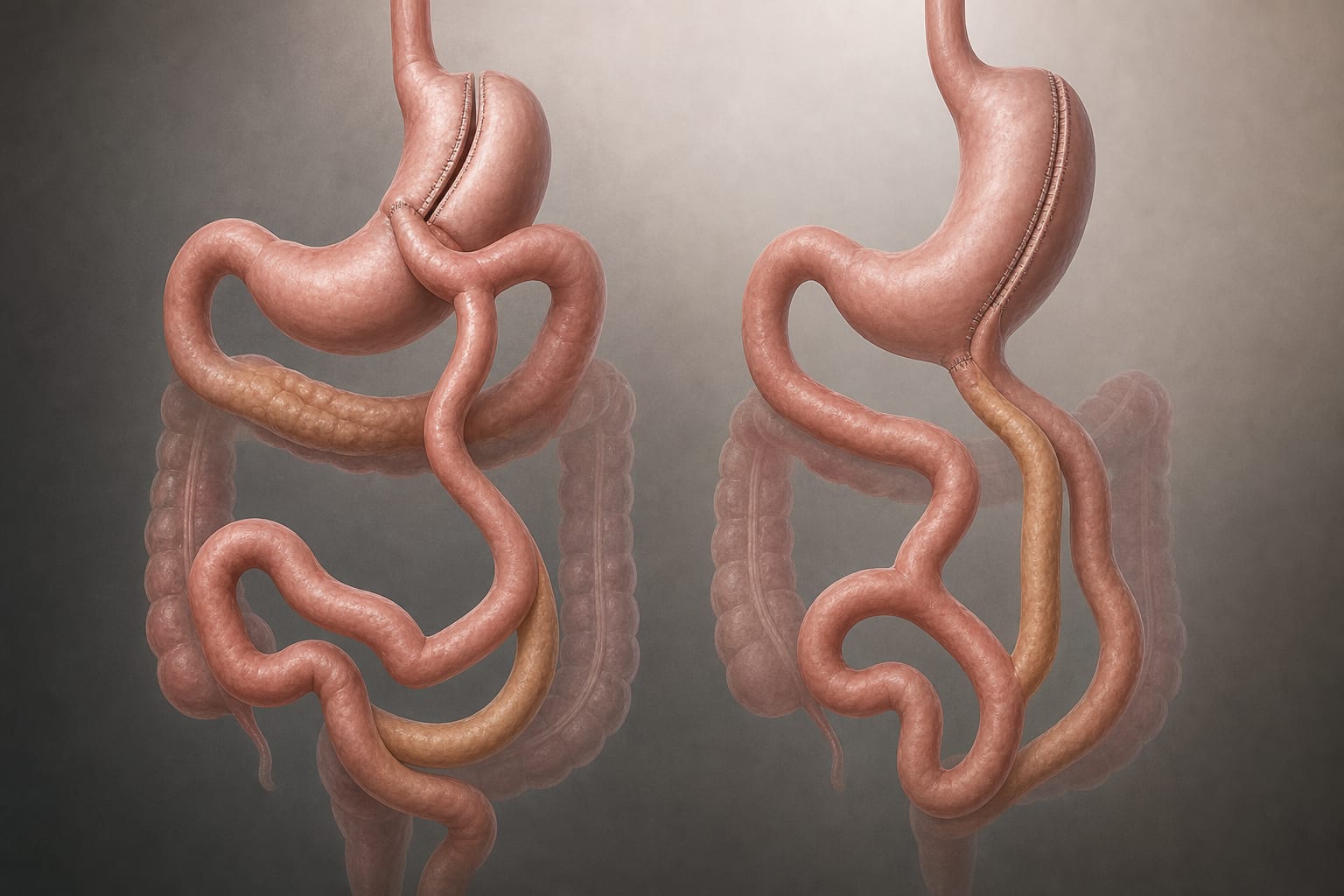
Clinical Scorecard: Utilization of Endoluminal Vacuum Therapy for Managing Postoperative Leaks Following Metabolic Bariatric Surgery: Insights from a Single-Center Study
At a Glance
Category
Detail
Condition
Postoperative anastomotic and staple-line leaks following metabolic/bariatric surgery
Key Mechanisms
Endoluminal vacuum therapy (EVT) applies continuous negative pressure to promote closure and healing of gastrointestinal leaks
Target Population
Patients undergoing metabolic/bariatric surgery who develop postoperative leaks (anastomotic leakage or staple-line leakage)
Care Setting
Specialized high-volume metabolic/bariatric surgery center with multidisciplinary surgical and endoscopic expertise
Key Highlights
Anastomotic and staple-line leaks after metabolic/bariatric surgery occur in 1.5–5.6% of cases and significantly impact perioperative outcomes.
EVT is a minimally invasive endoscopic technique offering a promising alternative or adjunct to surgical revision and self-expanding metal stent therapy for managing leaks.
Therapeutic success with EVT depends on precise placement, regular sponge changes every 3–4 days, and individualized multidisciplinary treatment strategies.
Guideline-Based Recommendations
Diagnosis
Diagnose leaks based on clinical signs (tachycardia >100 bpm, hypotension, fever, severe pain), elevated inflammatory markers, and imaging with contrast-swallow X-ray or CT scan.
Use endoscopy and air-fluid leak tests during revisional surgery to localize leaks and assess staple line or anastomosis integrity.
Classify leaks as acute (0–7 days), early (1–6 weeks), late (7–12 weeks), or chronic (>12 weeks) postoperatively.
Management
Employ EVT as standalone therapy or combined with diagnostic laparoscopy and/or self-expanding metal stent (SEMS) placement depending on leak severity and patient condition.
Place EVT sponges intraluminally near the leak using overtube or pull-through techniques with precise drain positioning.
Replace EVT sponges every 3–4 days and maintain continuous vacuum pressure between −60 to −80 mmHg.
Provide parenteral nutrition during EVT and introduce moderate enteral nutrition when SEMS is applied.
Adapt therapeutic strategies individually based on patient clinical presentation and response.
Monitoring & Follow-up
Monitor clinical symptoms and inflammatory markers closely to detect leak recurrence or complications.
Perform methylene-blue swallow tests during EVT pauses to assess for persistent leakage.
Regularly evaluate EVT placement and effectiveness endoscopically and adjust treatment accordingly.
Risks
Potential EVT-associated complications include sponge dislocation, insufficient drainage, bleeding, intolerance, and patient non-compliance.
Revisional surgeries carry increased risk and require high surgical expertise.
Patient & Prescribing Data
Patients with postoperative leaks after primary or revisional metabolic/bariatric surgery, including those transferred from other centers.
EVT demonstrated promising efficacy and safety as a minimally invasive treatment option, with individualized multidisciplinary management improving outcomes.
Clinical Best Practices
Early recognition of clinical signs suggestive of leakage to prompt timely diagnostic imaging and endoscopy.
Use multidisciplinary teams specialized in metabolic/bariatric surgery and endoscopy for managing complex postoperative leaks.
Ensure precise EVT sponge placement and maintain scheduled sponge changes to optimize leak closure.
Provide tailored nutritional support during EVT and adjust feeding strategies when SEMS is introduced.
Regularly reassess therapeutic approach based on patient progress and clinical parameters.