Accelerated Recurrence of Intracranial Solitary Fibrous Tumor After TERT-Wild-Type Primary Tumor: A Case Study
By
Longfei Shao
Chao Yang
Xukun Teng
Jianmin Yang
Jinyang Li
Yinghao Gu
Shuo Sun
September 8, 2026
Clinical Scorecard: Accelerated Recurrence of Intracranial Solitary Fibrous Tumor After TERT-Wild-Type Primary Tumor: A Case Study
At a Glance
Category Detail
Condition Intracranial Solitary Fibrous Tumor (SFT) Key Mechanisms TERT promoter mutations are associated with malignant progression; however, rapid progression can occur without these mutations. Target Population Adults, specifically a 70-year-old male in this case study. Care Setting Neurosurgery department at a tertiary care hospital.
Key Highlights
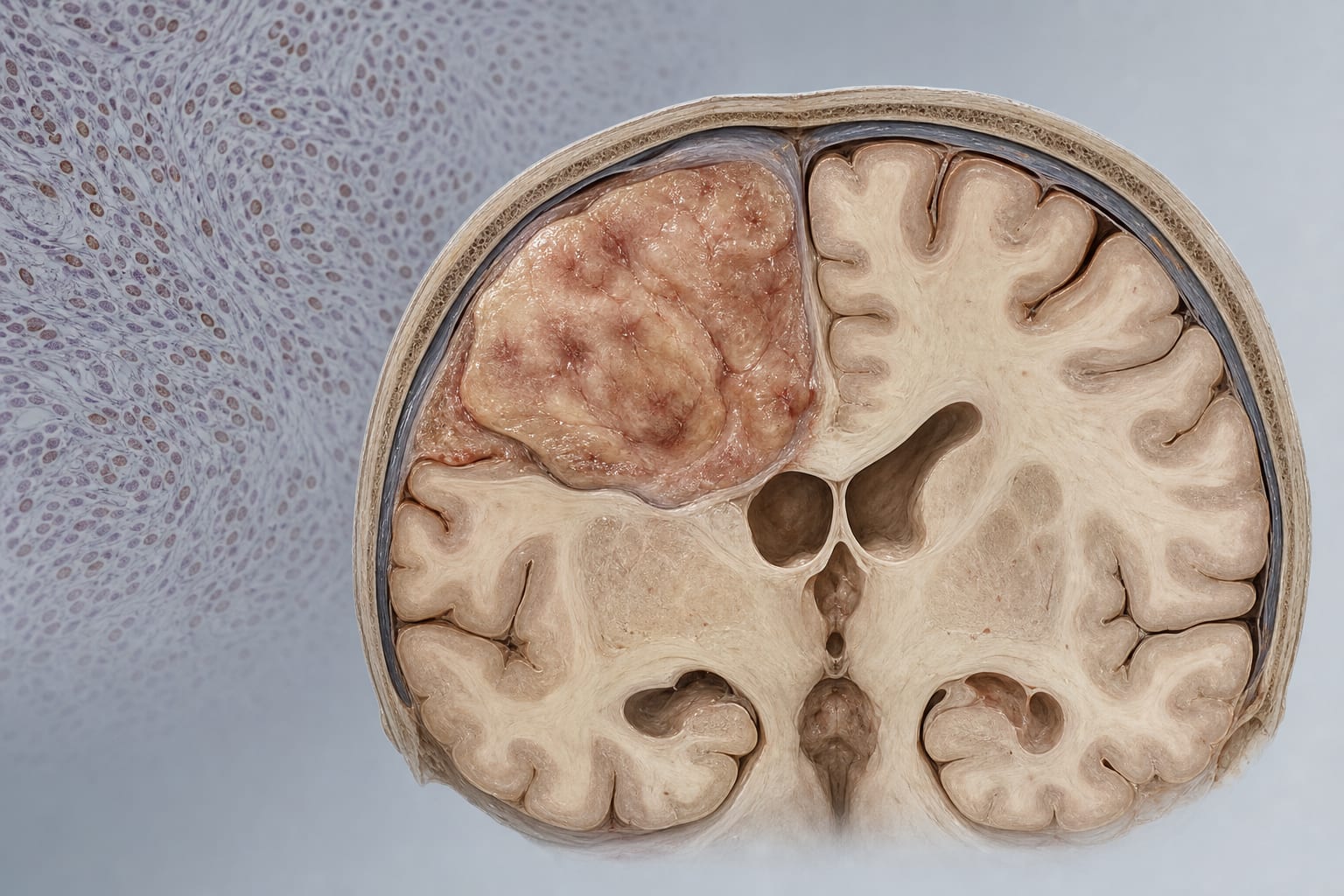
Intracranial SFT is a rare mesenchymal neoplasm, comprising approximately 0.09% of intracranial tumors. The case illustrates rapid clinical and proliferative deterioration in SFT after a TERT-wild-type primary tumor. The Ki-67 index is a critical measure of proliferative activity, with values reaching 70% in the recurrent tumor. Differential diagnosis between SFT and meningioma is crucial due to overlapping imaging characteristics. Postoperative surveillance should be tailored according to validated risk stratification models. Guideline-Based Recommendations
Diagnosis
Immunohistochemistry for nuclear STAT6 is the diagnostic gold standard for SFT. Management
Gross total resection is recommended for symptomatic lesions. Monitoring & Follow-up
Regular follow-up is advised, with individualized postoperative surveillance. Risks
Rapid progression may occur in SFT without TERT mutations, complicating management and prognosis. Patient & Prescribing Data
Adult patients with intracranial solitary fibrous tumors.
No adjuvant therapy was administered post-surgery in this case.
Clinical Best Practices
Accurate differential diagnosis between SFT and meningioma is essential. Consideration of the Ki-67 index for assessing tumor aggressiveness. Related Resources & Content