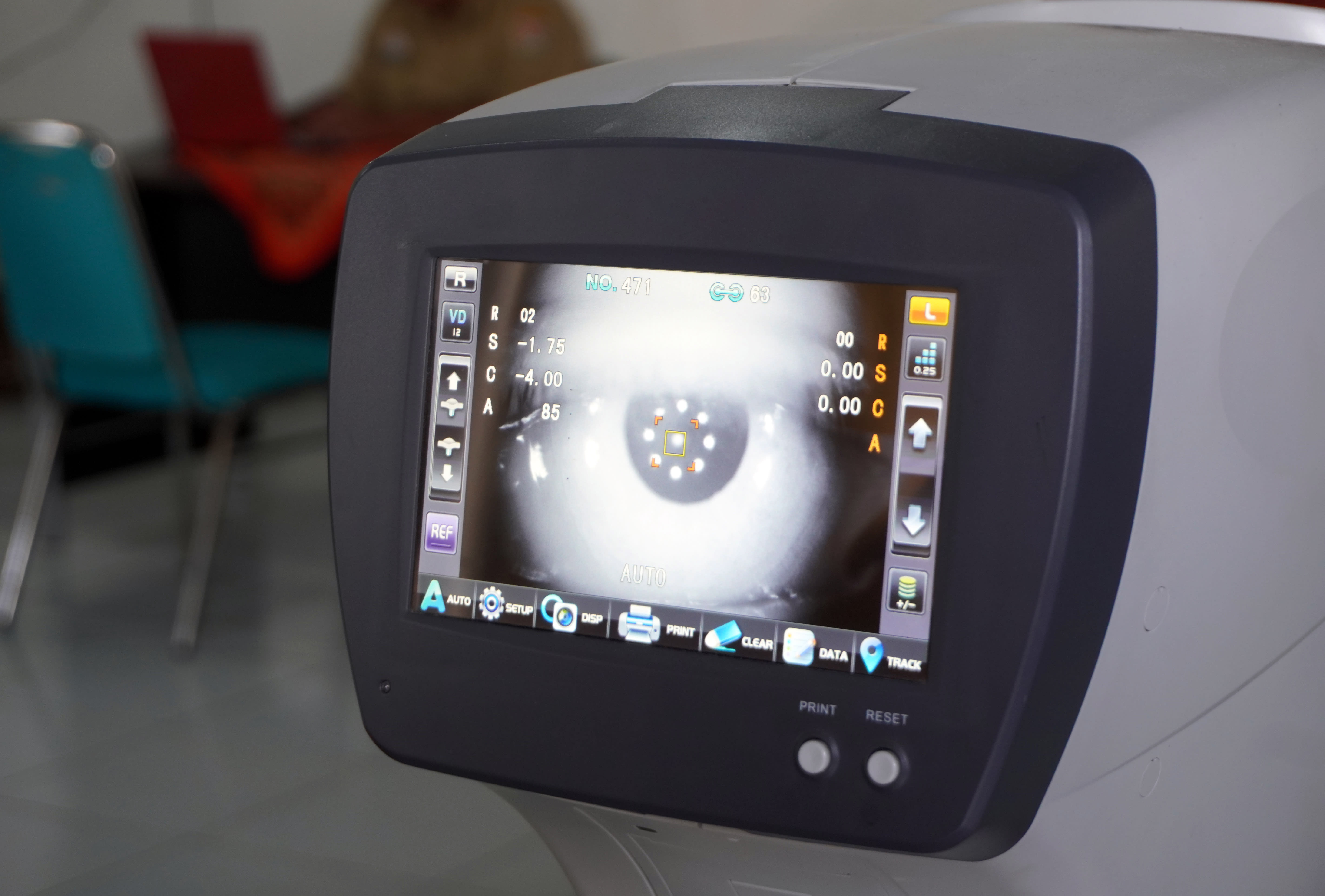
Clinical Scorecard: The Relationship of Tear Film Instability and Higher-Order Aberrations to Refractive Variability
At a Glance
Category
Detail
Condition
Tear film instability associated with dry eye disease causing higher-order aberrations and refractive variability
Key Mechanisms
Tear film breakup induces microfluctuations in corneal curvature and refractive power, increasing higher-order aberrations and degrading retinal image quality
Target Population
Patients with ocular surface disease, particularly dry eye disease
Care Setting
Optometric and ophthalmologic clinical settings involving refraction, contact lens fitting, and refractive or cataract surgery planning
Key Highlights
Tear film instability leads to fluctuating vision and inconsistent refractive measurements due to dynamic higher-order aberrations.
Ocular surface inflammation drives tear film instability, creating a self-perpetuating cycle that degrades optical quality.
Stabilizing the ocular surface before refraction improves measurement repeatability, prescription accuracy, and patient satisfaction.
Guideline-Based Recommendations
Diagnosis
Assess tear film stability and ocular surface inflammation prior to refractive measurements.
Use wavefront aberrometry to detect increased higher-order aberrations during interblink intervals.
Recognize inconsistent autorefractor and subjective refraction results as potential indicators of tear film instability.
Management
Treat underlying ocular surface inflammation to restore tear film stability rather than relying solely on tear supplementation.
Prioritize ocular surface optimization before prescribing glasses, fitting contact lenses, or planning surgery.
Repeat refractive measurements after ocular surface treatment to ensure accuracy.
Monitoring & Follow-up
Monitor patient-reported visual fluctuations and dissatisfaction as signs of unstable tear film.
Evaluate repeatability of objective and subjective refractive measurements over time.
Assess corneal topography and keratometry quality to detect tear film-related distortions.
Risks
Proceeding with refraction in the presence of untreated ocular surface disease risks inaccurate prescriptions and poor visual outcomes.
Unstable optical interfaces increase likelihood of patient dissatisfaction, remakes, and increased clinical costs.
Repeated prescription changes may erode patient confidence and perceived clinical precision.
Patient & Prescribing Data
Patients with dry eye disease or ocular surface inflammation undergoing refractive assessment
Addressing ocular surface inflammation prior to refraction leads to more stable tear film, reduced higher-order aberrations, improved measurement repeatability, and better patient satisfaction with prescriptions.
Clinical Best Practices
Evaluate and manage ocular surface inflammation before performing refractive measurements.
Use both objective and subjective refraction methods to identify variability caused by tear film instability.
Delay finalizing prescriptions until tear film stability is achieved to reduce remakes and improve visual outcomes.
Educate patients about the impact of tear film instability on vision fluctuations and the importance of ocular surface treatment.