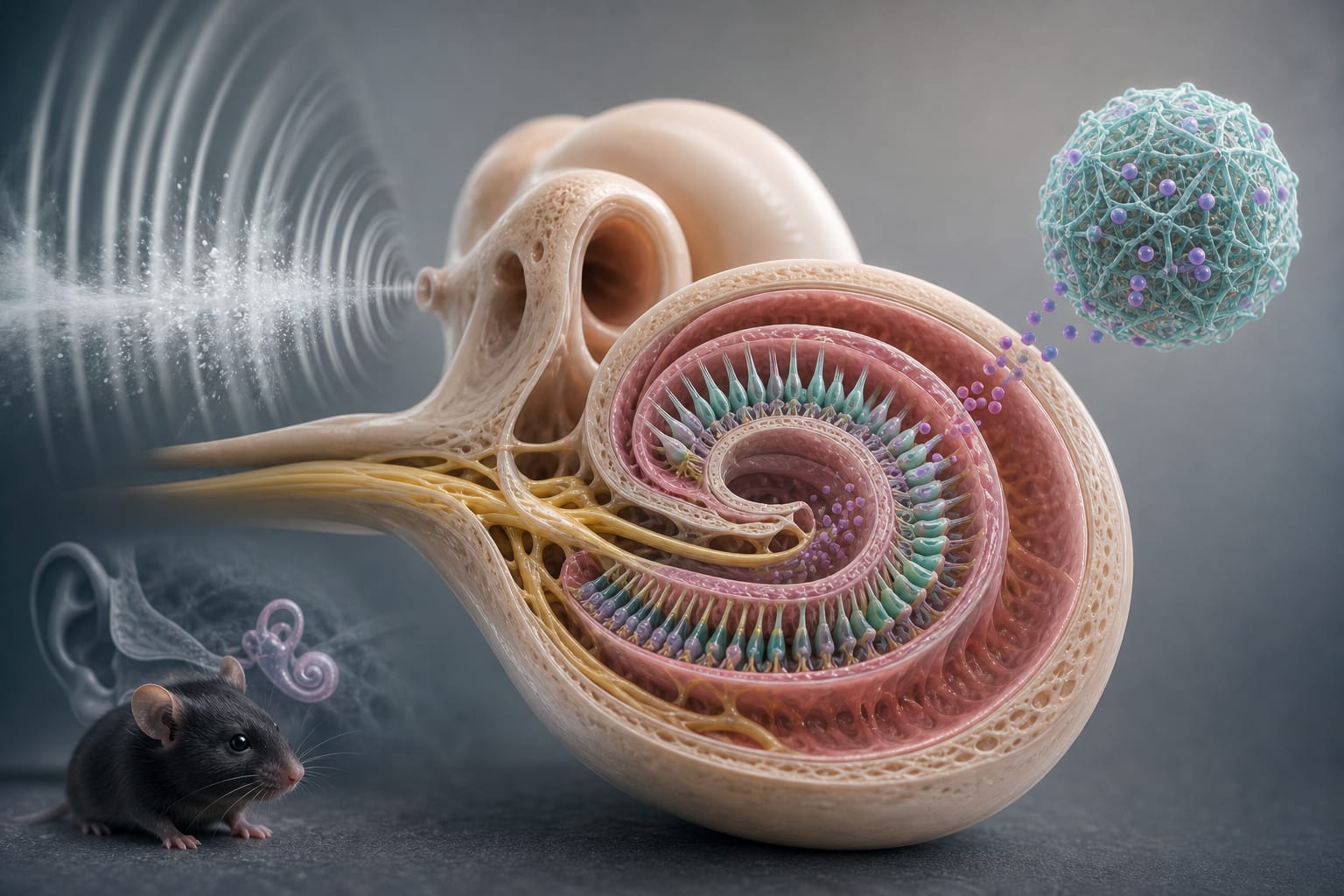
Clinical Scorecard: TrkB Stimulation Alleviates Cochlear Damage from Blast Exposure and Enhances Hearing Recovery in a Compressed-Air Blast Mouse Model
At a Glance
Category
Detail
Condition
Key Mechanisms
TrkB activation via 7,8-dihydroxyflavone (7,8-DHF) delivered through nanoparticles (as per study findings)
Target Population
Care Setting
Key Highlights
Development of a reproducible compressed-air blast mouse model for BIHL
Local delivery of 7,8-DHF via nanoparticles improved auditory brainstem response (ABR) thresholds
Histological analyses showed preserved inner hair cell density with reduced outer hair cell loss
Significant functional recovery observed compared to vehicle treatment
Guideline-Based Recommendations
Diagnosis
Management
Local delivery of 7,8-DHF using biodegradable nanoparticles (as per study findings)
Monitoring & Follow-up
Risks
Patient & Prescribing Data
Mice exposed to blast in a controlled research setting
7,8-DHF-loaded nanoparticles provided localized therapeutic effects and structural protection
Clinical Best Practices
Utilize nanoparticle delivery systems for targeted cochlear therapies (as per study findings)
Monitor cochlear health and auditory function post-intervention (as per study findings)