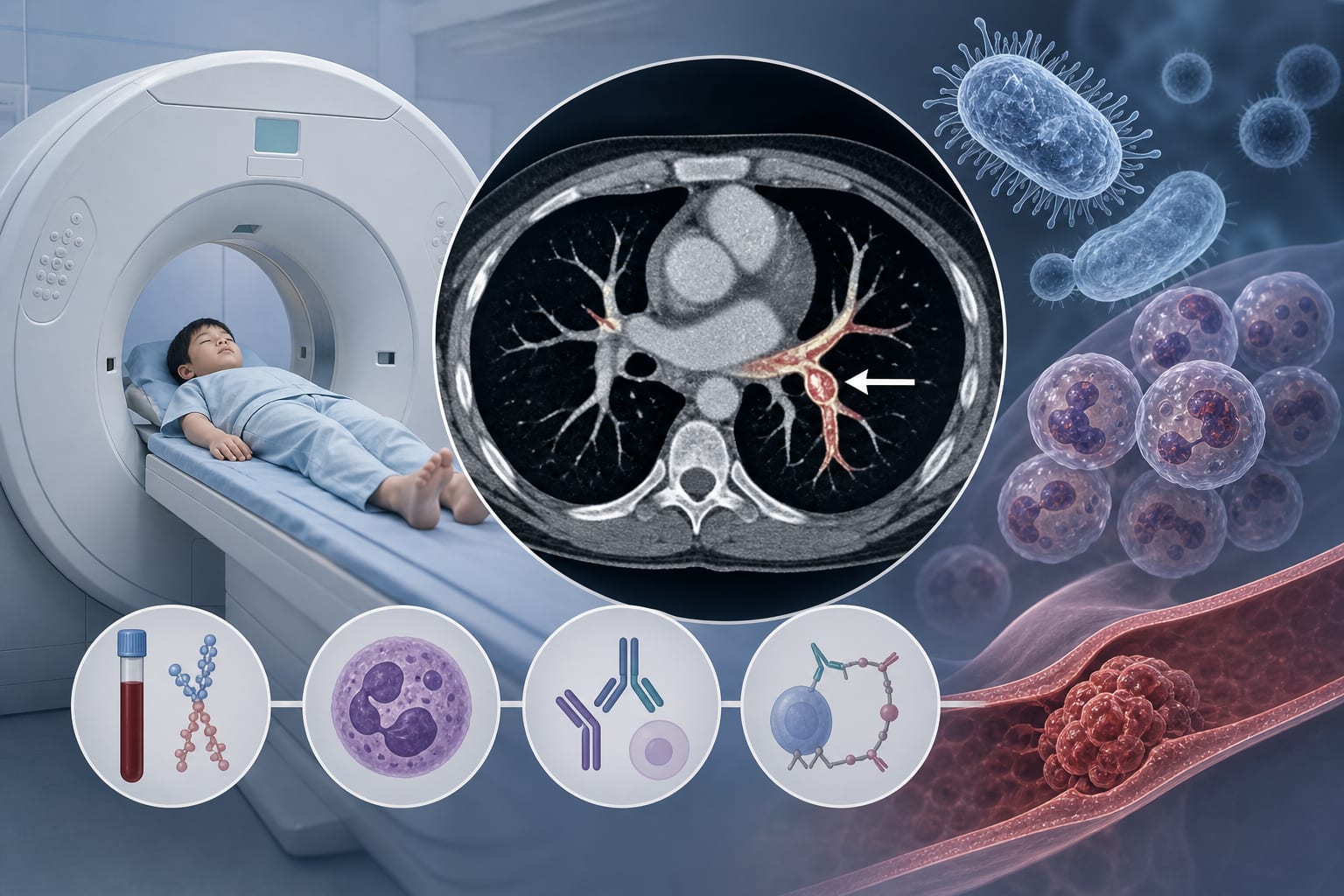
Clinical Scorecard: Identifying Risk Factors for Pulmonary Embolism in Pediatric Patients with Refractory Mycoplasma pneumoniae Pneumonia and High D-dimer Levels
At a Glance
Category
Detail
Condition
Pulmonary Embolism in Pediatric Patients with Refractory Mycoplasma pneumoniae Pneumonia
Key Mechanisms
Elevated D-dimer levels, neutrophil count, simultaneous positivity for lupus anticoagulant and antinuclear antibodies, left lower lobe consolidation
Target Population
Children diagnosed with Refractory Mycoplasma pneumoniae pneumonia
Care Setting
Pediatric hospitals in northern China
Key Highlights
49 out of 109 children with RMPP had pulmonary embolism (PE)
Higher neutrophil counts and D-dimer levels were associated with PE
Simultaneous positivity for lupus anticoagulant and antinuclear antibodies was more frequent in PE group
Left lower lobe consolidation was significantly associated with PE
CTPA is the gold standard for diagnosing PE
Guideline-Based Recommendations
Diagnosis
Use computed tomographic pulmonary angiography (CTPA) to confirm or exclude PE
Management
Monitor inflammatory markers and D-dimer levels in children with RMPP
Monitoring & Follow-up
Assess for clinical manifestations suggestive of PE in patients with elevated D-dimer
Risks
Invasive nature of CTPA and potential risks associated with its application in pediatric populations
Patient & Prescribing Data
Children under 14 years with refractory Mycoplasma pneumoniae pneumonia
Elevated D-dimer levels and inflammatory markers may indicate risk for PE
Clinical Best Practices
Standardize screening criteria for suspected PE across healthcare settings
Perform CTPA in children with RMPP and elevated D-dimer levels
Court-documented maltreatment was associated with small differences in GrimAge and DunedinPACE in sixth decade of life, but neither difference was statistically significant.
A literature review published in Future Cardiology suggests that providers should look beyond chronological age to various modifiable physiologic factors when planning a superior cavopulmonary connection (SCPC) procedure.