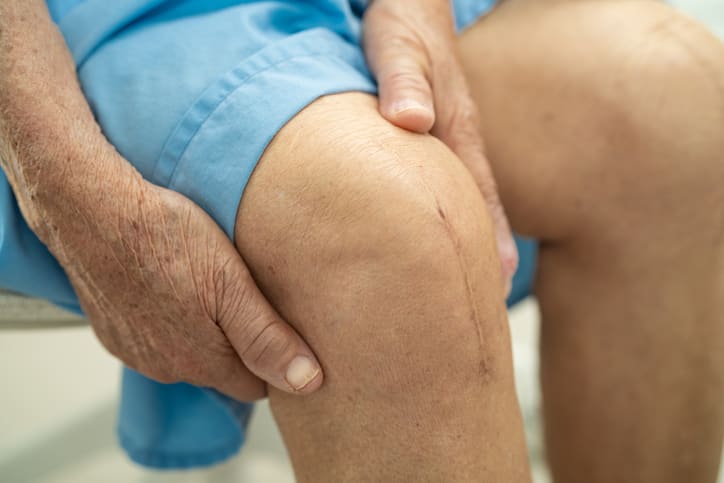
How does IBD relate to joint infection risk?
Investigators assessed 90-day outcomes among patients with IBD who underwent elective total joint arthroplasty.
By
Kathryn Wighton
August 31, 2026
Clinical Scorecard: How does IBD relate to joint infection risk?
At a Glance
Category Detail
Condition Inflammatory Bowel Disease (IBD) Key Mechanisms Increased risk of periprosthetic joint infection associated with Crohn's disease following total joint arthroplasty. Target Population Patients undergoing elective total hip or knee arthroplasty with a diagnosis of IBD. Care Setting Orthopaedic Surgery
Key Highlights
Crohn's disease linked to increased 90-day risk of periprosthetic joint infection post-arthroplasty. No increased risk of infection found in patients with ulcerative colitis. Study analyzed 10,040 patients with IBD and 70,203 matched controls. Increased risks of acute kidney injury, sepsis, and hospital readmission noted in IBD patients. Administrative coding may have limitations in accurately identifying infection types. Guideline-Based Recommendations
Diagnosis
Use International Classification of Diseases, 10th Revision for identifying periprosthetic joint infection. Management
Optimize patients with Crohn's disease prior to arthroplasty to minimize infection risk. Monitoring & Follow-up
Monitor for acute kidney injury, sepsis, and postoperative infections in IBD patients. Risks
Increased risk of periprosthetic joint infection in patients with Crohn's disease. Patient & Prescribing Data
Patients with inflammatory bowel disease undergoing elective arthroplasty.
Consideration of disease severity and medication use is important for optimizing surgical outcomes.
Clinical Best Practices
Carefully assess and optimize patients with Crohn's disease before joint surgery. Be aware of potential coding errors in administrative databases when evaluating infection risks. Related Resources & Content