Clinical Scorecard: Evaluating the Transition Between Complement Inhibitors in Paroxysmal Nocturnal Hemoglobinuria: A Study on Strategy, Effectiveness, and Safety
At a Glance
Category
Detail
Condition
Paroxysmal Nocturnal Hemoglobinuria (PNH)
Key Mechanisms
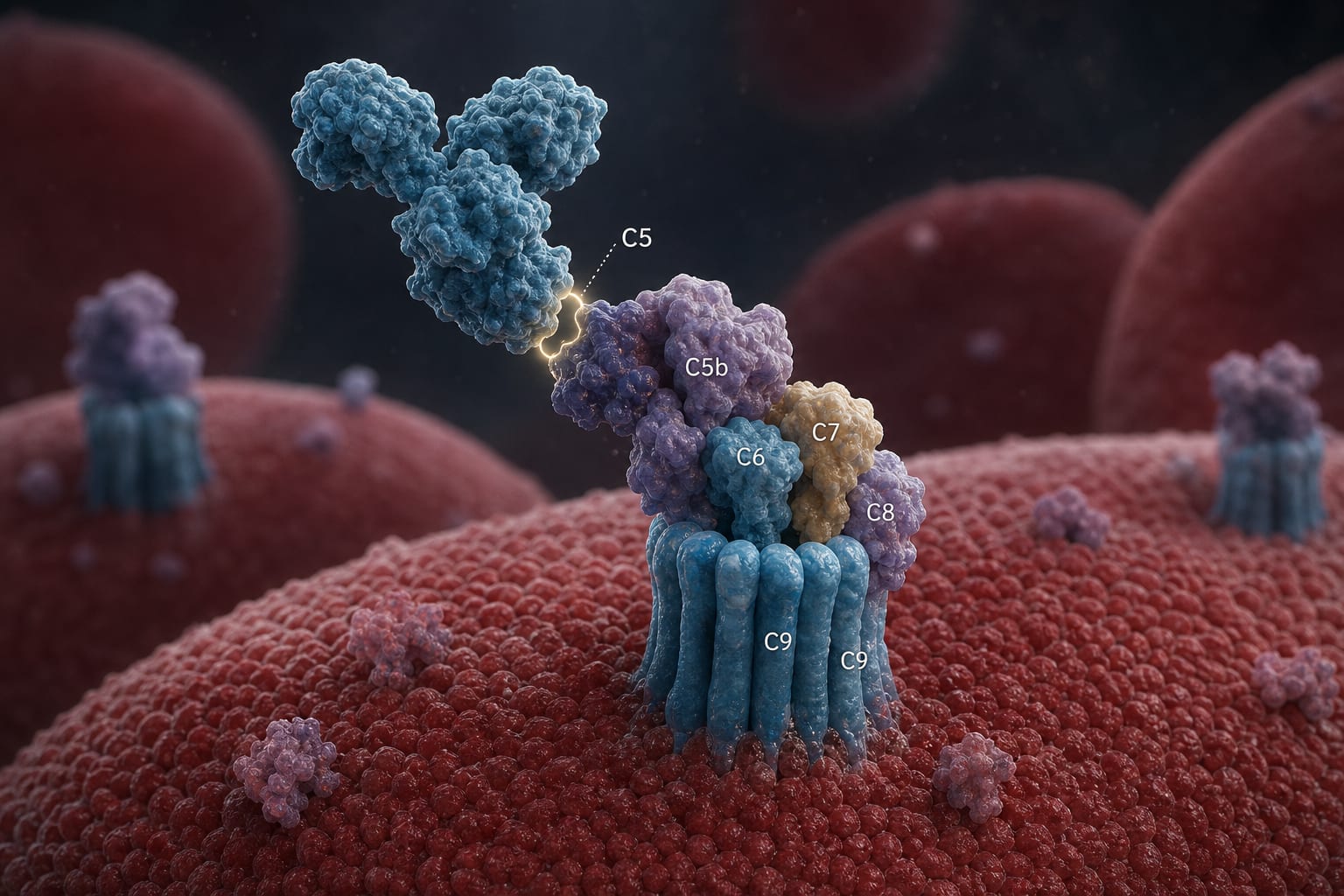
Acquired mutation in PIGA gene leading to uncontrolled complement activation and intravascular hemolysis.
Target Population
Patients aged 16 years and older diagnosed with PNH.
Care Setting
Clinical management of PNH with complement inhibitors.
Key Highlights
Three C5 inhibitors approved for PNH: eculizumab, ravulizumab, crovalimab.
Proximal inhibitors include pegcetacoplan, iptacopan, danicopan.
149 changes in complement inhibitors observed among 65 patients.
Breakthrough hemolysis occurred in 8.4% of patients within 14 days of switching.
Indications for switching include side effects, suboptimal response, and patient preference.
Guideline-Based Recommendations
Diagnosis
Diagnosis of PNH based on clinical symptoms and laboratory findings.
Management
Initiate complement inhibition for symptomatic hemolytic PNH and related complications.
Monitoring & Follow-up
Monitor for breakthrough hemolysis and transfusion requirements during treatment transitions.
Risks
Risk of extravascular hemolysis and breakthrough hemolysis during treatment changes.
Patient & Prescribing Data
Patients with PNH on complement inhibitors.
Switching strategies based on clinical trial protocols and patient-specific factors.
Clinical Best Practices
Follow clinical trial guidance for switching between complement inhibitors.
Ensure treatment overlap when transitioning from terminal to proximal inhibitors.
Monitor lactate dehydrogenase levels to assess for breakthrough hemolysis.
by Morag Griffin, Bruno Fattizzo, Jong Wook Lee, Richard J. Kelly, Roochi Trikha, Yasutaka Ueda, Jun-ichi Nishimura, Christopher J. Patriquin, Alexander Röth, Petra Muus, Jens Panse, Miguel Gómez Álvarez, Alexandra Pike, Talha Munir, Shreyans Gandhi, Austin Kulasekararaj