Impairment of T cell Function in Chronic Parasitic Infections
-
By
-
Ge Gao
-
Hao Wang
-
Rafeezul Mohamed
-
Yinming Liang
-
September 4, 2026
Clinical Scorecard: Impairment of T cell Function in Chronic Parasitic Infections
At a Glance
| Category | Detail |
|---|
| Condition | Chronic Parasitic Infections |
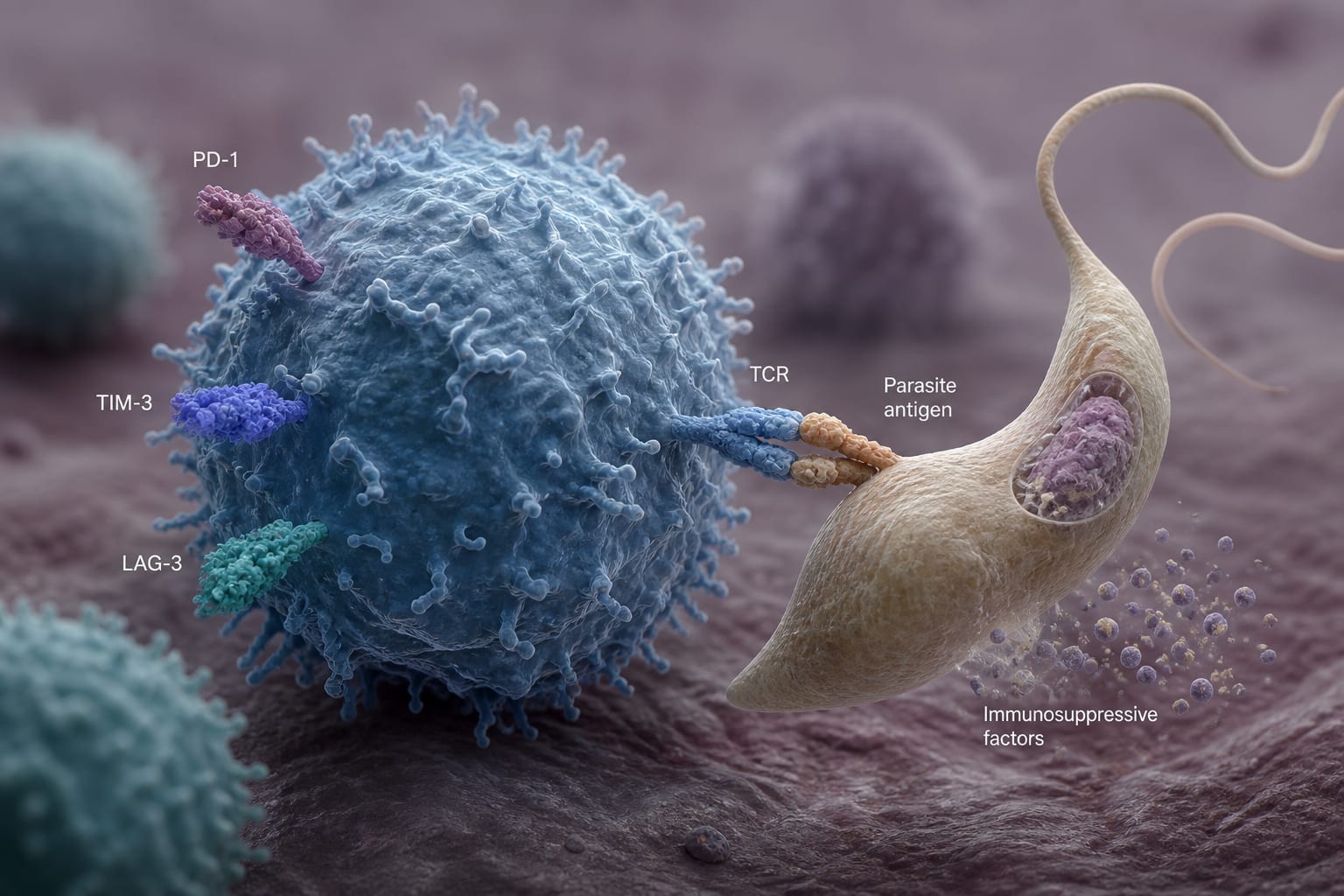
| Key Mechanisms | T cell exhaustion due to sustained antigenic stimulation and increased expression of inhibitory receptors. |
| Target Population | Individuals with chronic parasitic infections. |
| Care Setting | Immunotherapy research and clinical settings. |
Key Highlights
- T cell exhaustion is characterized by progressive functional impairment.
- Exhausted T cells exhibit increased expression of inhibitory receptors.
- The loss of effector functions in CD8+ T cells occurs hierarchically.
- Distinct mechanisms of T cell exhaustion are observed in parasitic infections compared to viral infections.
- Therapeutic interventions may be more effective before T cell dysfunction becomes irreversible.
Guideline-Based Recommendations
Diagnosis
- Identify T cell exhaustion through assessment of functional capabilities and inhibitory receptor expression.
Management
- Consider immunotherapies targeting exhausted T cells as a potential treatment strategy.
Monitoring & Follow-up
- Monitor T cell functionality and expression of inhibitory receptors over time.
Risks
- Increased risk of immunopathology due to persistent T cell exhaustion.
Patient & Prescribing Data
Patients with chronic parasitic infections exhibiting T cell exhaustion.
Immunotherapies may reverse T cell exhaustion by targeting inhibitory receptors.
Clinical Best Practices
- Early intervention in T cell exhaustion may prevent irreversible dysfunction.
- Regular assessment of T cell functionality is essential in managing chronic infections.
Related Resources & Content