Perioperative Outcomes of Robot-Assisted versus Video-Assisted Thoracoscopic Surgery for Non-Small Cell Lung Cancer: A Meta-Analysis Focusing on Real-World Clinical Studies in the Past 10 Years - Scorecard - MDSpire
Advertisement
Perioperative Outcomes of Robot-Assisted versus Video-Assisted Thoracoscopic Surgery for Non-Small Cell Lung Cancer: A Meta-Analysis Focusing on Real-World Clinical Studies in the Past 10 Years
Clinical Scorecard: Comparative Analysis of Perioperative Outcomes in Robot-Assisted and Video-Assisted Thoracoscopic Surgery for Non-Small Cell Lung Cancer
At a Glance
Category
Detail
Condition
Non-Small Cell Lung Cancer (NSCLC)
Key Mechanisms
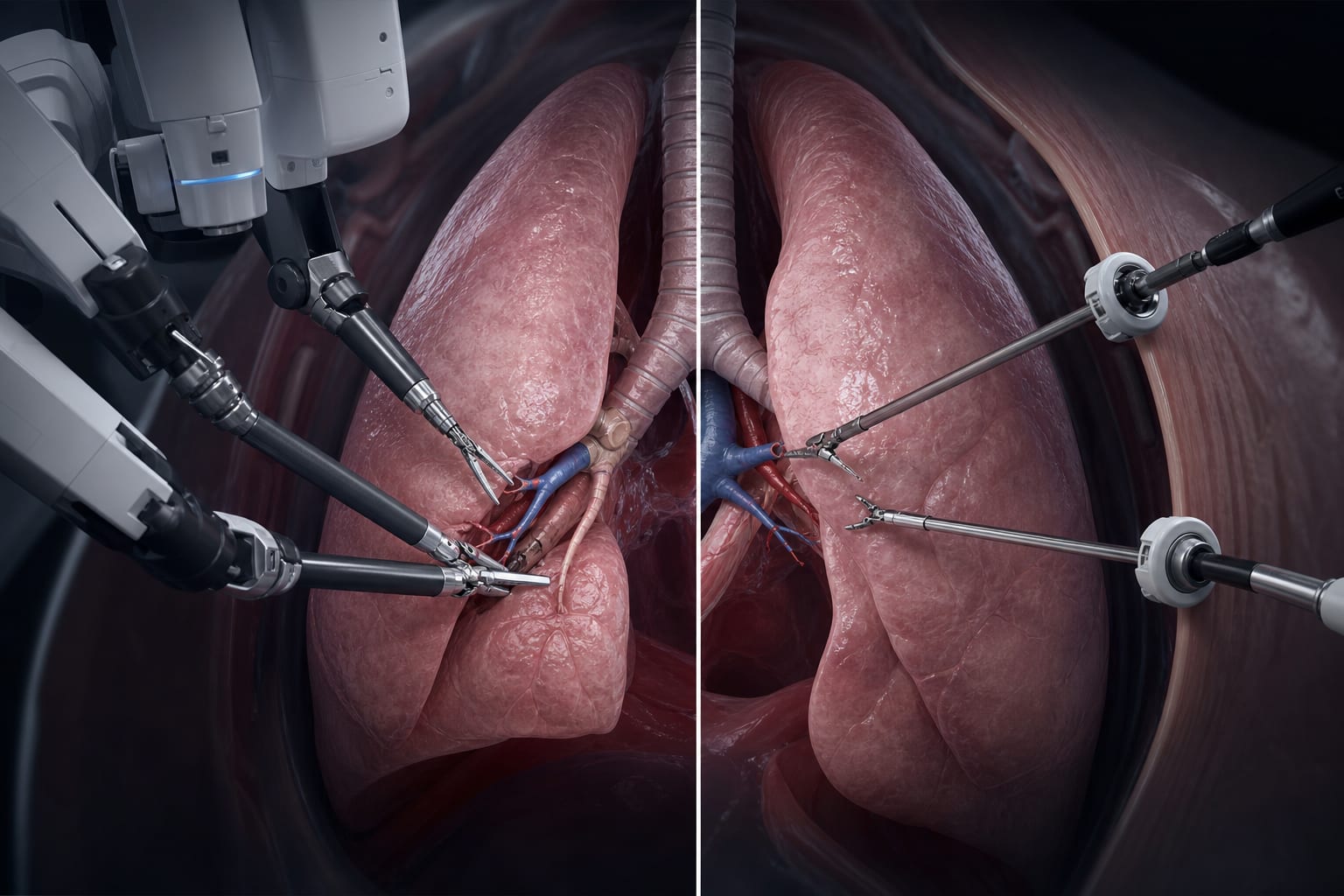
Minimally invasive lobectomy via RATS and VATS
Target Population
Patients with early-stage NSCLC
Care Setting
Real-world clinical practice
Key Highlights
RATS and VATS show comparable perioperative safety and short-term outcomes.
RATS yields a higher lymph node retrieval compared to VATS.
Operative time and postoperative length of stay are shorter with RATS in lobectomy cases.
Study quality assessed using the Newcastle–Ottawa Scale.
Meta-analysis based on real-world clinical studies, excluding database analyses.
Guideline-Based Recommendations
Diagnosis
Utilize imaging and biopsy for NSCLC diagnosis.
Management
Consider RATS for patients prioritizing lymph node yield.
Monitoring & Follow-up
Monitor postoperative complications and recovery metrics.
Risks
Evaluate risks associated with both RATS and VATS procedures.
Patient & Prescribing Data
Patients diagnosed with early-stage NSCLC undergoing lobectomy.
RATS may be preferred for improved lymph node retrieval.
Clinical Best Practices
Assess individual patient needs when choosing between RATS and VATS.
Ensure thorough preoperative evaluation and planning.