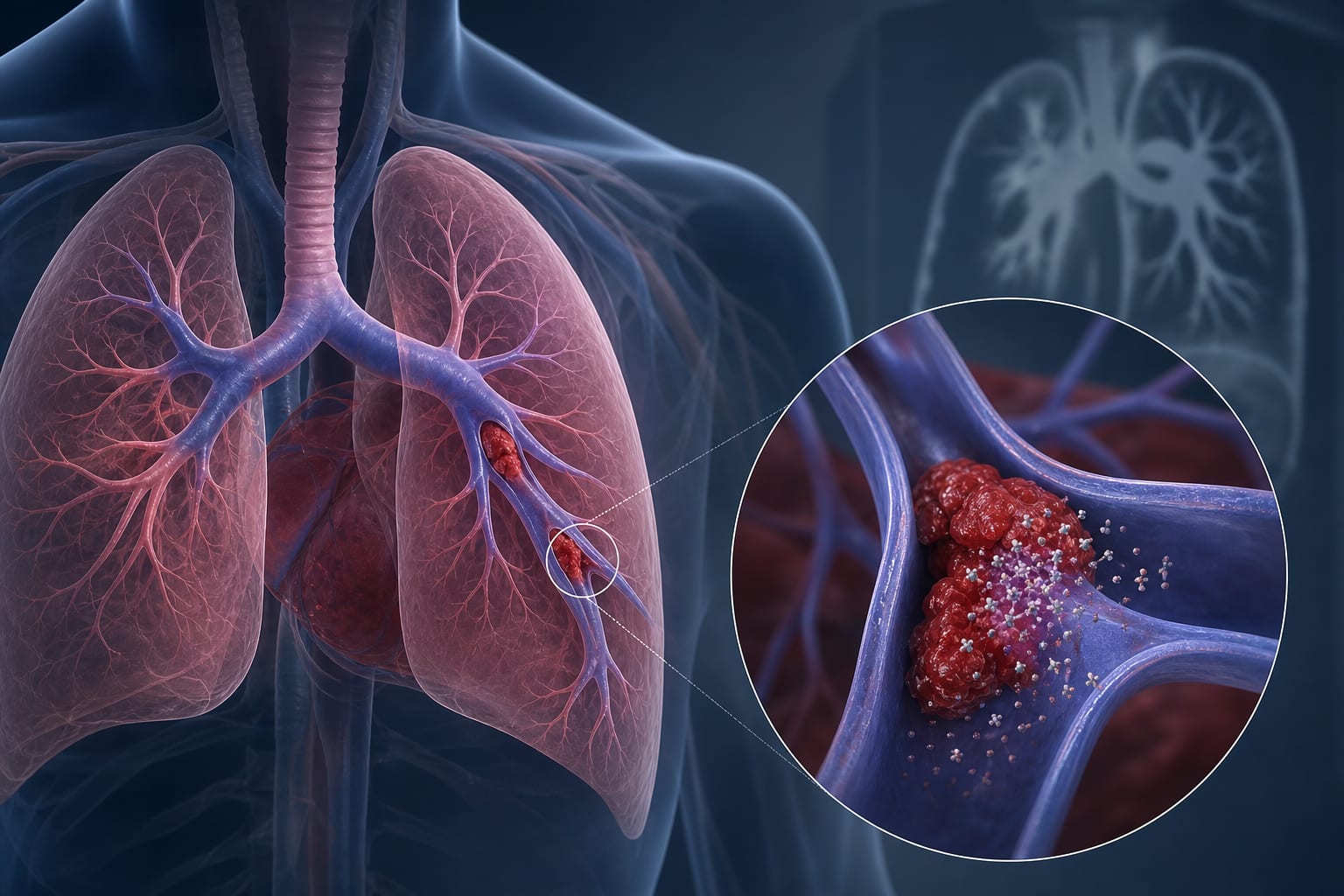
Efficacy and safety of low-dose thrombolysis in acute intermediate-high risk pulmonary thromboembolism complicated by PaO2/FiO2 < 300
By
Lei Liu
Congcong Li
Liang Shi
Debin Ma
Zhiyuan Zhang
Hongzhu Bao
Chunhua Li
Li Li
Min Wang
Zhuang Ma
Junli Zhang
July 9, 2026
Clinical Scorecard: Assessment of Low-Dose Thrombolysis Efficacy and Safety in Acute Intermediate-High Risk Pulmonary Thromboembolism with PaO2/FiO2 Ratio Below 300
At a Glance
Category Detail
Condition Acute Intermediate-High Risk Pulmonary Thromboembolism Key Mechanisms Thrombolysis with alteplase to improve oxygenation and reduce mPAP. Target Population Patients with acute intermediate-high-risk PTE and PaO2/FiO2 ratio < 300 mmHg. Care Setting Department of Respiratory and Critical Care Medicine
Key Highlights
Low-dose alteplase showed similar efficacy to conventional-dose in improving PaO2/FiO2 ratio. No major bleeding events were reported; minor bleeding was lower in the low-dose group. NT-proBNP levels decreased significantly in thrombolysis groups compared to LMWH. mPAP was significantly lower in thrombolysis groups at 24 h and 7 days. Further large-sample studies are needed to confirm findings. Guideline-Based Recommendations
Diagnosis
Diagnosis confirmed by computed tomography pulmonary angiography. Management
Anticoagulation is recommended as initial treatment; thrombolysis remains controversial. Monitoring & Follow-up
Monitor PaO2/FiO2 ratio, NT-proBNP, and mPAP at specified intervals. Risks
Monitor for hemodynamic decompensation and bleeding events. Patient & Prescribing Data
96 patients with acute intermediate-high-risk PTE.
Low-dose thrombolysis may reduce minor bleeding without compromising efficacy.
Clinical Best Practices
Consider low-dose thrombolysis for patients with acute intermediate-high-risk PTE and low PaO2/FiO2 ratio. Regularly assess hemodynamic status and oxygenation in patients receiving thrombolysis. Related Resources & Content