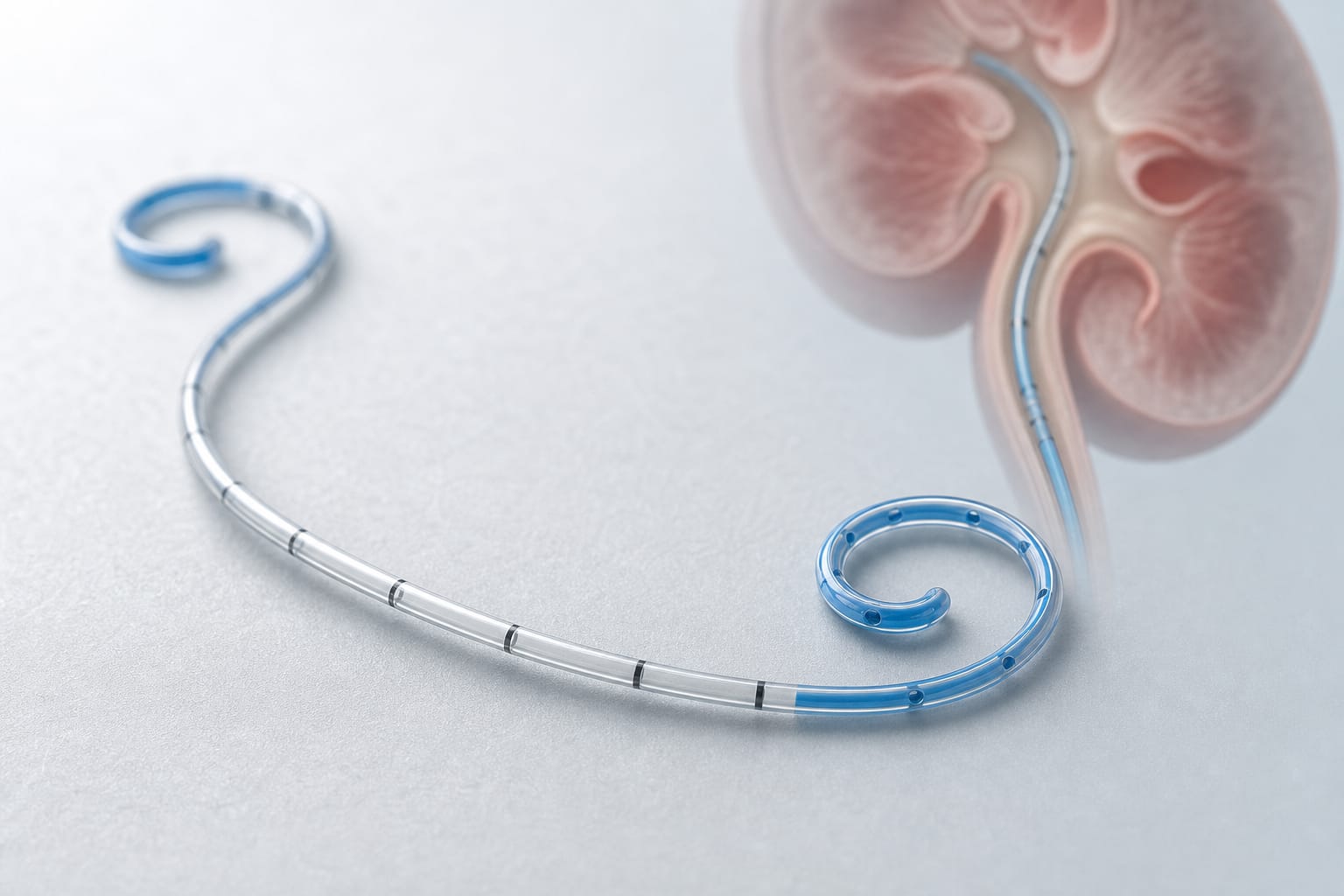
Comprehensive survey on urological stent practices by the European Association of Urology (EAU) Endourology
-
By
-
Burak Akgul
-
Selcuk Guven
-
Gernot Ortner
-
Hakan Akdere
-
Bhaskar Somani
-
Vineet Gauhar
-
Steffi Kar Kei Yuen
-
Panagiotis Kallidonis
-
Thomas RW Herrmann
-
Udo Nagele
-
Theodoros Tokas
-
July 19, 2026
Clinical Scorecard: In-Depth Analysis of Urological Stenting Practices by the European Association of Urology (EAU) Endourology
At a Glance
| Category | Detail |
|---|
| Condition | Ureteral Stenting Practices |
| Key Mechanisms | Stent-related symptoms and complications such as infection and encrustation. |
| Target Population | Endourology patients undergoing ureteroscopy (URS). |
| Care Setting | Endourological practice. |
Key Highlights
- Up to 80% of patients experience stent-related symptoms.
- Routine stenting after uncomplicated URS is controversial but commonly practiced.
- Standardized assessment tools like the Ureteral Stent Symptom Questionnaire (USSQ) are rarely used.
- Optimal stent characteristics remain poorly defined.
- Patient safety concerns exist regarding delayed removal and follow-up.
Guideline-Based Recommendations
Diagnosis
- Routine stenting may be avoided in selected cases after uncomplicated URS.
Management
- Consideration of stent characteristics such as size, material, and duration.
Monitoring & Follow-up
- Follow-up systems should be improved to ensure timely stent removal.
Risks
- Complications include infection and encrustation, particularly with prolonged dwell time.
Patient & Prescribing Data
Patients undergoing ureteroscopy (URS) in endourology.
Polyurethane stents are most commonly used, with 6 Fr being the preferred size.
Clinical Best Practices
- Evaluate the necessity of stenting on a case-by-case basis.
- Utilize standardized assessment tools for symptom management.
- Ensure timely removal of stents to minimize complications.
Related Resources & Content