Effectiveness and safety of Guipi Mixture for the treatment of premature ventricular contractions (heart-spleen deficiency syndrome): study protocol for a randomized, double-blind, placebo-controlled, multicentre trial - Scorecard - MDSpire
Conexiant’s news site is now MDSpire News. Learn more
Advertisement
Efficacy and Safety of Guipi Mixture in Treating Premature Ventricular Contractions Associated with Heart-Spleen Deficiency Syndrome: A Protocol for a Randomized, Double-Blind, Placebo-Controlled Multicenter Trial
Clinical Scorecard: Efficacy and Safety of Guipi Mixture in Treating Premature Ventricular Contractions Associated with Heart-Spleen Deficiency Syndrome: A Protocol for a Randomized, Double-Blind, Placebo-Controlled Multicenter Trial
At a Glance
Category
Detail
Condition
Premature Ventricular Contractions (PVCs)
Key Mechanisms
Combination of Guipi Mixture and metoprolol targeting heart-spleen deficiency syndrome.
Target Population
Patients with PVCs associated with heart-spleen deficiency syndrome.
Care Setting
Multicenter trial across 18 hospitals in China.
Key Highlights
PVCs are common arrhythmias that can lead to serious cardiovascular risks.
Current treatments include pharmacotherapy and catheter ablation.
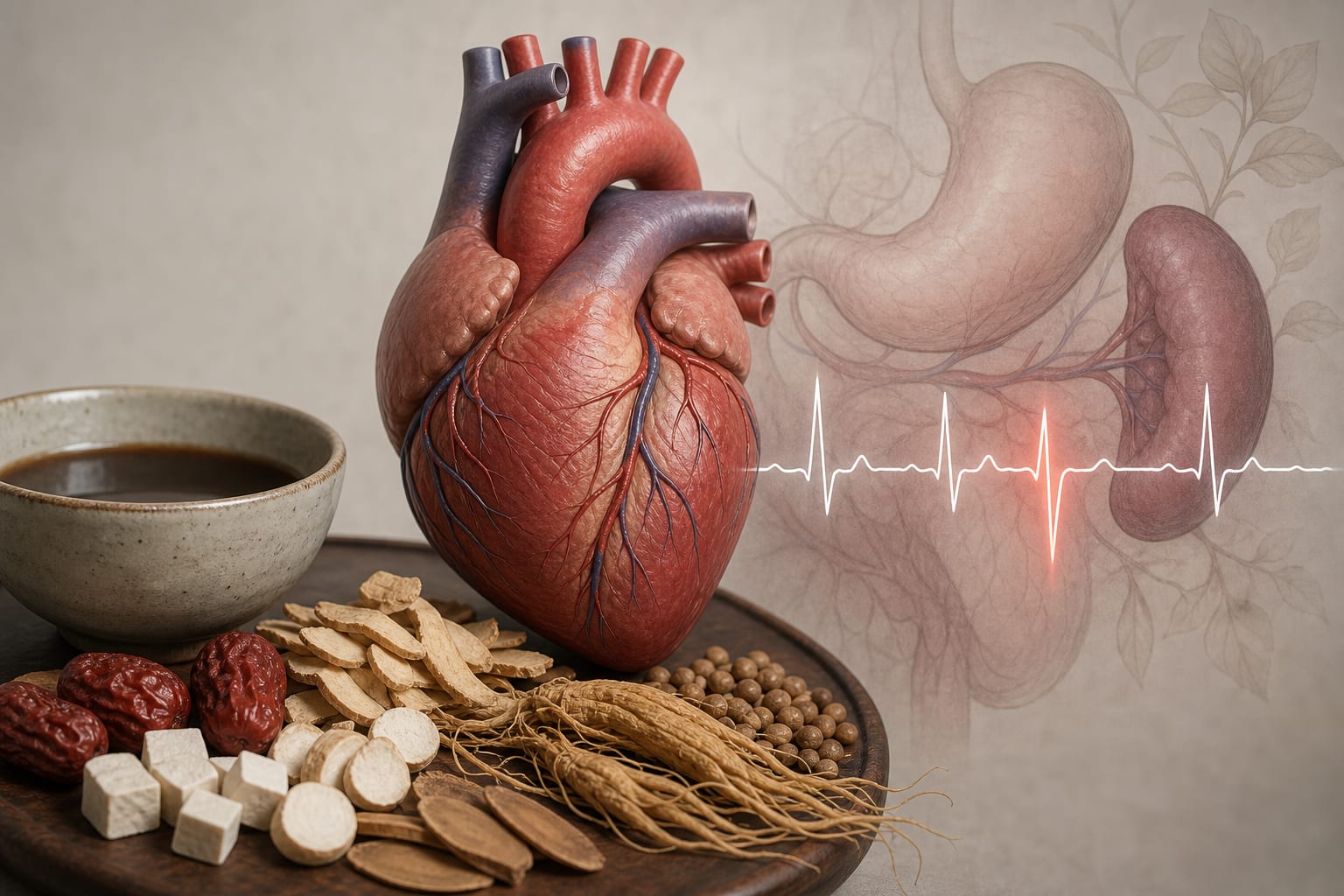
Guipi Mixture is a TCM preparation aimed at treating heart-spleen deficiency syndrome.
The study evaluates the efficacy and safety of Guipi Mixture combined with metoprolol.
Primary outcome is the change in 24-hour PVC count measured by ambulatory ECG.
Guideline-Based Recommendations
Diagnosis
Diagnosis of PVCs based on clinical evaluation and ECG findings.
Management
Use of metoprolol and other pharmacotherapies as first-line treatments.
Monitoring & Follow-up
Monitoring of PVC counts and patient-reported outcomes during the trial.
Risks
Potential long-term cardiovascular adverse effects from conventional pharmacotherapy.
Patient & Prescribing Data
200 eligible subjects with PVCs.
Combination therapy of Guipi Mixture and metoprolol may enhance treatment efficacy.
Clinical Best Practices
Adopt a holistic approach in treating PVCs, considering both TCM and Western medicine.
Monitor patients for adverse effects during treatment.
Surgeons from around the world came to the Baptist Health Education Center this week to learn from Baptist Health Heart & Vascular Care experts as part of the International Society for Minimally Invasive Cardiothoracic Surgery (ISMICS) annual meeting
Narrative review describes how physiologic stressors accumulate from induction through postintubation care and may contribute to cardiovascular deterioration during airway management.