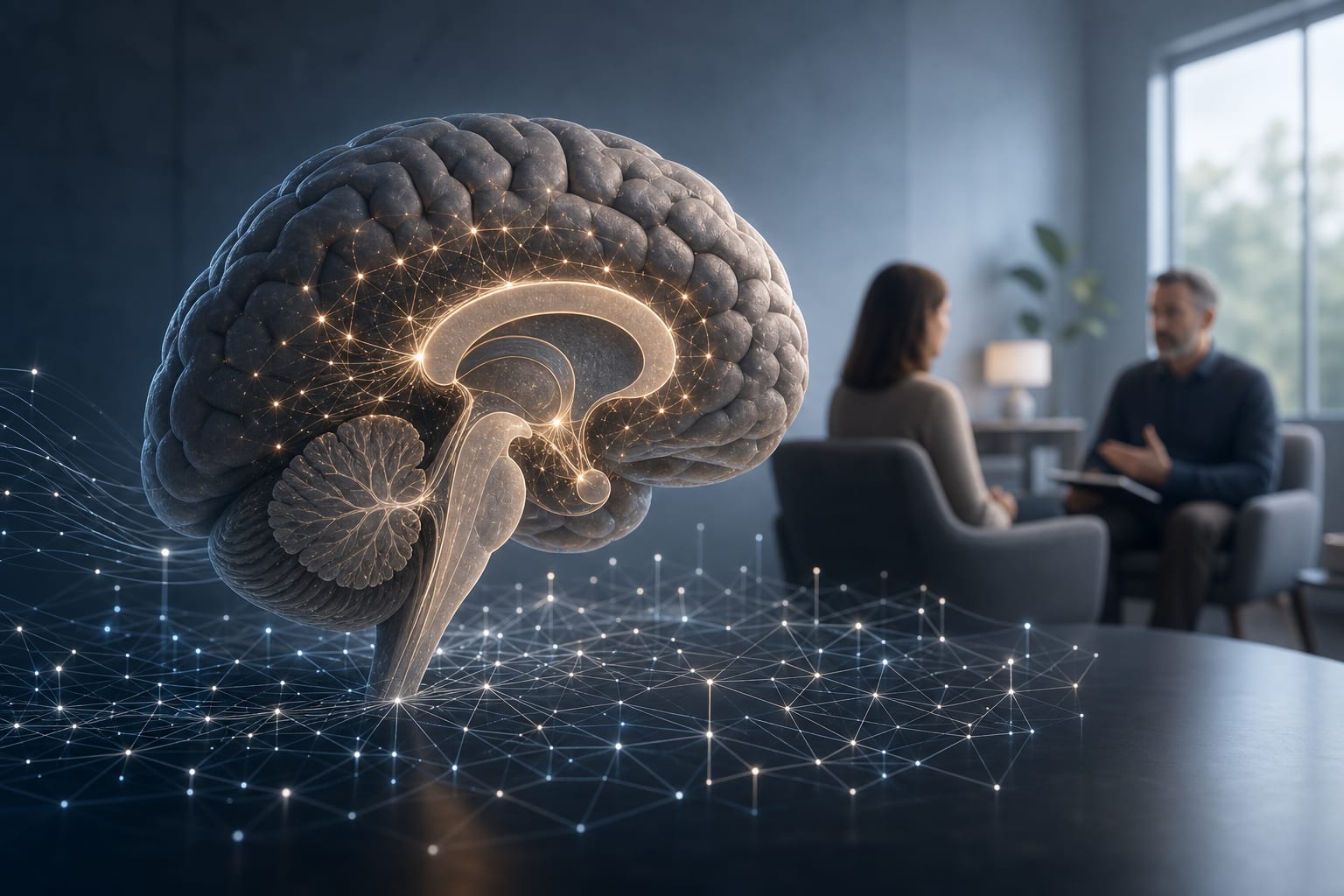
Augmenting neurocounseling in addiction recovery with intelligent systems: a roadmap for research and practice
-
By
-
Christopher Ashton
-
Denise Duffie
-
June 10, 2026
-
Clinical Scorecard: Enhancing Addiction Recovery Through Neurocounseling and Intelligent Systems: A Research and Practice Framework
At a Glance
| Category | Detail |
|---|
| Condition | |
| Key Mechanisms | Neuroscience-informed counseling, acceptance, and unmanageability |
| Target Population | |
| Care Setting | Community and counseling resources |
Key Highlights
- Neurocounseling integrates neuroscience with counseling methodologies.
- Understanding neurobiology aids in managing addiction and recovery.
- Acceptance and unmanageability are key indices for recovery progress.
Guideline-Based Recommendations
Diagnosis
- Utilize DSM-5-TR criteria for sustained remission assessment.
Management
- Incorporate neuroscience knowledge into counseling practices.
Monitoring & Follow-up
- Employ scales to assess acceptance and unmanageability.
Risks
- Relapse remains common; overdose risk is significant.
Patient & Prescribing Data
Individuals experiencing substance use disorder and seeking recovery.
Neurocounseling can enhance the effectiveness of traditional recovery methods.
Clinical Best Practices
- Integrate AI tools to personalize and enhance counseling.
- Focus on the biological, psychological, social, and spiritual aspects of recovery.
Related Resources & Content