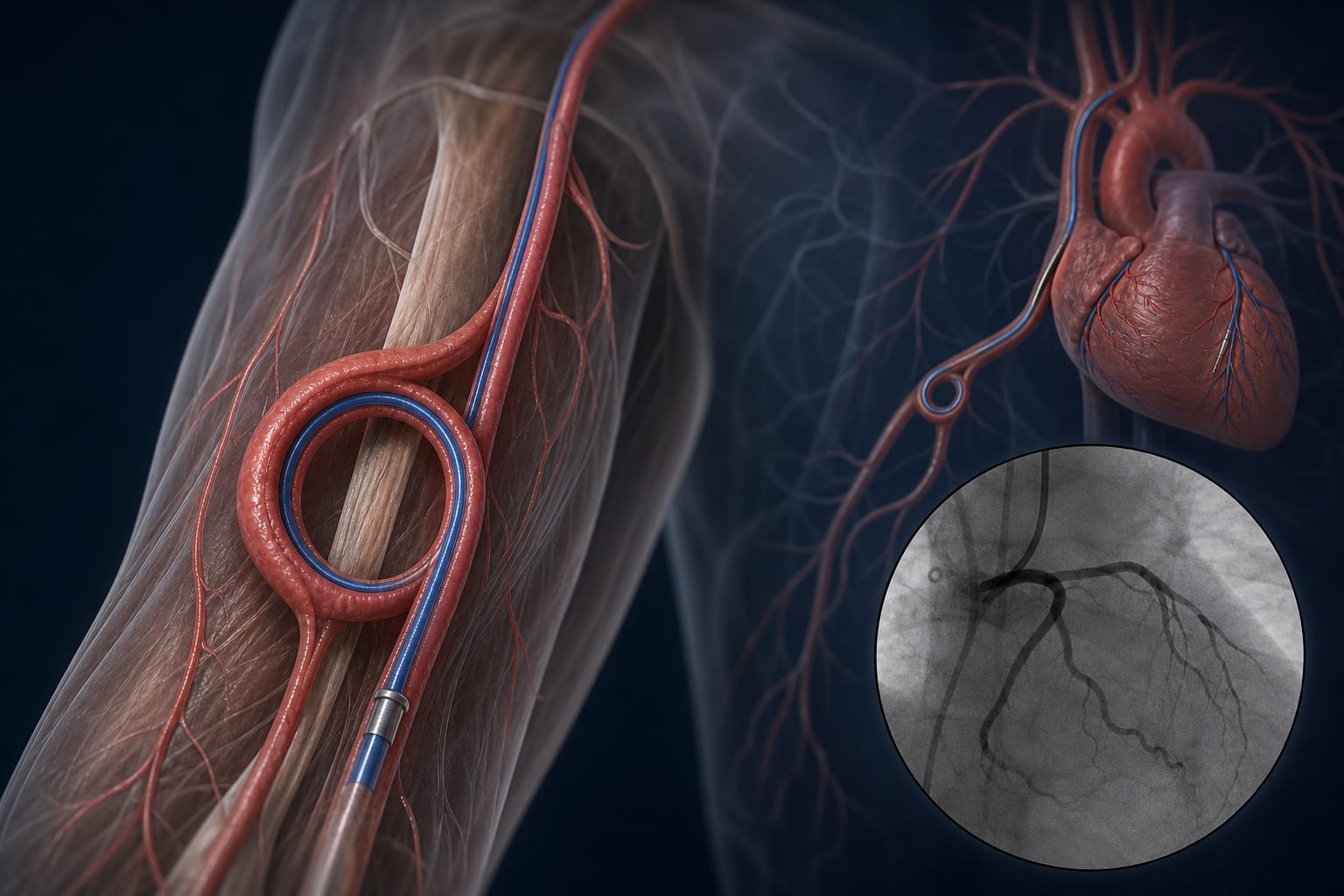
Case Study: Beyond Simple Traversal - Achieving Functional Access in an Extreme Brachial Artery Loop During Primary PCI
By
Ali Hakan Konuş
Recep Polat
July 16, 2026
Clinical Scorecard: Case Study: Beyond Simple Traversal - Achieving Functional Access in an Extreme Brachial Artery Loop During Primary PCI
At a Glance
Category Detail
Condition Acute inferior ST-elevation myocardial infarction Key Mechanisms Distinction between successful traversal and functional access in tortuous arterial anatomy Target Population Patients undergoing primary PCI with extreme upper-limb arterial tortuosity Care Setting Catheterization laboratory
Key Highlights
Successful guidewire traversal does not guarantee functional access. Geometric correction is essential for effective catheter performance. A structured escalation strategy can restore functional access. Primary PCI was completed with a door-to-balloon time of 36 minutes. Correctability-focused approach enhances procedural success in tortuous anatomy. Guideline-Based Recommendations
Diagnosis
Electrocardiography to confirm ST-segment elevation in inferior leads. Management
Initiate dual antiplatelet therapy and anticoagulation in the emergency department. Monitoring & Follow-up
Continuous fluoroscopic guidance during catheter manipulation. Risks
Inadequate catheter support and ineffective torque transmission due to extreme tortuosity. Patient & Prescribing Data
73-year-old woman with type 2 diabetes, hypertension, and coronary artery disease.
Loading doses of aspirin 300 mg and ticagrelor 180 mg were administered.
Clinical Best Practices
Assess for bilateral radial artery patency prior to access. Utilize a correctability-oriented framework for managing arterial tortuosity. Consider sequential exchange to higher-support guidewires for effective loop straightening. Related Resources & Content