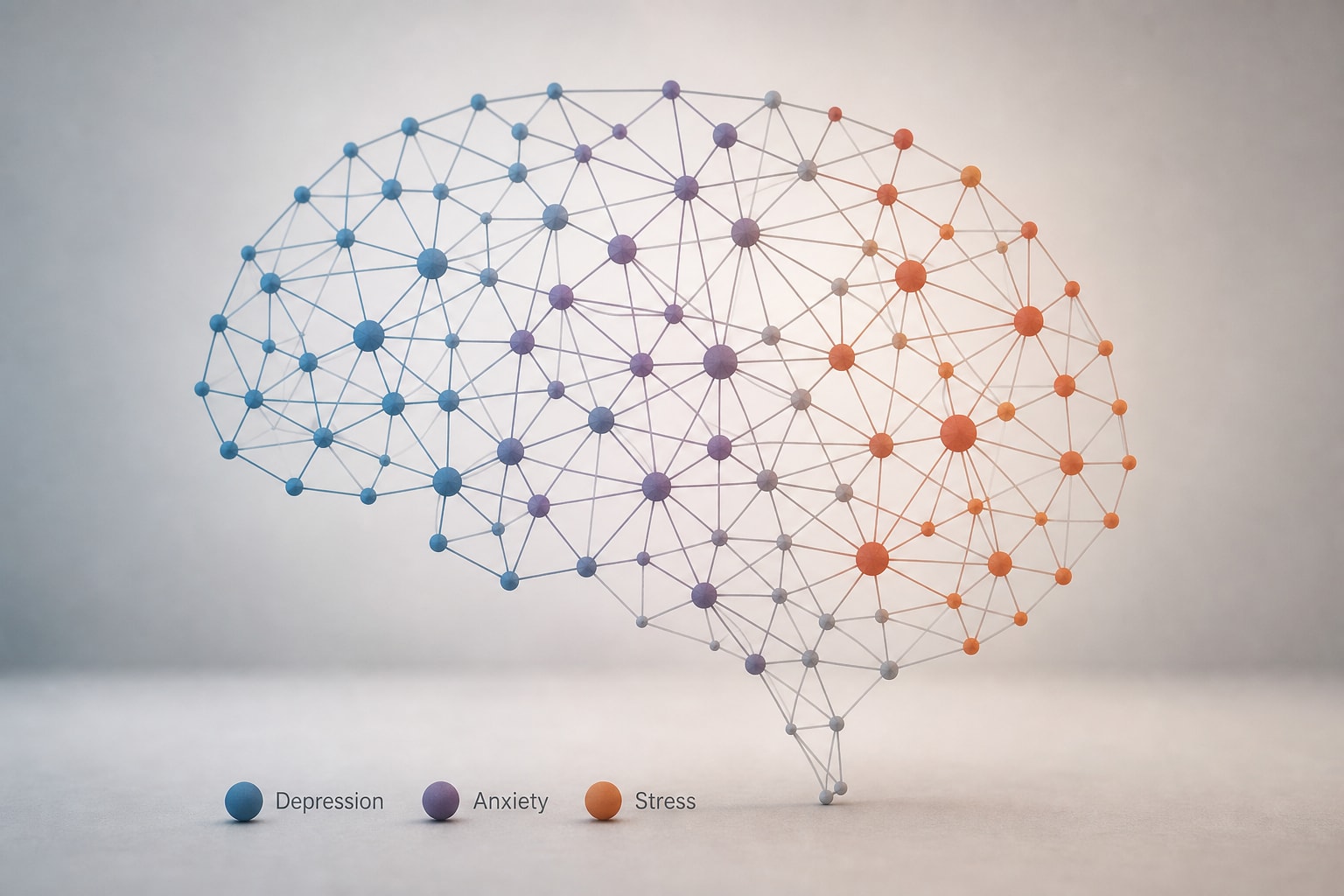
Network structure analysis of depression, anxiety, and stress symptoms among college students: identification of central and bridge symptoms - Scorecard - MDSpire
Advertisement
Network structure analysis of depression, anxiety, and stress symptoms among college students: identification of central and bridge symptoms
Clinical Scorecard: Analysis of Network Structures Relating to Depression, Anxiety, and Stress Symptoms in College Students: Identifying Key and Transitional Symptoms
At a Glance
Category
Detail
Condition
Key Mechanisms
Network analysis to examine interrelationships among symptoms (source needed)
Target Population
Care Setting
University mental health services (source needed)
Key Highlights
High prevalence of depression (9.8%) and anxiety (15.5%) among college students (source needed)
Central symptoms identified: feeling of panic, difficulty relaxing, feeling scared without reason (source needed)
Bridge symptoms connecting dimensions: nervous tension, feeling of panic, feeling downhearted and blue (source needed)
Network analysis provides insights into comorbidity and symptom interactions (source needed)
Guideline-Based Recommendations
Diagnosis
Utilize the Depression Anxiety Stress Scale-21 (DASS-21) for assessment (source needed)
Management
Focus on central and bridge symptoms for intervention strategies (source needed)
Monitoring & Follow-up
Regularly assess symptom interrelationships and changes over time (source needed)
Risks
Comorbidity associated with academic impairment, interpersonal issues, and increased suicide risk (source needed)
Patient & Prescribing Data
Chinese college students experiencing mental health issues
Target central and bridge symptoms for effective interventions
Clinical Best Practices
Implement network analysis in understanding symptom interactions (source needed)
Adopt transdiagnostic approaches in treatment planning (source needed)
Monitor symptom evolution and interconnections regularly (source needed)
Patients with preoperative vitamin D deficiency had higher postoperative pain scores and opioid use after mastectomy, including more than triple the odds of moderate to severe pain within 24 hours of surgery.