The clinical efficacy analysis of ultrasound-assisted minimally invasive treatment for Jakob Type II humeral lateral condyle fractures in children - Scorecard - MDSpire
Advertisement
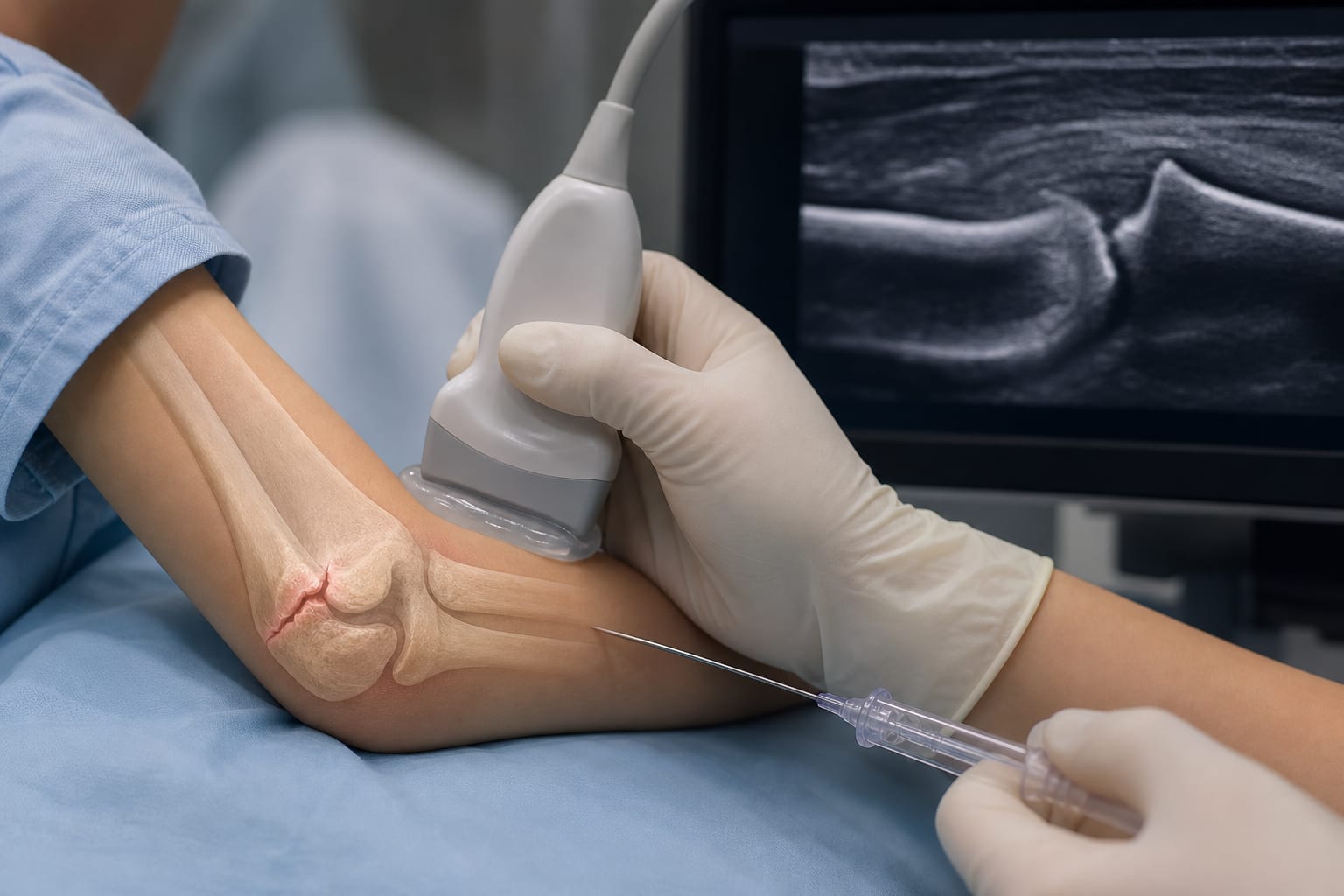
The clinical efficacy analysis of ultrasound-assisted minimally invasive treatment for Jakob Type II humeral lateral condyle fractures in children
Clinical Scorecard: Evaluating the Clinical Effectiveness of Ultrasound-Guided Minimally Invasive Techniques for Treating Jakob Type II Humeral Lateral Condyle Fractures in Pediatric Patients
At a Glance
Category
Detail
Condition
Key Mechanisms
Ultrasound-assisted closed reduction and internal fixation versus open reduction and percutaneous pin fixation (as per study findings)
Target Population
Care Setting
Key Highlights
57 pediatric patients included in the study
No significant differences in demographics or complications between treatment groups
Surgical time and hospital stay were shorter in the UA-CRPP group (P < 0.05)
Radiological union time of fracture was shorter in the UA-CRPP group (P < 0.05)
No cases of nonunion, refracture, or nerve injury observed
Guideline-Based Recommendations
Diagnosis
Diagnosis confirmed through x-rays or CT scans
Management
Ultrasound-assisted closed reduction and internal fixation is supported by study findings
Monitoring & Follow-up
Regular follow-up to assess fracture healing and complications
Risks
Potential complications include pin tract infection, deep infection, and intraoperative blood loss
Patient & Prescribing Data
Children diagnosed with Jakob Type II humeral lateral condyle fractures
Insights based on study findings
Clinical Best Practices
Utilize ultrasound for real-time imaging during fracture assessment (as per study findings)
Ensure consistent training for personnel performing ultrasound evaluations (as per study findings)
Consider patient-specific factors when selecting treatment approach (as per study findings)