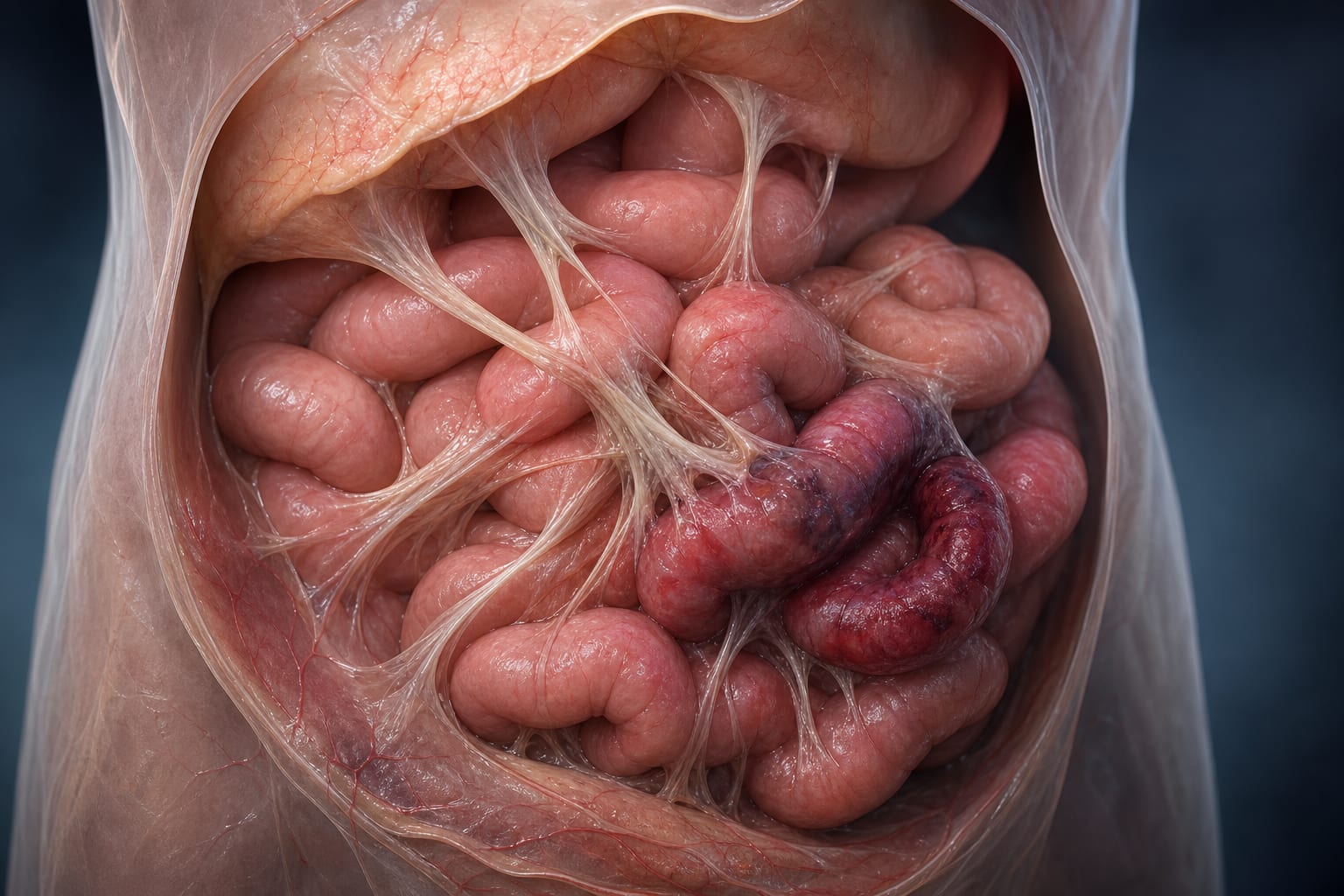
Laparoscopic and open feeding jejunostomy in upper gastrointestinal pathology: a single-centre cohort study - Scorecard - MDSpire
Advertisement
Comparative Analysis of Laparoscopic Versus Open Feeding Jejunostomy in Patients with Upper Gastrointestinal Disorders: A Cohort Study from a Single Institution
Clinical Scorecard: Comparative Analysis of Laparoscopic Versus Open Feeding Jejunostomy in Patients with Upper Gastrointestinal Disorders: A Cohort Study from a Single Institution
Dysphagia, tumour obstruction, systemic inflammation, cancer cachexia leading to malnutrition and weight loss
Target Population
Adult patients requiring enteral nutritional support due to inadequate or contraindicated oral intake in upper GI disorders
Care Setting
Tertiary upper gastrointestinal referral centre with elective and emergency surgical contexts
Key Highlights
Feeding jejunostomy (FJ) provides reliable medium- to long-term enteral access preserving gut integrity and reducing infectious risks compared to parenteral nutrition.
Laparoscopic feeding jejunostomy (LFJ) is associated with reduced morbidity and shorter hospital stay but is technically demanding with variable operative techniques.
This study compares standardized laparoscopic versus open FJ approaches regarding safety, postoperative complications, and operative context in a large cohort.
Guideline-Based Recommendations
Diagnosis
Identify patients with upper GI pathology causing inadequate oral intake or contraindications to gastrostomy.
Assess nutritional status and need for enteral access prior to oncological treatment or major surgery.
Management
Consider feeding jejunostomy for medium- to long-term enteral nutrition in patients undergoing neoadjuvant therapy, major upper GI resections, or acute upper GI conditions.
Use standardized surgical techniques for both laparoscopic and open FJ to optimize outcomes.
Select jejunal loop without tension, create antimesenteric enterotomy, construct Witzel tunnel, and secure with anti-torque sutures.
Monitoring & Follow-up
Confirm tube position and patency intraoperatively (laparoscopically or visually).
Monitor for postoperative complications graded by Clavien–Dindo classification.
Maintain feeding tube until oral intake is established and dietitian review is completed.
Remove jejunostomy tubes electively in outpatient setting under local anesthesia if required.
Risks
Postoperative pain, wound-related complications, and prolonged recovery are more common with open FJ.
Laparoscopic FJ carries technical challenges and variable complication rates depending on technique.
Potential risks include tube rotation, volvulus, and procedure-related morbidity.
Patient & Prescribing Data
Adults with upper GI malignancy or acute pathology requiring enteral feeding access
Standardized laparoscopic FJ may reduce morbidity and hospital stay compared to open FJ, but requires surgical expertise; feeding tubes remain until oral intake recovery.
Clinical Best Practices
Perform FJ insertion under consultant supervision with trainee involvement as appropriate.
Use Mic® Surgical Jejunostomy Set ENFit® tubes with Witzel tunnel construction and anti-torque sutures to minimize complications.
Tailor laparoscopic port placement to procedural context, especially when combined with other surgeries.
Confirm tube patency intraoperatively by saline infusion and flushing.
Ensure multidisciplinary follow-up including dietitian assessment for timing of tube removal.