Harmonized Dual Deep Learning Architectures for Image-Based Diagnostics of Skin Neglected Tropical Diseases: Benchmark Study via Novel Funnel Framework - Scorecard - MDSpire
Advertisement
Harmonized Dual Deep Learning Architectures for Image-Based Diagnostics of Skin Neglected Tropical Diseases: Benchmark Study via Novel Funnel Framework
Clinical Scorecard: Integrated Dual Deep Learning Models for Diagnostic Imaging of Skin-Related Neglected Tropical Diseases: A Benchmark Evaluation Using an Innovative Funnel Approach
At a Glance
Category
Detail
Condition
Skin-Related Neglected Tropical Diseases (NTDs)
Key Mechanisms
Deep learning methods for diagnostic imaging
Target Population
Underserved communities in tropical areas, particularly in Ethiopia
Care Setting
Diagnostic imaging using artificial intelligence-based tools
Key Highlights
Over 1 billion people affected by NTDs globally, with significant skin manifestations.
Challenges include data scarcity and class imbalance in skin image datasets.
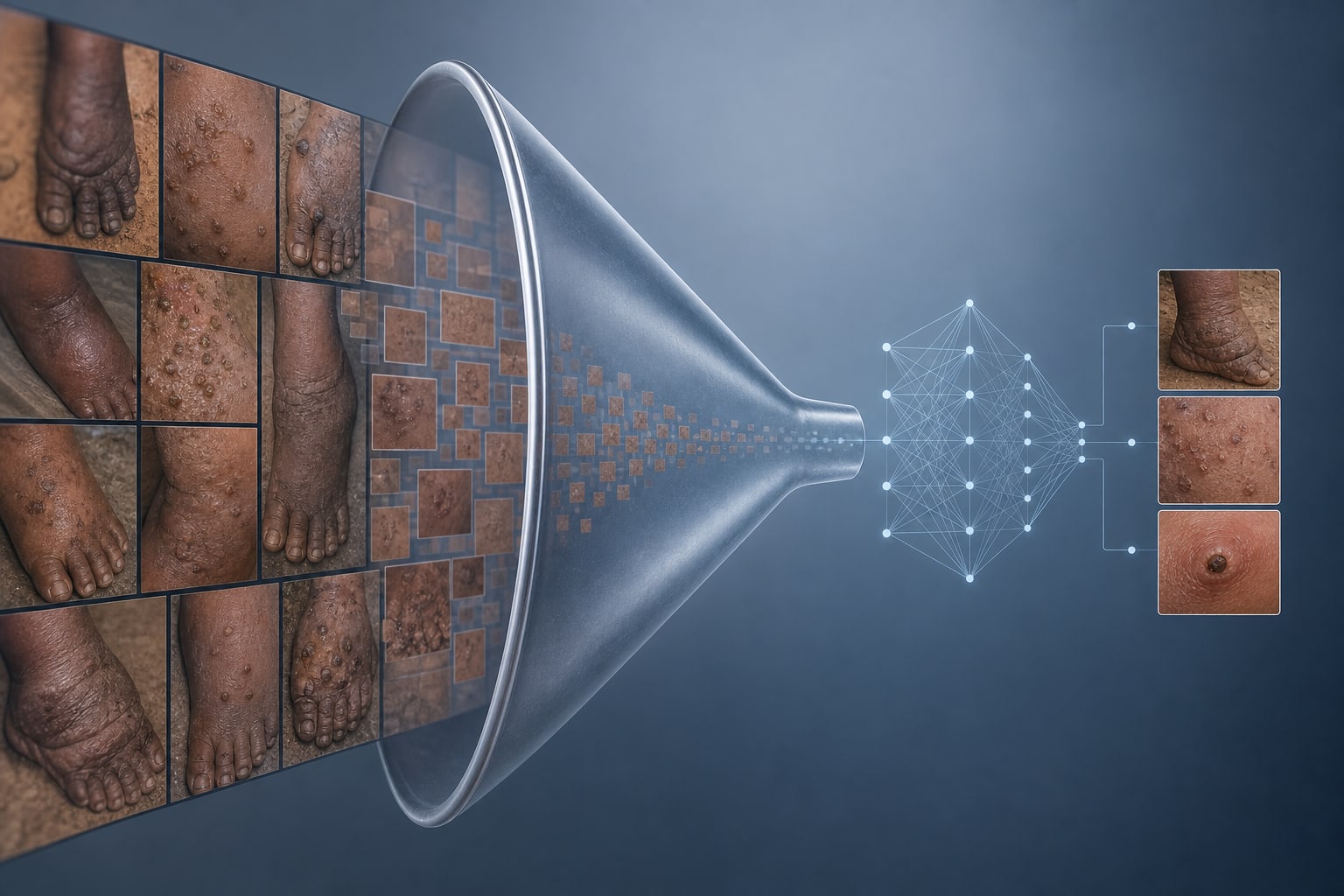
Proposed a dual deep learning model to improve diagnostic accuracy for skin NTDs.
Transfer learning is recommended as a feasible strategy for model development.
Developed a robust DL model development pipeline integrating feature mapping and domain adaptation.
Guideline-Based Recommendations
Diagnosis
Utilize integrated diagnostic approaches involving deep learning for skin NTDs.
Management
Address data-related challenges to improve the efficacy of DL diagnostic tools.
Monitoring & Follow-up
Implement systematic architectural screening and experimental setups for DL models.
Risks
Challenges include insufficient infrastructure and data security issues.
Patient & Prescribing Data
Individuals at risk of skin NTDs in tropical regions.
DL models can enhance diagnostic accuracy but face challenges in data requirements.
Clinical Best Practices
Adopt a two-stage approach for developing DL models to ensure robustness.
Incorporate regularization methods in model architecture to improve feature filtering.