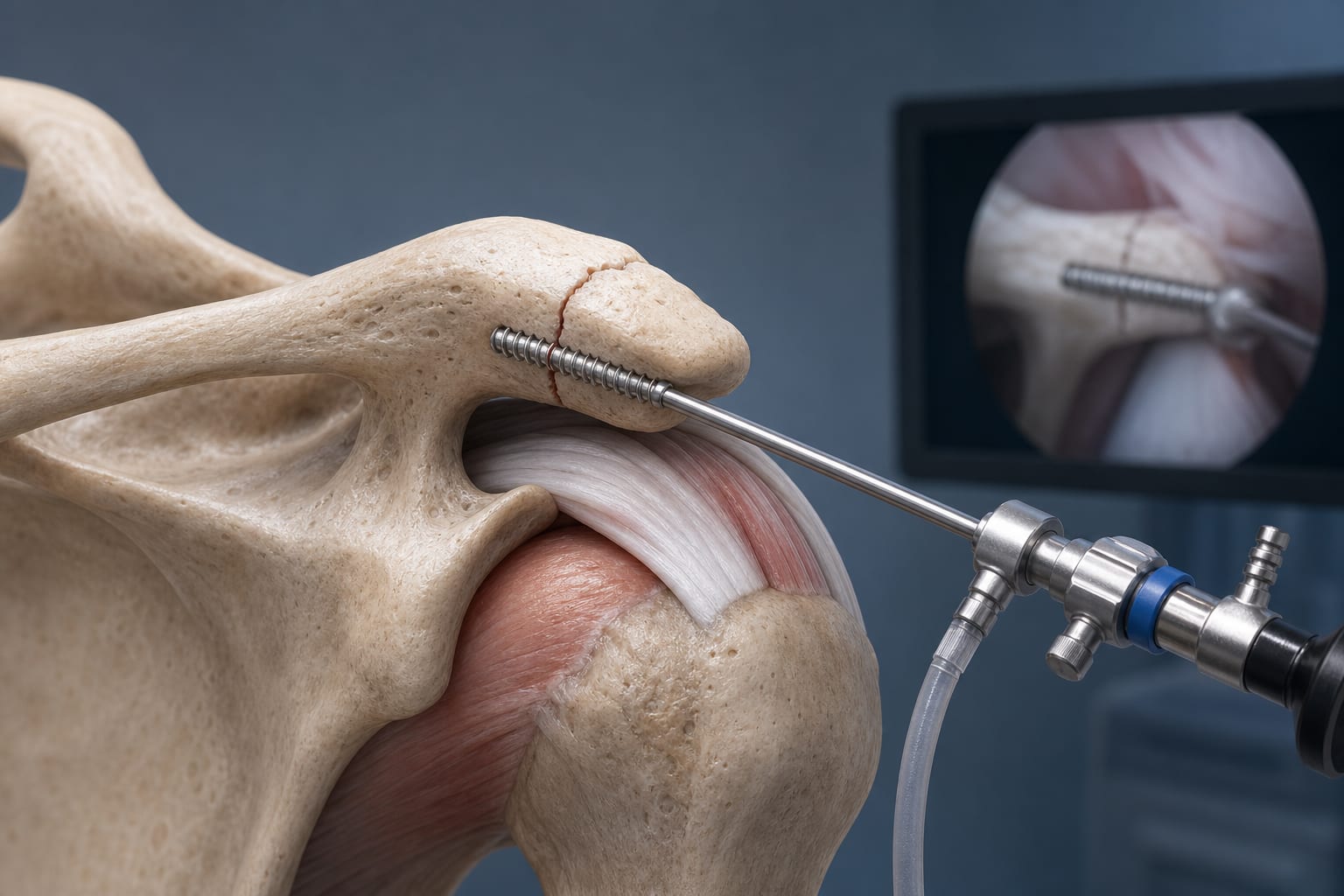
Advancements in Managing Complex Osteoporotic Proximal Humeral Fractures Among Older Adults
-
By
-
Wei Fan
-
Na Yang
-
Rui Qiao
-
Kun Zhang
-
Zhe Song
-
June 23, 2026
Clinical Scorecard: Advancements in Managing Complex Osteoporotic Proximal Humeral Fractures Among Older Adults
At a Glance
| Category | Detail |
|---|
| Condition | Proximal Humeral Fractures |
| Key Mechanisms | Fracture classification, surgical and non-surgical management strategies. |
| Target Population | Older adults with osteoporosis. |
| Care Setting | Orthopedic clinical practice. |
Key Highlights
- Proximal humeral fractures account for approximately 10% of all fractures in older adults.
- 15%-20% of displaced complex fractures require surgical intervention.
- Non-operative management is effective for 80%-85% of minimally displaced fractures.
- Recent advancements include improved fracture classification and surgical techniques.
- Complications in older patients often arise from comorbid conditions and poor bone quality.
Guideline-Based Recommendations
Diagnosis
- Utilize Neer and AO/OTA classifications for assessing fracture type and treatment planning.
Management
- Non-operative treatment for stable fractures; surgical options for complex fractures.
Monitoring & Follow-up
- Regular follow-up to assess functional recovery and complications.
Risks
- Increased risk of complications in older patients due to comorbidities and poor bone quality.
Patient & Prescribing Data
Older adults with proximal humeral fractures, particularly those with osteoporosis.
Conservative management is often sufficient for stable fractures, while complex fractures may require surgical intervention.
Clinical Best Practices
- Tailor treatment based on fracture classification and patient functional requirements.
- Implement structured rehabilitation to mitigate risks of shoulder stiffness and chronic pain.
Related Resources & Content