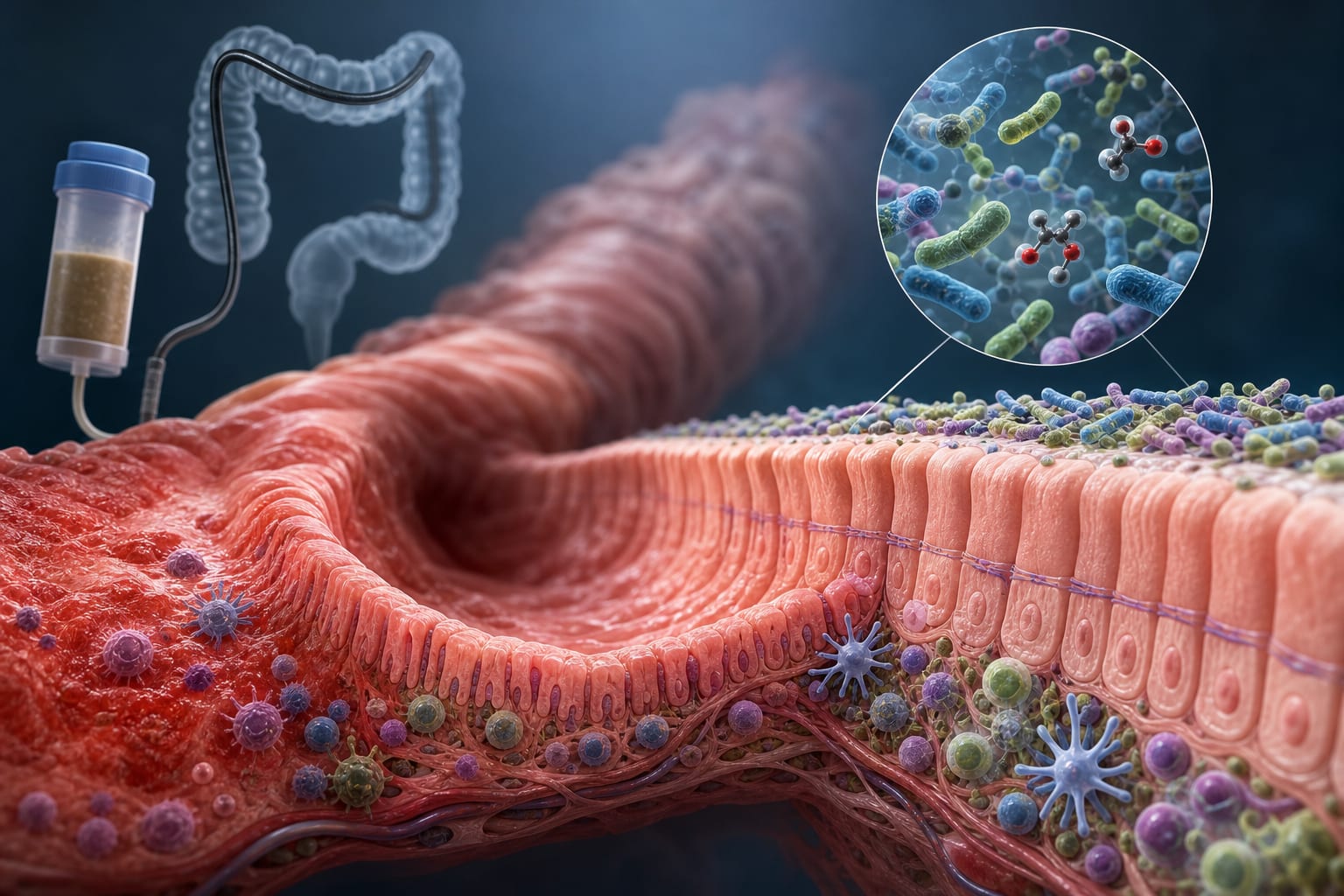
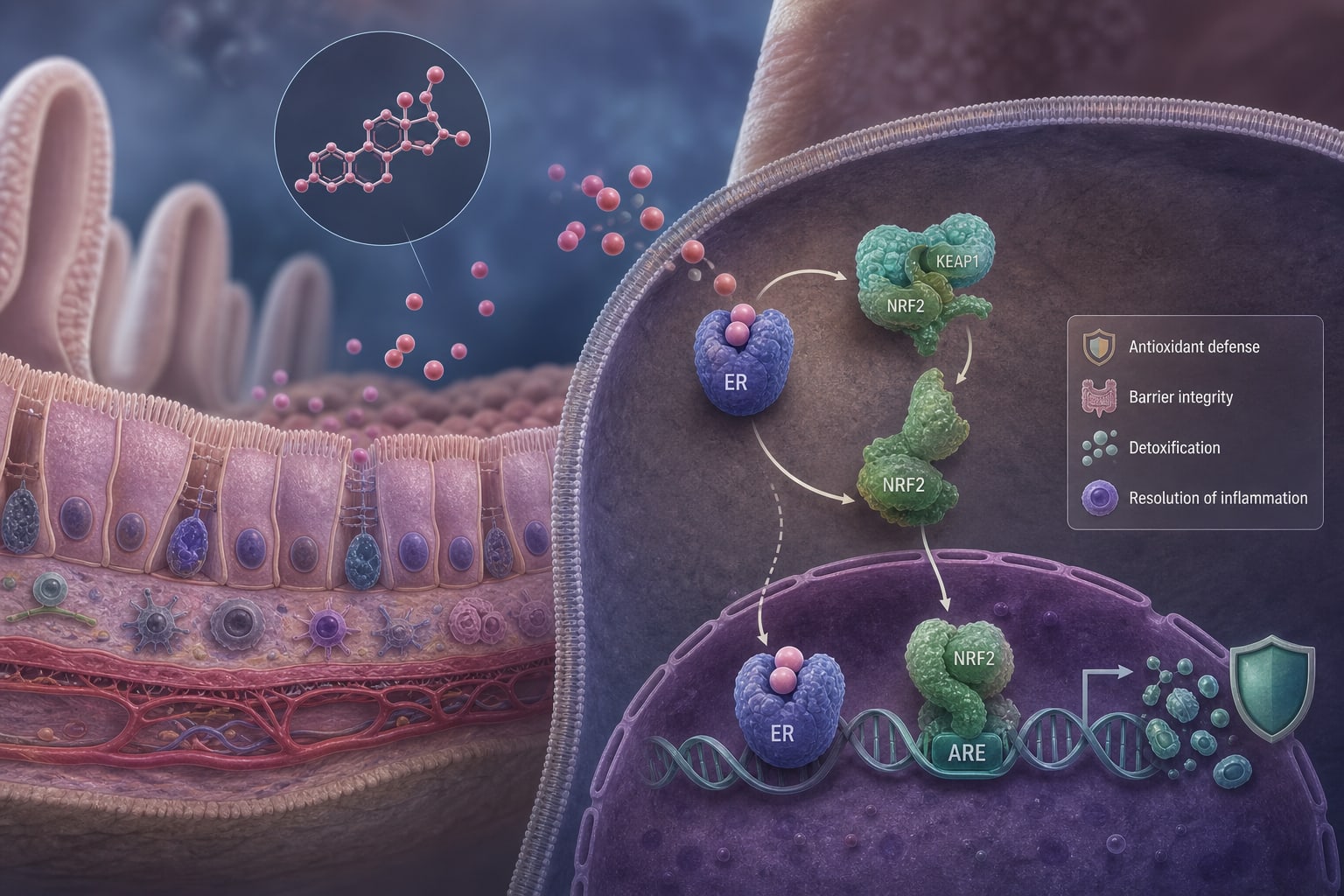
Exploring Mucosal Immune Mechanisms and Targeted Microbiota Therapy in Ulcerative Colitis through Fecal Microbiota Transplantation
-
By
-
Enhui Lu
-
Miao Zhang
-
Yuanyang Zhao
-
Hai Meng
-
Zhixuan Xu
-
July 20, 2026
Clinical Scorecard: Exploring Mucosal Immune Mechanisms and Targeted Microbiota Therapy in Ulcerative Colitis through Fecal Microbiota Transplantation
At a Glance
| Category | Detail |
|---|
| Condition | Ulcerative Colitis |
| Key Mechanisms | Restoration of dysbiotic gut ecosystems, enhancement of epithelial barrier integrity, regulation of mucosal immunity. |
| Target Population | Patients with mild-to-moderate ulcerative colitis. |
| Care Setting | Investigational microbiota-targeted strategy. |
Key Highlights
- FMT may induce clinical and endoscopic remission in selected UC patients.
- Efficacy of FMT is heterogeneous and influenced by donor characteristics and treatment methods.
- Current guidelines do not recommend routine FMT for UC outside clinical trials.
- Personalized strategies may improve response and safety of FMT.
- Gut microbial dysbiosis is a significant contributor to UC pathogenesis.
Guideline-Based Recommendations
Diagnosis
- Diagnosis of UC should consider clinical, endoscopic, and histological criteria.
Management
- FMT is considered an investigational therapy and not a standard treatment for UC.
Monitoring & Follow-up
- Monitor for clinical and endoscopic remission post-FMT.
Risks
- Potential risks include infection and adverse reactions related to donor microbiota.
Patient & Prescribing Data
Patients with mild-to-moderate ulcerative colitis.
FMT shows promise but requires further validation and personalized approaches.
Clinical Best Practices
- Consider donor-recipient matching to enhance treatment efficacy.
- Utilize multi-donor or optimized regimens for FMT administration.
- Integrate dietary modulation and combination therapy in treatment plans.
Related Resources & Content