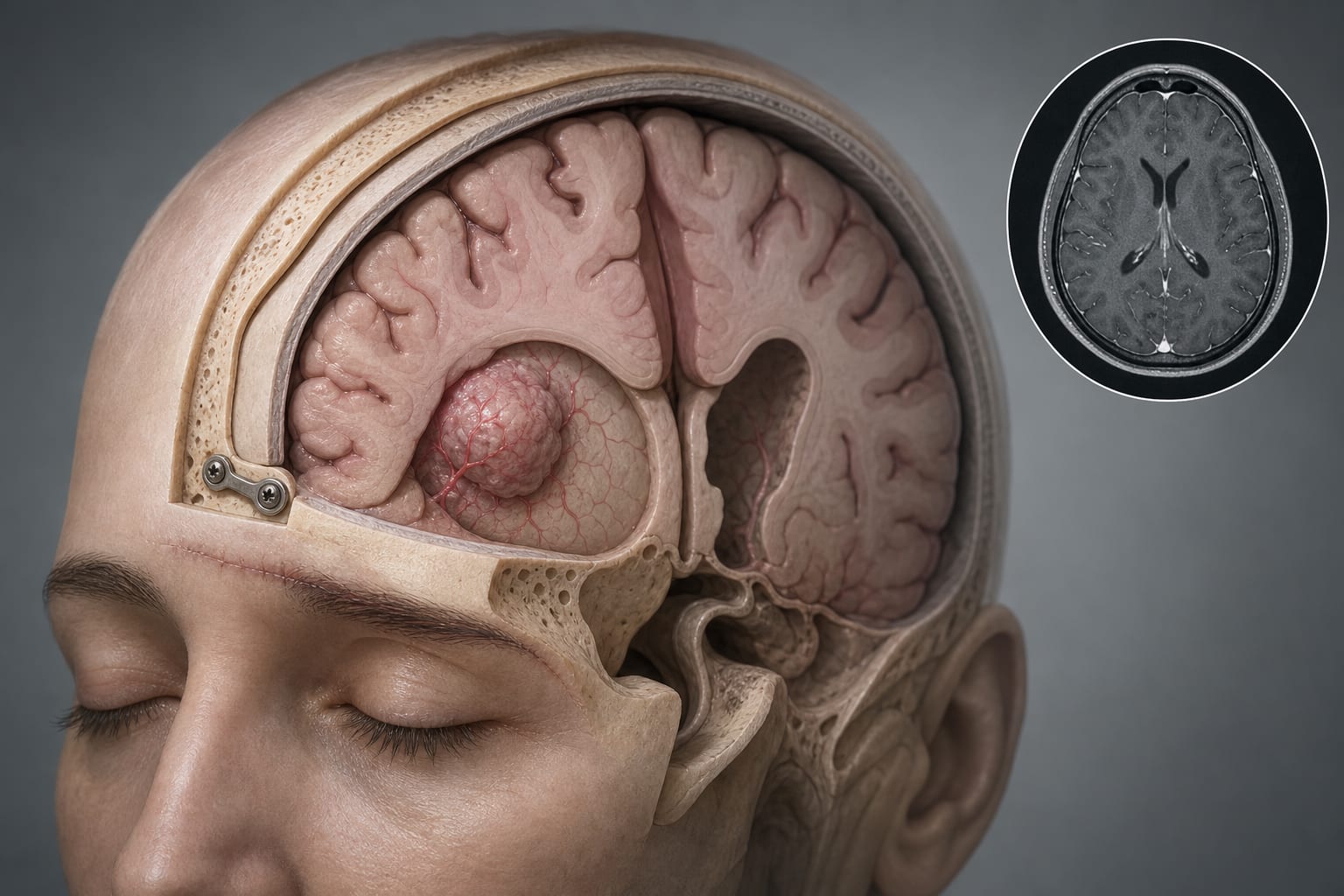
Clinical Scorecard: Surgical Case Study: Supraorbital Keyhole Approach for Resection of IDH-Mutant Grade 3 Astrocytoma in the Medial Orbitofrontal Area
At a Glance
Category
Detail
Condition
IDH-Mutant Grade 3 Astrocytoma
Key Mechanisms
Minimally invasive supraorbital trans-eyebrow craniotomy for tumor resection
Target Population
Adults with high-grade gliomas in the medial orbitofrontal region
Care Setting
Neurosurgical operating room
Key Highlights
Successful gross total resection via minimally invasive approach
Histopathological confirmation of IDH-mutant Grade 3 astrocytoma
Postoperative MRI showed no residual tumor
Patient maintained neurological function and high cosmetic satisfaction
Standard adjuvant therapy with radiochemotherapy initiated post-surgery
Guideline-Based Recommendations
Diagnosis
MRI imaging to assess tumor characteristics and location
Histopathological examination for definitive diagnosis
Management
Maximal safe resection of high-grade gliomas
Adjuvant radiotherapy and temozolomide-based chemotherapy
Monitoring & Follow-up
Postoperative MRI to confirm resection success
Regular follow-up for neurological function and tumor recurrence
Risks
Surgical morbidity associated with deep-seated tumors
Potential for neurological deficits post-surgery
Patient & Prescribing Data
Adults diagnosed with IDH-mutant Grade 3 astrocytoma
Adjuvant therapy with temozolomide is standard following surgical resection
Clinical Best Practices
Utilize minimally invasive techniques to reduce surgical morbidity
Employ intraoperative neuronavigation for precise tumor resection
Ensure thorough histopathological and molecular analysis for accurate diagnosis