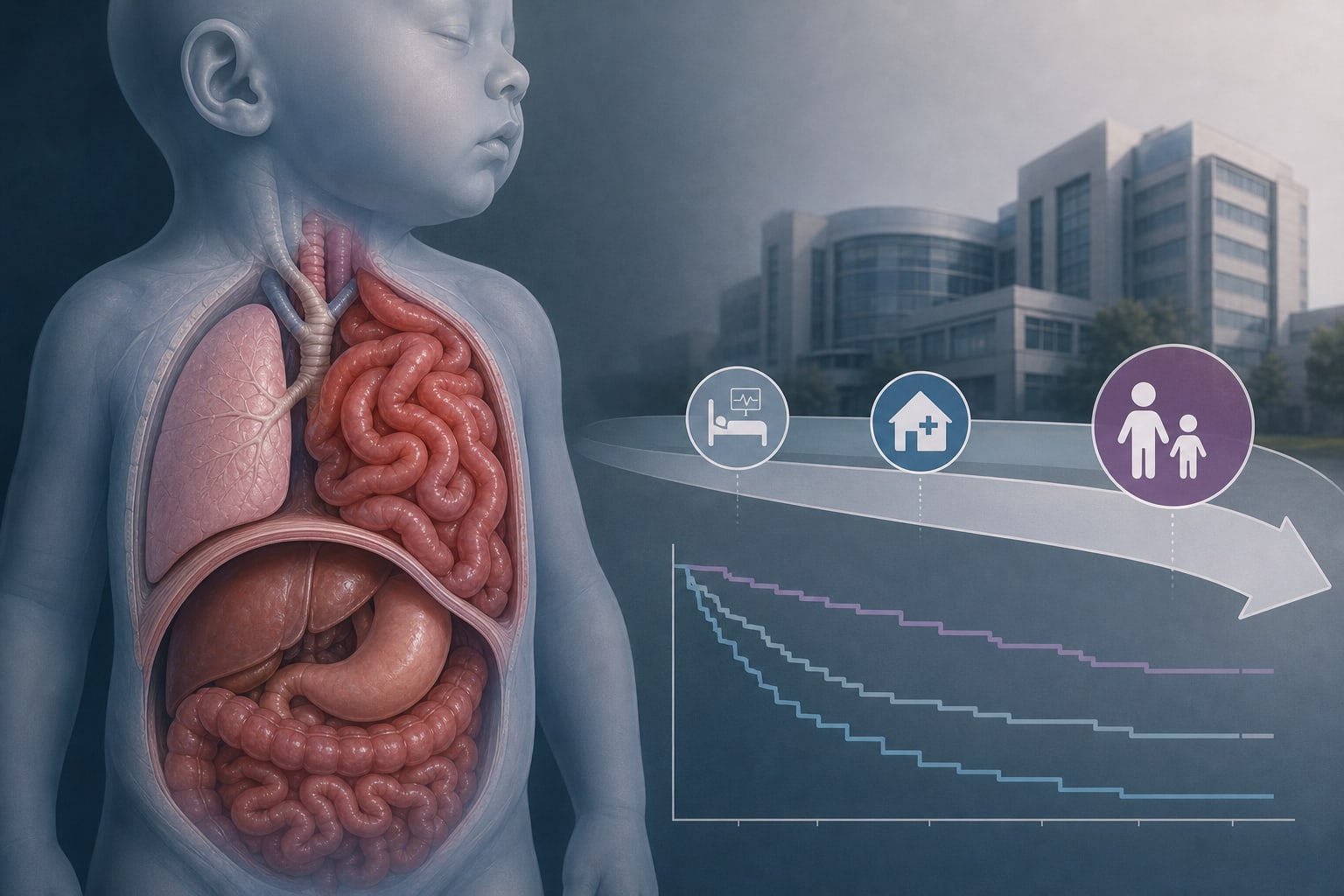
Hospital Readmissions and Long-Term Mortality in Pediatric Patients with Congenital Diaphragmatic Hernia
By
Marine Jouannin
Pierre Pinson
Mathis Collier
Alexandre Lapillonne
Jean-Marc Tréluyer
Elsa Kermorvant-Duchemin
June 29, 2026
Clinical Scorecard: Hospital Readmissions and Long-Term Mortality in Pediatric Patients with Congenital Diaphragmatic Hernia
At a Glance
Category Detail
Condition Congenital Diaphragmatic Hernia (CDH) Key Mechanisms Defect in the diaphragm allowing abdominal organs to herniate into the thoracic cavity, impairing lung development. Target Population Liveborn singleton children with CDH who underwent surgical repair within 6 months of life. Care Setting Pediatric critical care and neonatal surgery
Key Highlights
CDH occurs in approximately 1 in 3000 to 5000 births. Early mortality rates range from 10% to 40% depending on centers and countries. Long-term morbidity and readmission rates for CDH-associated complications are poorly documented. Study utilized linked national data to assess readmission and late mortality. Readmissions contribute to higher healthcare costs and prolonged hospital stays. Guideline-Based Recommendations
Diagnosis
Identification of CDH using ICD-10 code Q79.0. Management
Surgical repair of CDH within 6 months of life. Monitoring & Follow-up
Follow-up from primary discharge until death or study end date. Risks
Increased risk of readmission for respiratory, cardiovascular, nutritional, gastrointestinal, and surgical complications. Patient & Prescribing Data
Children discharged alive after neonatal care and surgery for CDH.
Inhaled nitric oxide and ECMO may be used during primary care.
Clinical Best Practices
Standardized management guidelines should be followed. Comprehensive follow-up care is essential to monitor long-term outcomes. Related Resources & Content