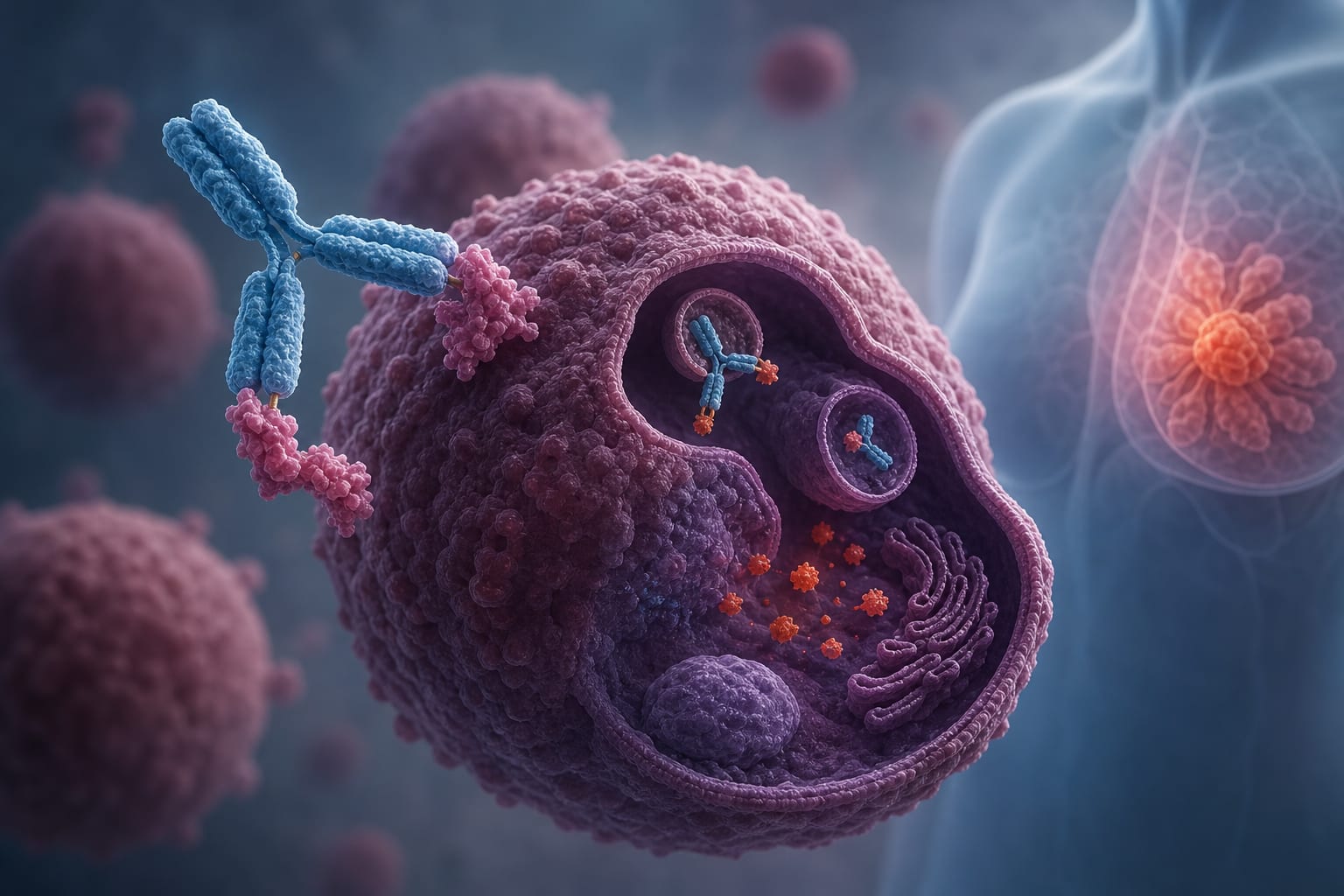
From monoclonals to bispecific T cell engagers: the evolving antibody-based therapy landscape in acute myeloid leukemia
By
Milad Rasouli
Marie Dalem
Marc H.G.P. Raaijmakers
Peter D. Katsikis
Stefan J. Erkeland
June 1, 2026
Clinical Scorecard: Advancements in Antibody-Based Treatments for Acute Myeloid Leukemia: Transitioning from Monoclonal Antibodies to Bispecific T Cell Engagers
At a Glance
Category Detail
Condition Key Mechanisms Antibody-based therapies targeting surface antigens. Target Population Care Setting
Key Highlights
Only gemtuzumab ozogamicin (GO) has received FDA approval for AML. Antibody constructs under investigation include unconjugated monoclonal antibodies, antibody-drug conjugates, and bispecific T cell engagers (BTCEs). BTCEs can activate T cells independently of T cell receptor specificity. Challenges include the absence of AML-specific surface antigens and the risk of on-target/off-leukemia toxicity. Guideline-Based Recommendations
Diagnosis
Management
Standard treatment includes intensive induction chemotherapy followed by consolidation therapy. Monitoring & Follow-up
Risks
Patient & Prescribing Data
Patients with relapsed/refractory acute myeloid leukemia.
Antibody-based therapies are being explored to complement or replace traditional cytotoxic regimens.
Clinical Best Practices
Related Resources & Content