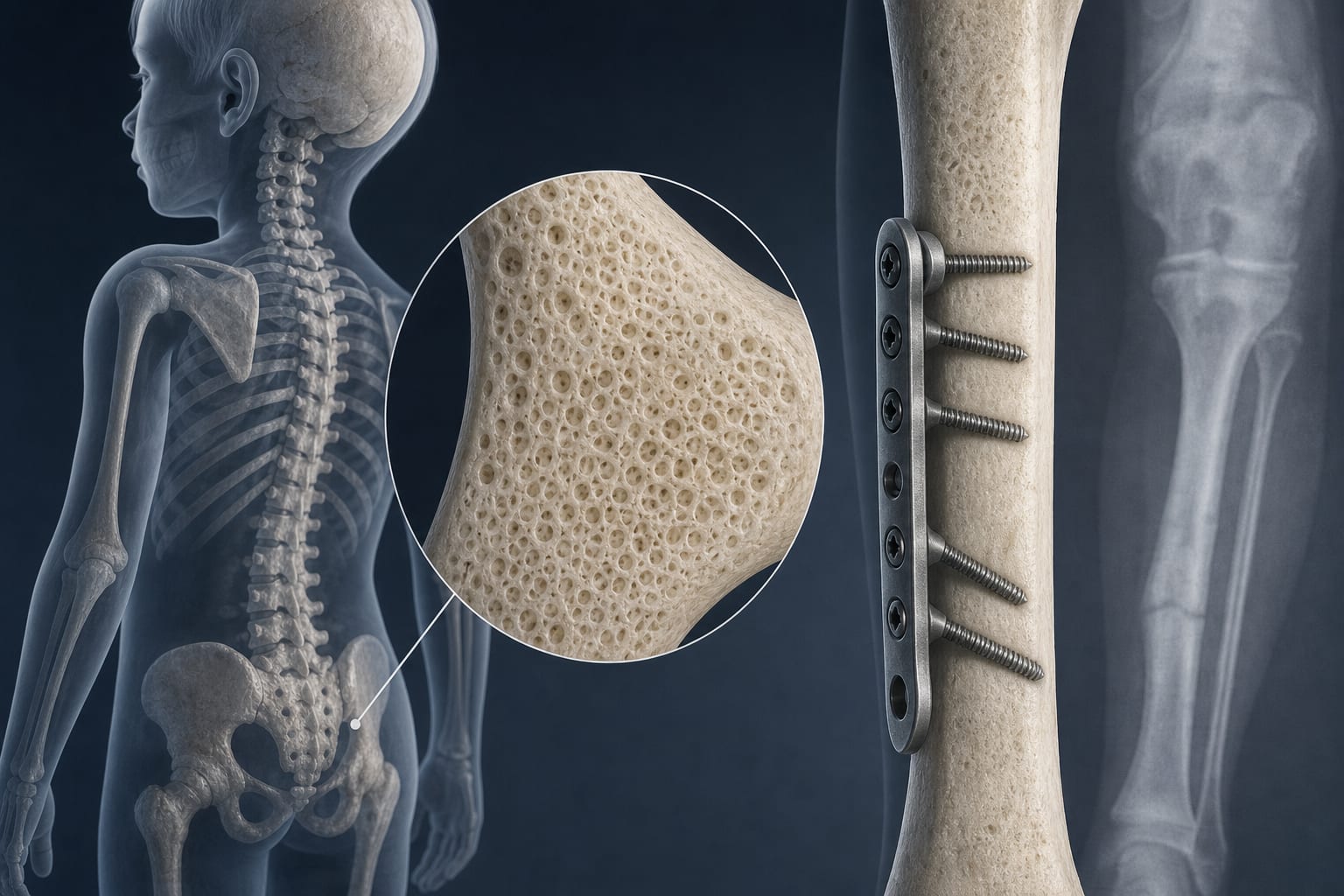
Orthopaedic Treatment Approaches for Osteopetrosis in Children: A Comprehensive Literature Review
-
By
-
Antoine Chemtob
-
Elio Paris
-
Giacomo De Marco
-
Oscar Vazquez
-
Christina Steiger
-
Sana Boudabbous
-
Romain Dayer
-
Dimitri Ceroni
-
July 6, 2026
Clinical Scorecard: Orthopaedic Treatment Approaches for Osteopetrosis in Children: A Comprehensive Literature Review
At a Glance
| Category | Detail |
|---|
| Condition | Osteopetrosis |
| Key Mechanisms | Osteoclast dysfunction leading to increased bone density and brittleness. |
| Target Population | Paediatric patients with osteopetrosis. |
| Care Setting | Orthopaedic surgical care. |
Key Highlights
- Osteopetrosis is a rare genetic disorder characterized by increased bone density and brittleness.
- The condition is associated with a high incidence of fractures and osseous deformities.
- It is classified into three types: malignant infantile ARO, intermediate IAO, and benign adult ADO.
- Management requires a multidisciplinary approach due to its systemic effects.
- Paediatric-specific orthopaedic evidence is limited and often extrapolated from adult studies.
Guideline-Based Recommendations
Diagnosis
- Diagnosis is based on clinical presentation and radiological findings.
Management
- Orthopaedic management focuses on fracture care and deformity correction.
Monitoring & Follow-up
- Regular monitoring for fractures and complications is essential.
Risks
- Increased risk of fractures, non-union, and malunion due to altered bone characteristics.
Patient & Prescribing Data
Children with osteopetrosis.
Treatment protocols are guided by the severity of the condition and associated complications.
Clinical Best Practices
- Employ a multidisciplinary approach for comprehensive care.
- Utilize imaging for accurate diagnosis and monitoring.
- Consider the unique challenges posed by altered bone density in surgical planning.
Related Resources & Content