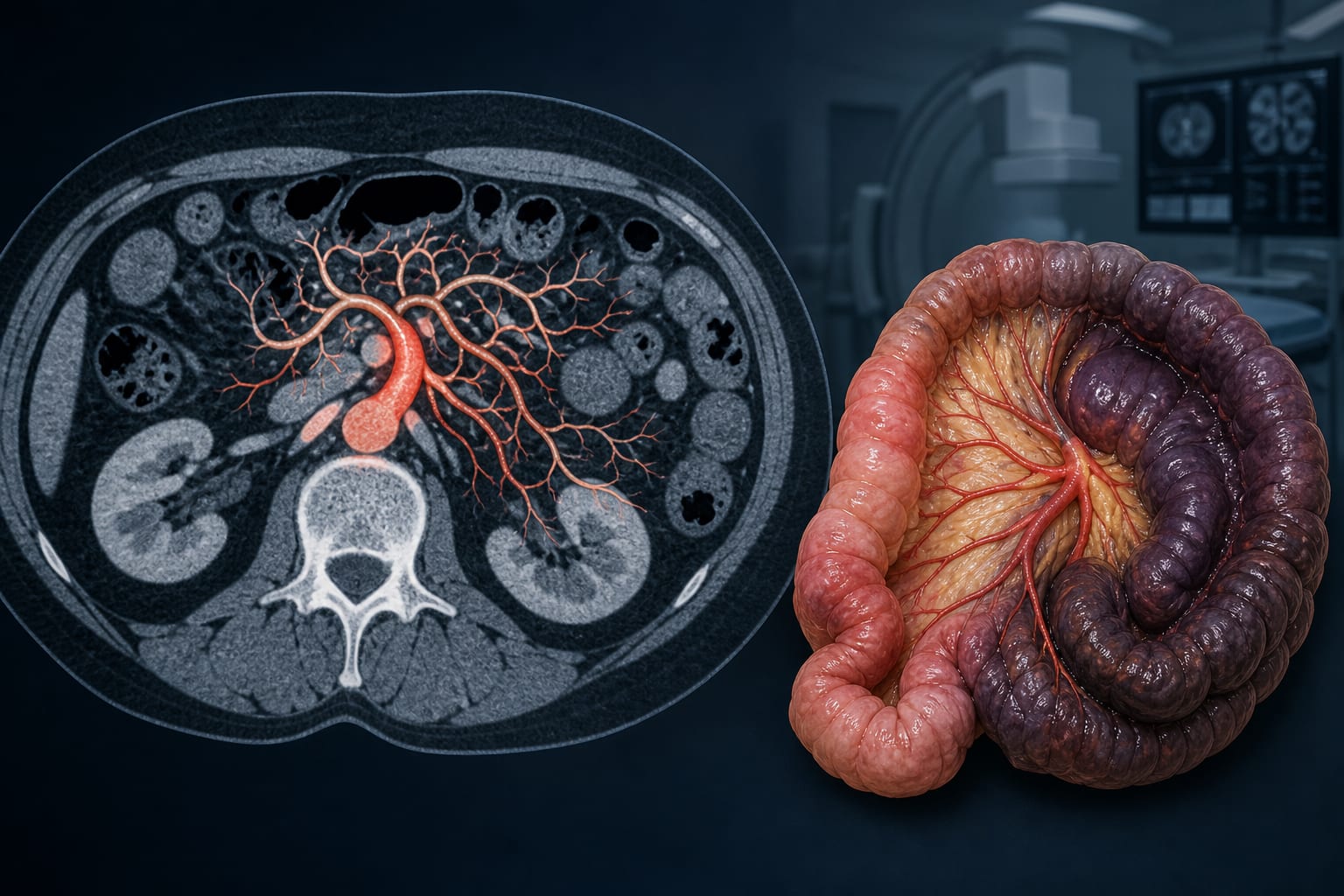
Clinical Scorecard: Mesenteric Ischaemia: Advances in Imaging and Treatment Through a Multidisciplinary Lens
At a Glance
Category
Detail
Condition
Acute mesenteric ischaemia, including arterial occlusion, mesenteric venous thrombosis, and non-occlusive mesenteric ischaemia.
Key Mechanisms
Mechanisms or clinical associations described in the source article.
Target Population
Patients with suspected or confirmed acute mesenteric ischaemia.
Care Setting
Care setting described in the source article.
Key Highlights
Obtain CTA without delay, using arterial and portal venous phases, when mesenteric ischaemia is suspected.
CTA can identify vascular and bowel abnormalities but cannot reliably exclude transmural bowel necrosis.
Peritonitis, perforation, or persuasive evidence of advanced bowel infarction requires urgent surgical evaluation.
Endovascular treatment may be appropriate when irreversible bowel injury is absent, but must not delay indicated surgery.
Treatment and reassessment should reflect the underlying mechanism and continue until bowel viability and physiological recovery are secure.
Guideline-Based Recommendations
Diagnosis
Management
Coordinate prompt multidisciplinary decision-making among radiology, interventional radiology, surgery, anaesthesia, and intensive care.
An endovascular-first approach may be supported for proximal superior mesenteric artery occlusion when irreversible bowel injury is not evident; peritonitis or CT signs of transmural infarction require surgical assessment without delay.
For mesenteric venous thrombosis, begin with anticoagulation; consider thrombectomy or catheter-directed thrombolysis if pain, bowel changes, or systemic deterioration worsen despite treatment.
For non-occlusive mesenteric ischaemia, correct shock, reduce vasoconstrictive triggers, and manage abdominal compartment syndrome; catheter-directed vasodilators may be considered, with evidence described as limited.
When surgery is required, remove only non-viable bowel, use damage-control principles where required, and arrange a second-look procedure if viability is uncertain.
Monitoring & Follow-up
Reassess bowel viability after revascularisation; technical success does not establish viability.
For mesenteric venous thrombosis, follow thrombus extent, bowel congestion, and clinical deterioration under anticoagulation.
Risks
Patient & Prescribing Data
Treatment is mechanism-dependent: endovascular revascularisation may be used when irreversible bowel injury is absent; mesenteric venous thrombosis is initially managed with anticoagulation; and non-occlusive disease requires haemodynamic correction and reassessment.
Clinical Best Practices
Use a predefined pathway that links urgent CTA, direct communication of critical findings, and concurrent multidisciplinary decision-making.
Align revascularisation with bowel viability and avoid delaying surgical assessment when advanced injury is suspected.
When feasible, re-establish mesenteric flow before definitive bowel resection to support assessment of potentially salvageable segments.
Do not treat procedural success as proof of bowel viability; continue reassessment and maintain readiness for exploration.