Influence of the pyruvate kinase activator mitapivat (AG-348) on RBC ATP content and export and RBC adhesivity in blood from healthy subjects and sickle cell disease patients - Scorecard - MDSpire
Advertisement
Influence of the pyruvate kinase activator mitapivat (AG-348) on RBC ATP content and export and RBC adhesivity in blood from healthy subjects and sickle cell disease patients
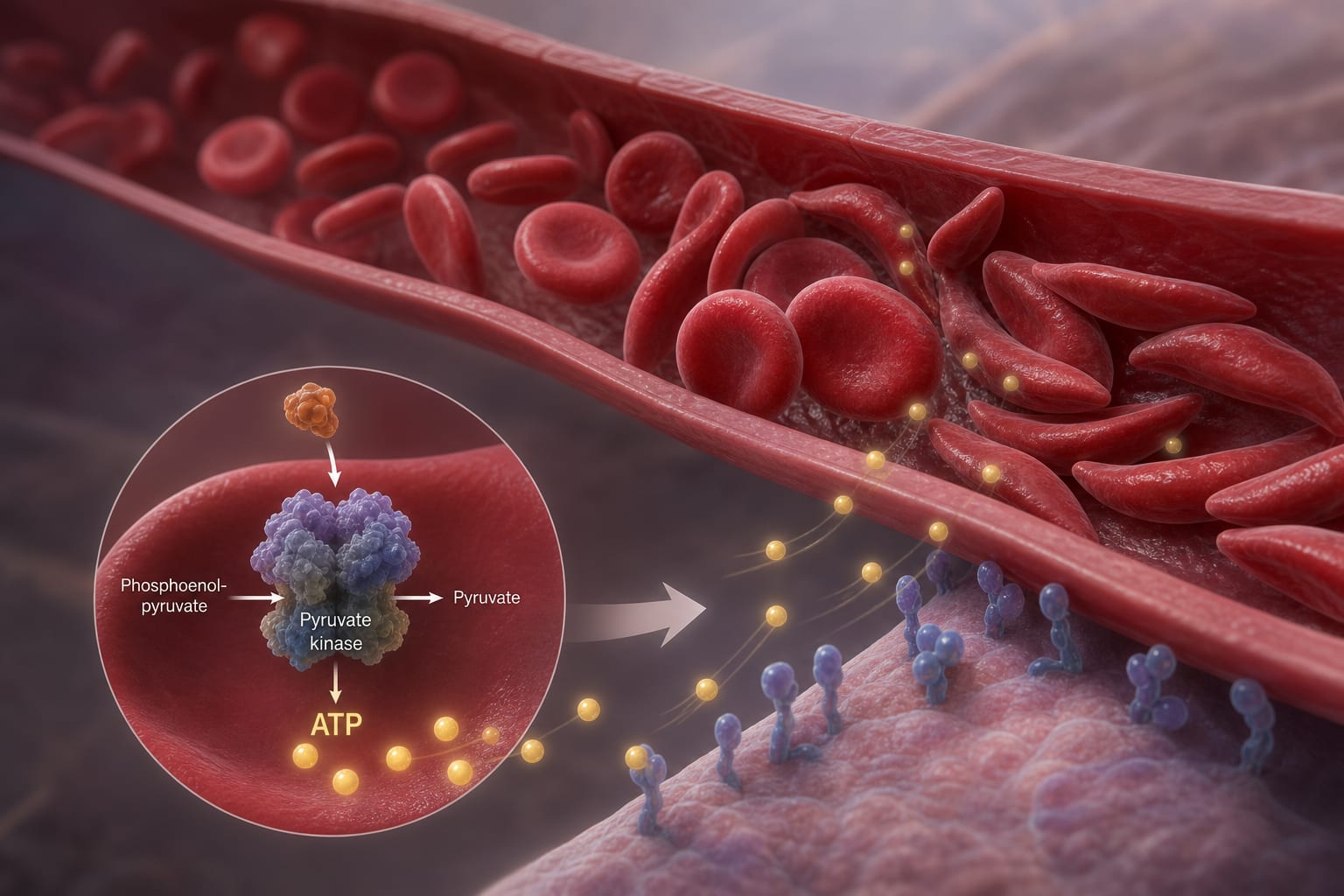
Clinical Scorecard: Effects of the pyruvate kinase activator mitapivat (AG-348) on ATP levels and adhesiveness of red blood cells in healthy individuals and patients with sickle cell disease
At a Glance
Category
Detail
Condition
Sickle Cell Disease (SCD)
Key Mechanisms
Reduced intracellular ATP levels in sickle red blood cells; pyruvate kinase activators increase ATP production.
Target Population
Patients with sickle cell disease and healthy individuals.
Care Setting
Clinical research setting.
Key Highlights
Mitapivat (AG-348) increases intracellular ATP in healthy red blood cells.
Sickle cell red blood cells do not show significant increase in ATP levels with mitapivat treatment.
ATP export from sickle red blood cells increases in hypoxia but not with PKRA treatment.
Mitapivat treatment reduces adhesion of sickle red blood cells under shear stress.
Guideline-Based Recommendations
Diagnosis
Sickle cell disease is diagnosed based on clinical presentation and laboratory findings.
Management
Consideration of pyruvate kinase activators in the management of sickle cell disease.
Monitoring & Follow-up
Monitor ATP levels and hemolysis markers in patients with sickle cell disease.
Risks
Potential for vaso-occlusive crises and hemolytic anemia in sickle cell disease.
Patient & Prescribing Data
Patients with sickle cell disease and healthy controls.
Mitapivat shows differential effects on ATP levels in healthy vs. sickle red blood cells.
Clinical Best Practices
Evaluate the role of ATP in red blood cell function and sickle cell disease pathology.
Consider the effects of hypoxia on ATP export in sickle cell disease management.