Innovations in Technology and Emerging Approaches in Precision Surgery for Gliomas
By
Christina Abi Faraj
Christopher C. Young
Thomas H. Beckham
Jeffrey S. Weinberg
July 4, 2026
Clinical Scorecard: Innovations in Technology and Emerging Approaches in Precision Surgery for Gliomas
At a Glance
Category Detail
Condition Diffuse Gliomas Key Mechanisms Maximal safe surgical resection, intraoperative technologies, and local drug delivery strategies. Target Population Adults with newly diagnosed or recurrent high-grade gliomas. Care Setting Neurosurgical operating rooms.
Key Highlights
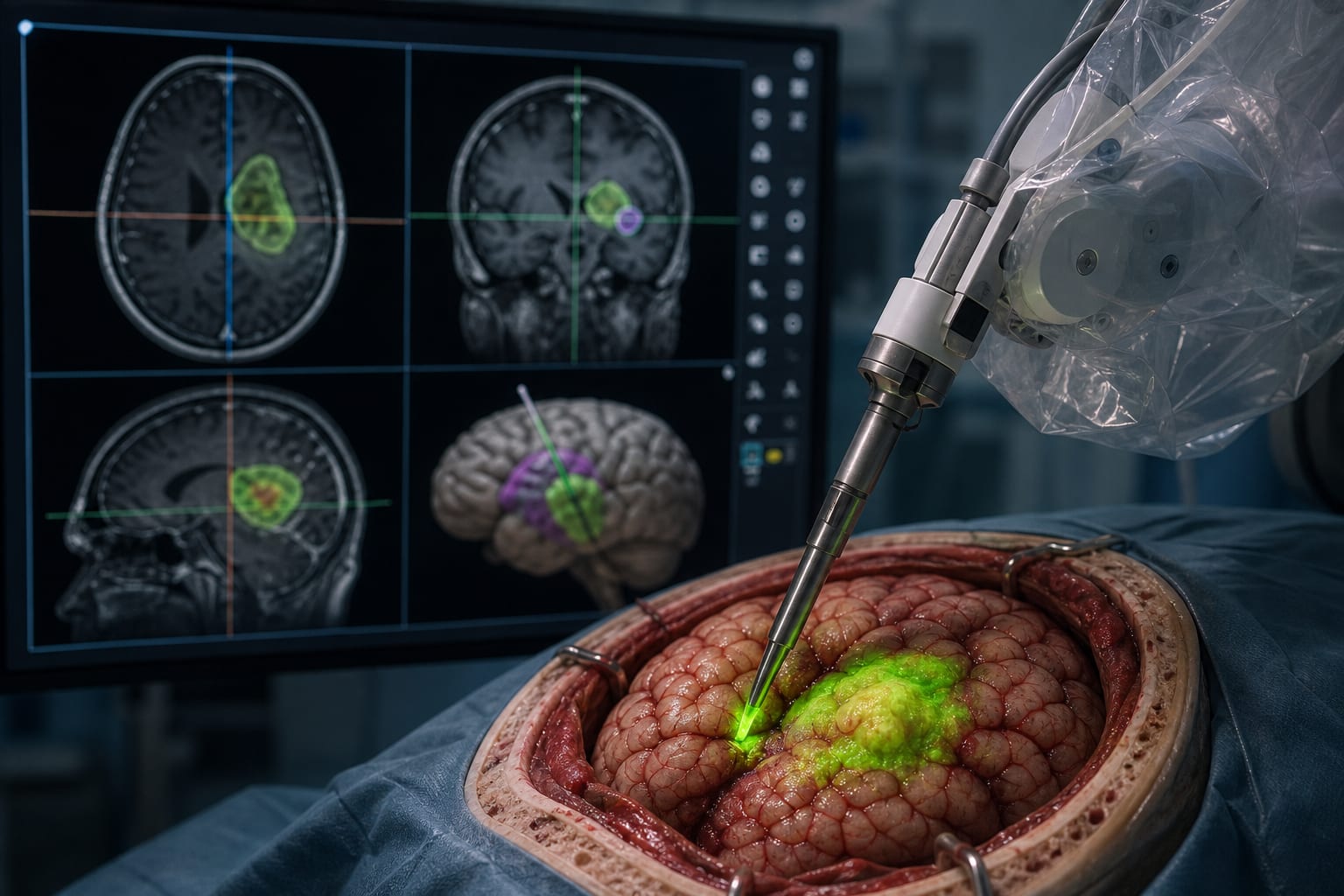
Maximal safe resection is associated with improved progression-free and overall survival. Achieving > 20% supramarginal resection significantly improves overall survival. Intraoperative technologies include neuronavigation, functional mapping, and fluorescence-guided surgery. Local drug delivery strategies, such as Gliadel® wafers, bypass the blood-brain barrier. Functional mapping techniques like fMRI enhance tumor delineation and protect eloquent brain areas. Guideline-Based Recommendations
Diagnosis
Use functional MRI for preoperative mapping of eloquent cortex. Management
Maximal safe surgical resection followed by concurrent radiotherapy and temozolomide. Monitoring & Follow-up
Monitor for postoperative neurological deficits that may affect survival. Risks
Aggressive resection in eloquent areas may lead to neurological deficits. Patient & Prescribing Data
Patients with newly diagnosed or recurrent high-grade gliomas.
Local drug delivery methods can enhance treatment efficacy by bypassing the blood-brain barrier.
Clinical Best Practices
Combine fMRI data with neuronavigation for optimal resection. Consider supramarginal resection to improve survival outcomes. Related Resources & Content