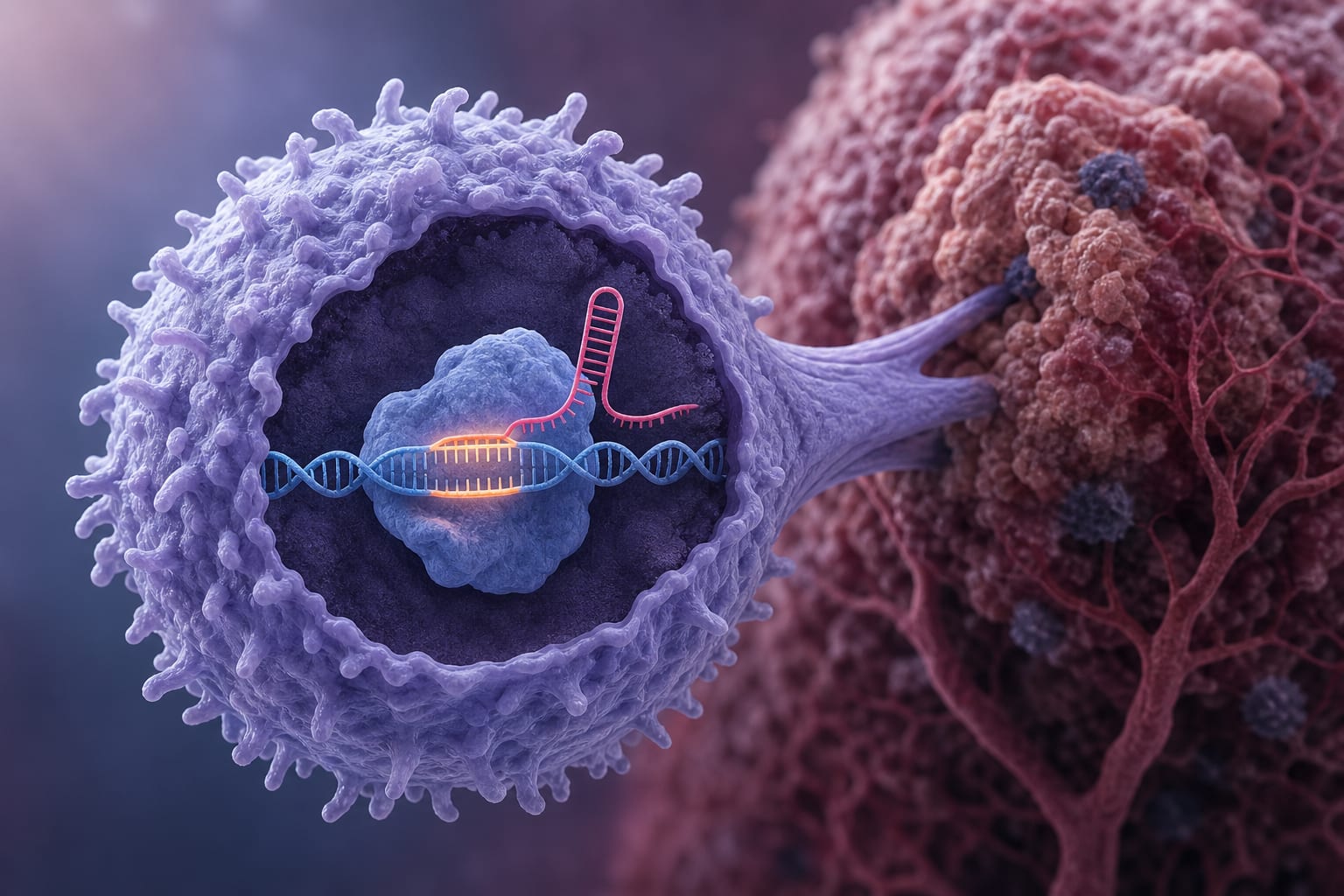
CRISPR/Cas9 in cancer therapy: clinical translation, mechanistic strategies, and therapeutic directions
By
Chu Xin Ng
Sakina Mustafa
Xin Yi Yap
Sau Har Lee
July 17, 2026
Clinical Scorecard: Utilizing CRISPR/Cas9 for Cancer Treatment: Insights into Clinical Applications, Mechanisms, and Future Approaches
At a Glance
Category Detail
Condition Cancer Key Mechanisms CRISPR/Cas9 genome editing for immune cell engineering, direct targeting of oncogenic mutations, modulation of tumor-supportive pathways. Target Population Patients with hematological malignancies and solid tumors. Care Setting Clinical oncology and translational research.
Key Highlights
CRISPR/Cas9 enables precise manipulation of genetic modifications in cancer. Clinical trials show encouraging safety profiles and early signs of activity. CRISPR-edited CAR-T cells targeting CD19 and BCMA have shown objective responses. Challenges remain in solid tumors due to delivery efficiency and tumor heterogeneity. Technological advancements are expanding CRISPR's therapeutic potential. Guideline-Based Recommendations
Diagnosis
Utilize CRISPR/Cas9 for the identification of genetic alterations in tumors. Management
Consider CRISPR-based therapies for patients with relapsed or refractory hematological malignancies. Monitoring & Follow-up
Monitor safety profiles and clinical activity in ongoing trials. Risks
Address potential off-target editing and delivery limitations. Patient & Prescribing Data
Patients with relapsed or refractory hematological malignancies and those with solid tumors.
CRISPR-based interventions have shown promise but require further validation.
Clinical Best Practices
Integrate CRISPR/Cas9 with immunotherapy and nanotechnology for enhanced delivery. Focus on multiplex genome editing to address tumor heterogeneity. Ensure rigorous monitoring of off-target effects during treatment. Related Resources & Content