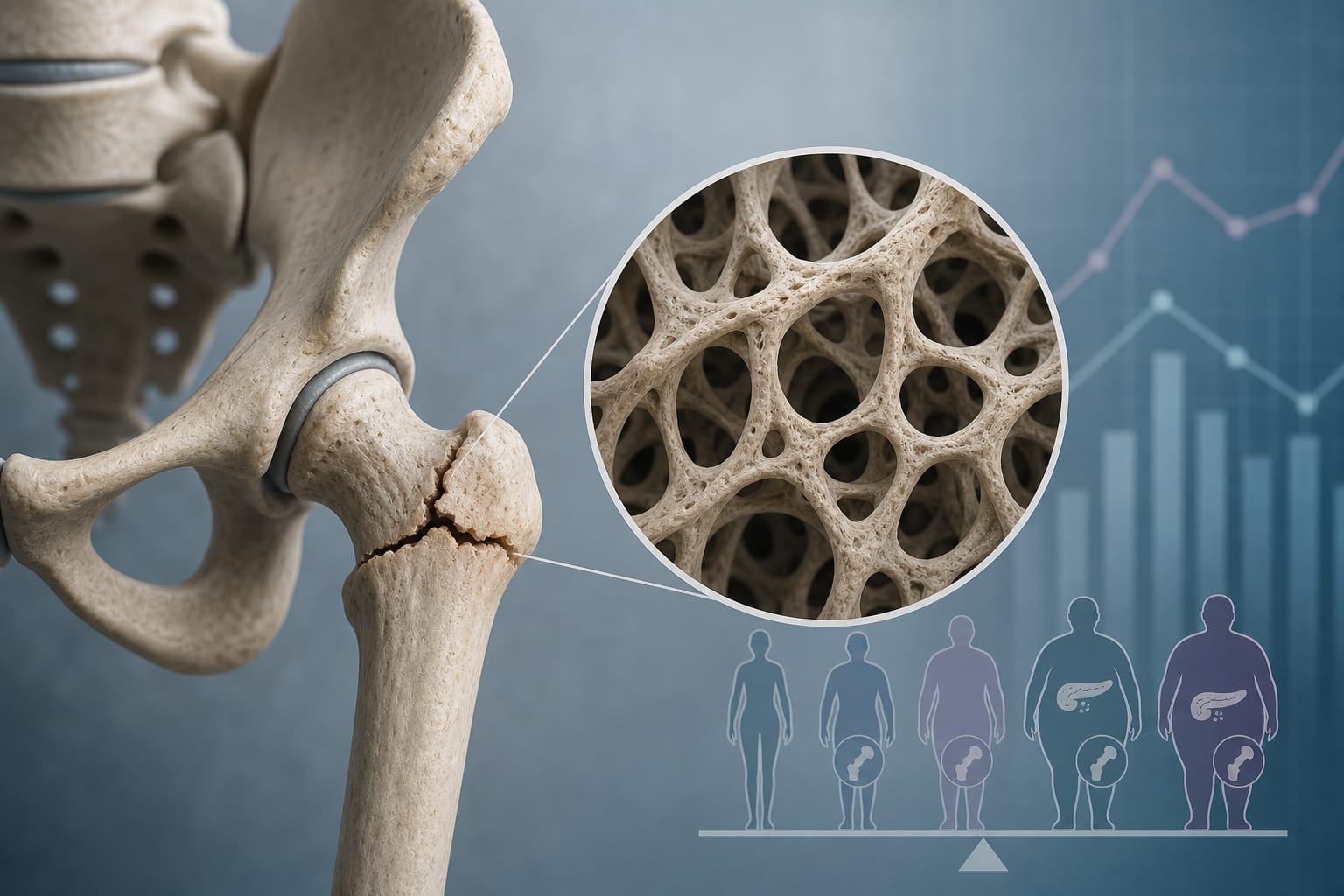
Clinical Scorecard: Correlation of Serum Periostin Levels with Bone Microarchitecture, Muscle Mass, and Functional Capacity in Postmenopausal Women from China
At a Glance
Category
Detail
Condition
Osteoporosis and sarcopenia in postmenopausal women
Key Mechanisms
Serum periostin influences bone microarchitecture, muscle mass, and muscle function; higher levels correlate with reduced bone strength and muscle mass and increased fall risk
Target Population
Community-dwelling Chinese postmenopausal women aged >50 years
Care Setting
Outpatient/community health settings for osteoporosis and sarcopenia assessment
Key Highlights
Higher serum periostin levels are negatively correlated with bone microarchitecture parameters including total area, cortical perimeter, trabecular area, and estimated bone strength.
Serum periostin negatively correlates with appendicular skeletal muscle mass, balance test scores, and gait speed, while positively correlating with fall risk assessments (TUG time and FROP-Com scores).
Serum periostin may serve as a biomarker for assessing skeletal and muscular health and fall risk in postmenopausal women.
Guideline-Based Recommendations
Diagnosis
Measure serum periostin levels using ELISA as part of osteoporosis and sarcopenia risk assessment in postmenopausal women.
Assess bone mineral density (aBMD) and bone microarchitecture using DXA and HR-pQCT respectively.
Evaluate muscle mass via DXA and muscle function using handgrip strength, SPPB, and TUG tests.
Screen fall risk using validated tools such as FROP-Com.
Management
Integrate serum periostin measurement with clinical evaluation to identify women at higher risk of bone fragility and muscle impairment.
Implement interventions targeting both bone health and muscle function to reduce fracture and fall risk.
Monitoring & Follow-up
Monitor serum periostin levels alongside bone density and muscle function parameters to evaluate disease progression or treatment response.
Risks
Elevated serum periostin is associated with smaller bone cross-sectional area, lower bone strength, reduced muscle mass, and increased fall risk, indicating higher fracture susceptibility.
Patient & Prescribing Data
Chinese postmenopausal women aged over 50 years living in urban community settings
Serum periostin levels can help stratify risk for osteoporosis and sarcopenia-related complications, guiding personalized management strategies.
Clinical Best Practices
Use a multidisciplinary approach assessing bone density, bone microarchitecture, muscle mass, and function for comprehensive risk evaluation.
Incorporate serum periostin measurement as a potential biomarker to enhance prediction of skeletal and muscular health deterioration.
Regularly assess fall risk using functional tests and screening tools to implement timely preventive measures.
Educate patients on the importance of maintaining both bone and muscle health to reduce fracture and fall risk.