Hybrid Hospital at Home and Physical Activity for Adults Admitted to the Hospital With Acute Illness: A
Clinical Scorecard: Integrating Home-Based Care and Physical Activity for Adults Hospitalized Due to Acute Illness
At a Glance
Category Detail
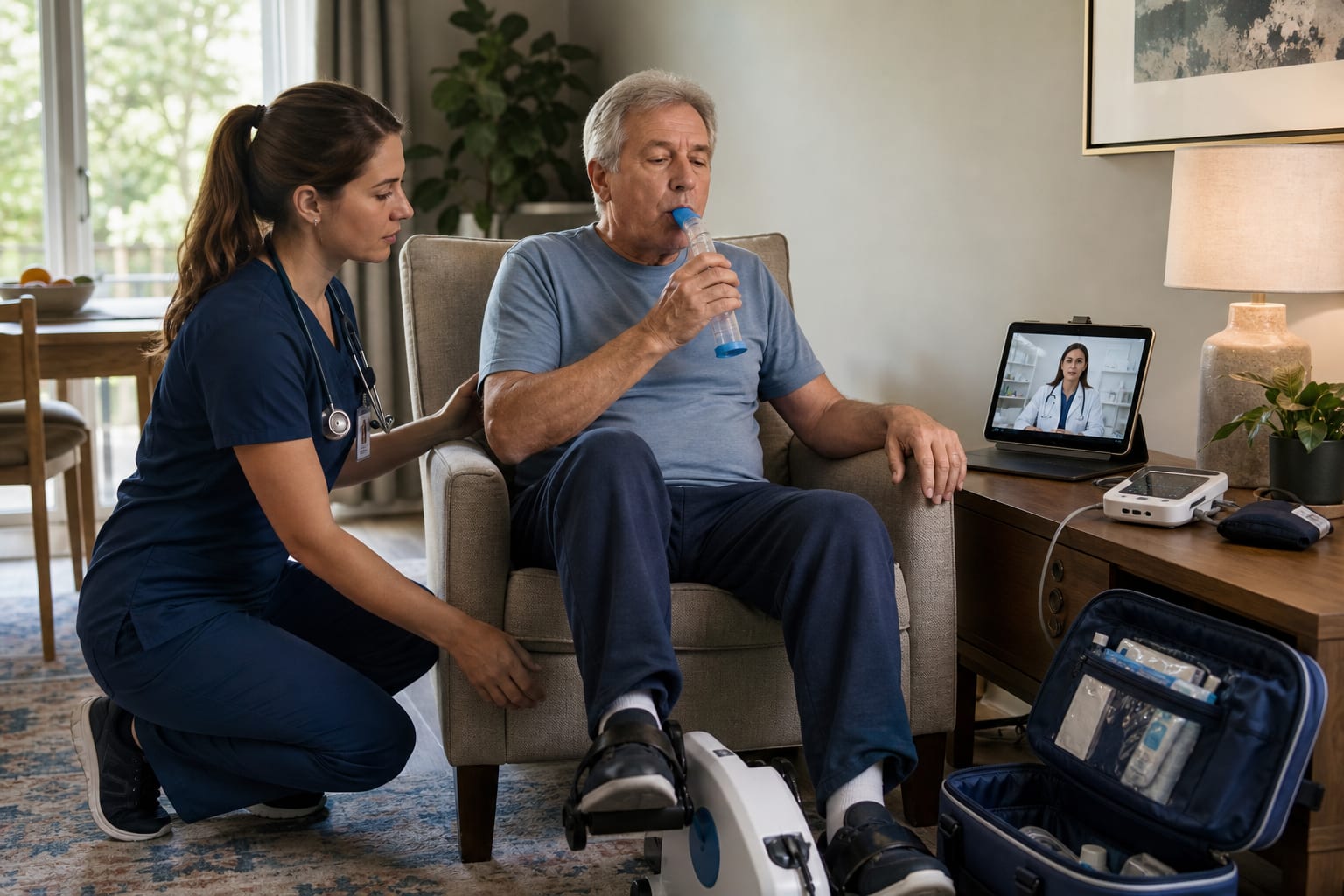
Condition Acute illness requiring hospitalization Key Mechanisms Hospital at home (HaH) model with remote patient monitoring and home-based clinical tasks Target Population Adults aged ≥18 years admitted to specific departments with acute illness Care Setting Hybrid home-based care integrated with hospital-level services
Key Highlights
HaH reduces nosocomial complications and improves patient-centered outcomes. Physical activity correlates with clinical prognosis in hospitalized patients. The study evaluates a hybrid HaH model in a Danish public hospital. Participants were randomized to either HaH or standard ward-based care. Safety screening ensured participants could be managed at home. Guideline-Based Recommendations
Diagnosis
Use early warning score (EWS) for screening suitability for HaH. Management
Implement remote patient monitoring and home-based clinical tasks. Monitoring & Follow-up
Conduct virtual ward rounds and ad hoc reviews as needed. Risks
Monitor for clinical stability and ensure safety for home management. Patient & Prescribing Data
Adults with acute illness, including infection-related admissions.
Hybrid HaH model may enhance physical activity and patient satisfaction.
Clinical Best Practices
Ensure structured onboarding for participants before home transfer. Utilize a structured alert system for timely clinical review. Evaluate physical activity as a primary outcome in hybrid HaH settings. Related Resources & Content