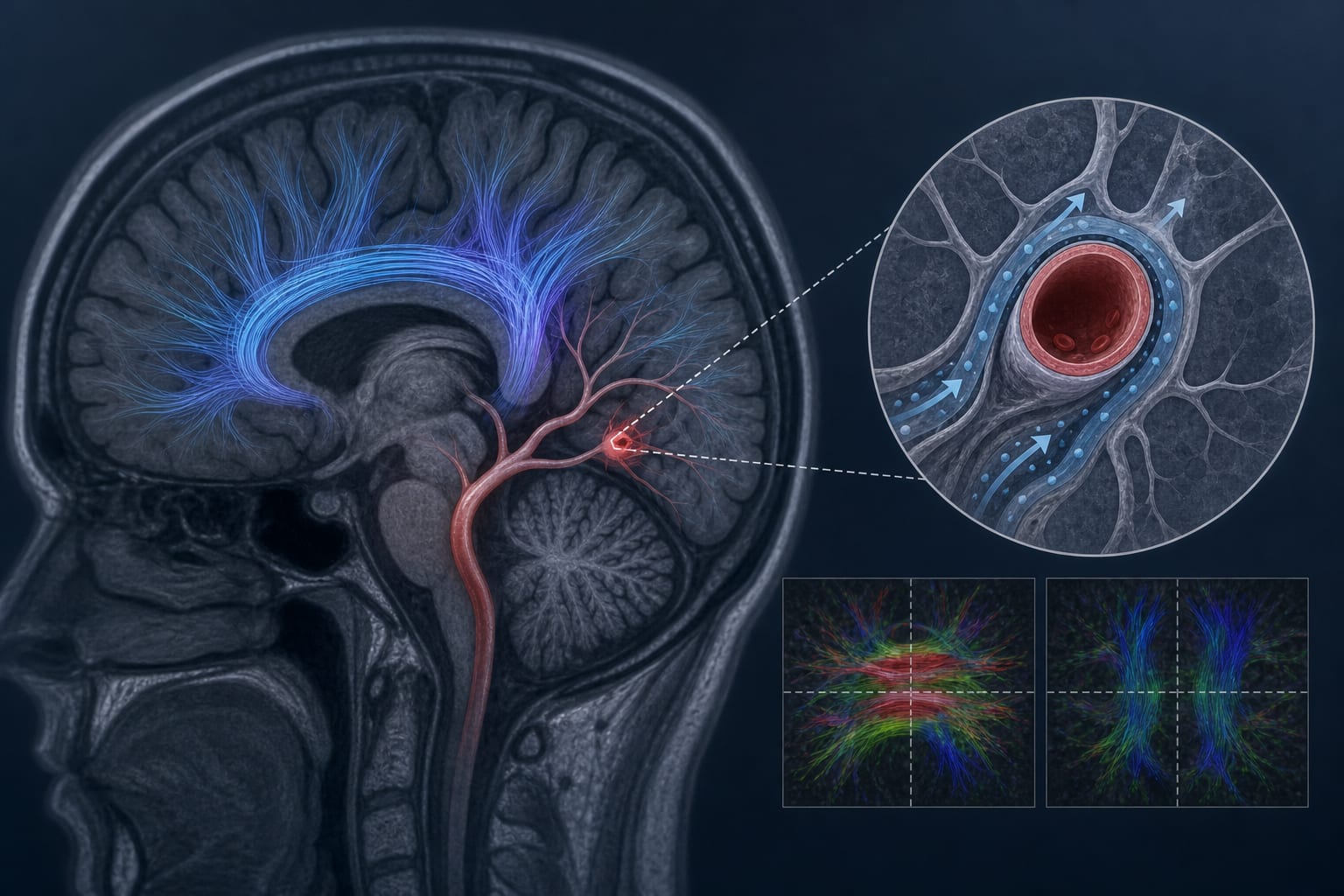
Non-invasive assessment of glymphatic dysfunction in middle cerebral artery stenosis based on DTI-ALPS and ro-ALPS
By
Yidi Zhu
Luoyu Wang
Liqing Zhang
Xue Tang
Maoling Liu
Qingqing Wen
Darong Zhu
Han Zhang
Xiufang Xu
Zhongxiang Ding
June 17, 2026
Clinical Scorecard: Evaluation of Glymphatic Function in Middle Cerebral Artery Stenosis Through Non-Invasive DTI-ALPS and ro-ALPS Techniques
At a Glance
Category Detail
Condition Key Mechanisms Impaired cerebral perfusion and vascular pulsatility affecting cerebrospinal fluid dynamics. Target Population Care Setting
Key Highlights
Both DTI-ALPS and ro-ALPS indices were significantly lower in MCA-S patients compared to healthy controls (p < 0.001). DTI-ALPS index negatively correlated with choroid plexus volume (r = -0.541, pFDR = 0.012). ro-ALPS index also showed a negative correlation with choroid plexus volume (r = -0.568, pFDR < 0.001). Guideline-Based Recommendations
Diagnosis
Confirm unilateral MCA-S through CTA, MRA, or DSA. Management
Monitoring & Follow-up
Utilize DTI-ALPS and ro-ALPS indices to assess perivascular clearance. Risks
Consider risks associated with atherosclerotic stenosis, including acute cardiovascular or cerebrovascular events. Patient & Prescribing Data
Patients with unilateral MCA-S aged 18-80 years.
Clinical Best Practices
Related Resources & Content