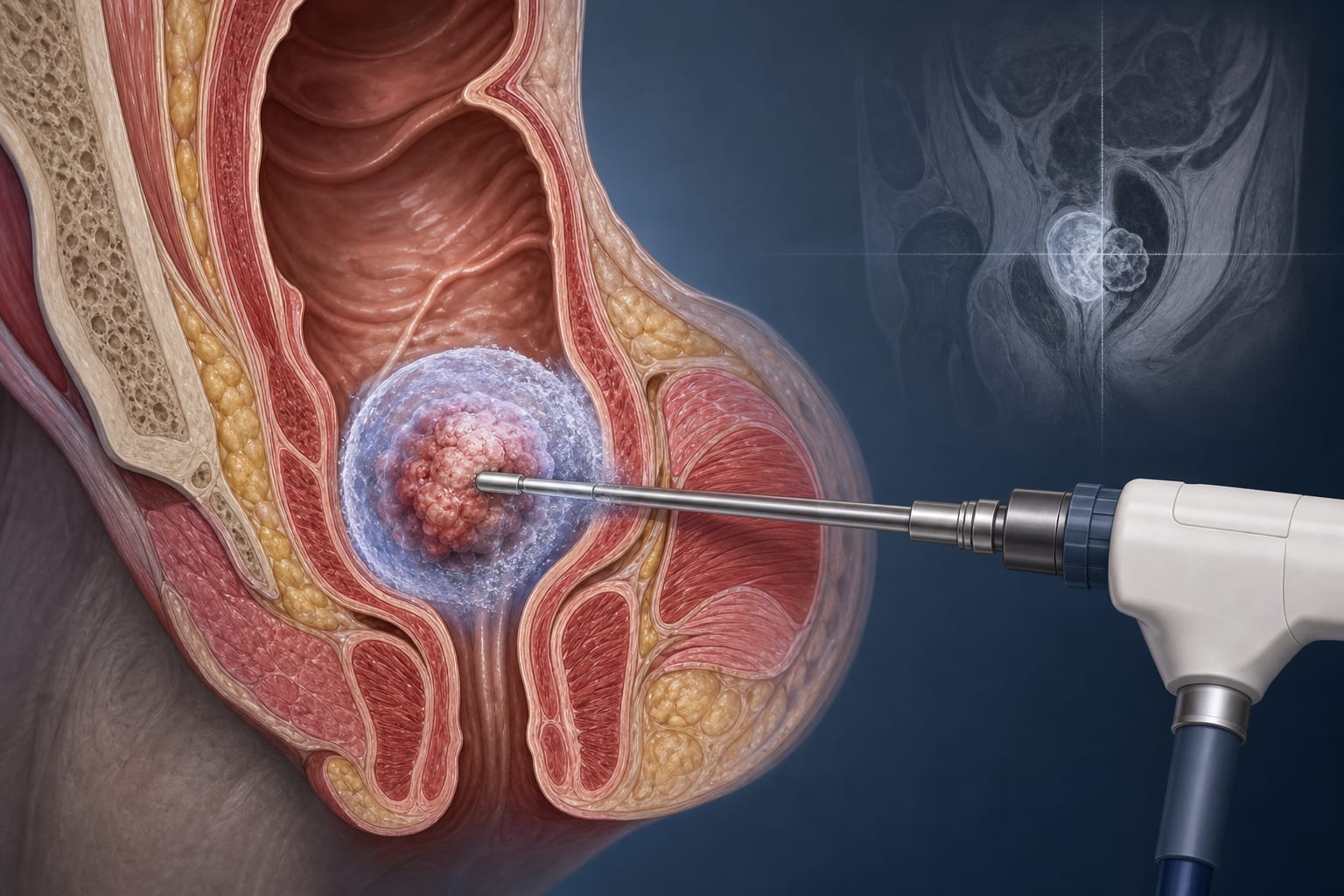
Cryoablation as an organ-preserving therapy for low rectal cancer a comprehensive protocol and institutional perspective
-
By
-
Xuejun Jiang
-
Feng Zhou
-
Zujin Ji
-
Xinyi Lei
-
Fangjun Yuan
-
July 16, 2026
Clinical Scorecard: Cryoablation: A Comprehensive Protocol for Organ-Sparing Treatment of Low Rectal Cancer from an Institutional Perspective
At a Glance
| Category | Detail |
|---|
| Condition | Low Rectal Cancer |
| Key Mechanisms | Localized tumor destruction via cryoprobe-induced hypothermia, cellular necrosis, and immune response activation. |
| Target Population | Patients with low rectal cancer, particularly those seeking sphincter preservation. |
| Care Setting | Interventional oncology and colorectal surgery. |
Key Highlights
- Cryoablation offers a sphincter-preserving option for select low rectal cancer patients.
- The procedure utilizes a cryoprobe to achieve localized tumor ablation.
- Indications include histologically confirmed rectal adenocarcinoma and specific tumor characteristics.
- Multidisciplinary team discussions are essential for patient selection.
- Standardized protocols enhance safety and feasibility.
Guideline-Based Recommendations
Diagnosis
- Histological confirmation via endoscopic biopsy.
- Imaging assessment with pelvic MRI and endorectal ultrasound.
Management
- Cryoablation for patients preferring sphincter preservation.
- Pre-procedural bowel preparation and antibiotic prophylaxis.
Monitoring & Follow-up
- Long-term follow-up protocols post-cryoablation.
Risks
- Potential complications include injury to adjacent structures and coagulation disorders.
Patient & Prescribing Data
Patients with low rectal cancer, including those with comorbidities or who decline radical surgery.
Cryoablation is categorized into radical and palliative modalities based on tumor characteristics.
Clinical Best Practices
- Utilize a multidisciplinary team for patient evaluation and treatment planning.
- Adhere to standardized protocols for pre-procedural assessment and management.
- Ensure thorough imaging and histological evaluation before proceeding with cryoablation.
Related Resources & Content