Impact of Sleeve Gastrectomy and Roux-en-Y Gastric Bypass on Esophageal Physiology and Gastroesophageal Reflux Disease: A Prospective Study - Scorecard - MDSpire
Advertisement
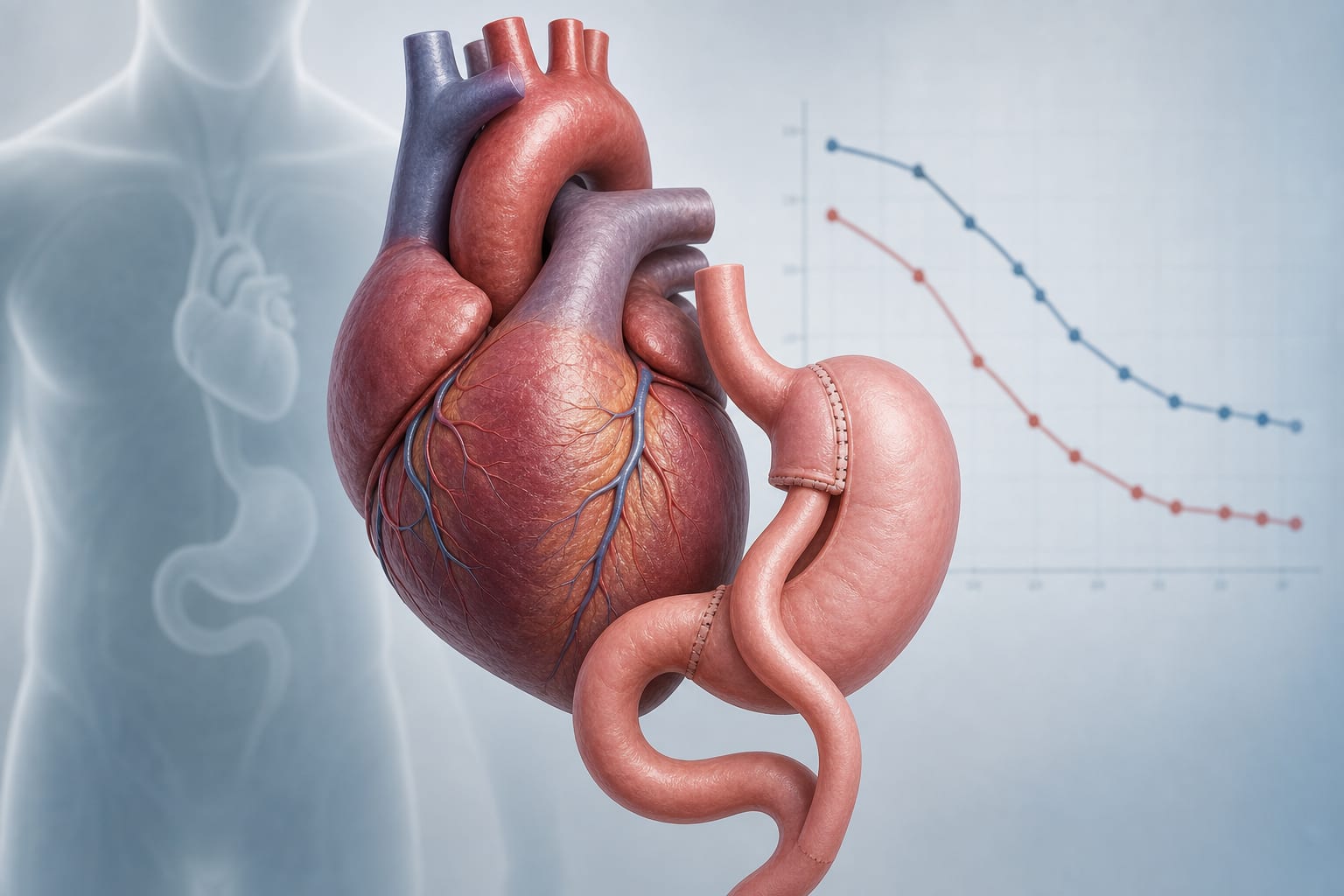
Impact of Sleeve Gastrectomy and Roux-en-Y Gastric Bypass on Esophageal Physiology and Gastroesophageal Reflux Disease: A Prospective Study
Clinical Scorecard: Effects of Sleeve Gastrectomy and Roux-en-Y Gastric Bypass on Esophageal Function and Gastroesophageal Reflux Disease: A Prospective Analysis
At a Glance
Category
Detail
Condition
Severe obesity and gastroesophageal reflux disease (GERD)
Key Mechanisms
LSG involves restrictive gastric resection affecting LES pressure and gastric compliance; LRYGB combines restrictive and malabsorptive mechanisms reducing acid secretion and bile reflux
Target Population
Adults aged 18-65 with BMI >40 kg/m2 or >35 kg/m2 with comorbidities undergoing bariatric surgery
Care Setting
Bariatric surgery center with multidisciplinary evaluation and follow-up
Key Highlights
LSG may increase GERD incidence due to decreased LES pressure, altered anatomy, and increased intragastric pressure.
LRYGB is more effective in managing GERD by reducing acid secretion and diverting bile, with lower rates of de novo GERD.
Comprehensive pre- and post-operative assessments including manometry, MII-pH monitoring, endoscopy, and validated questionnaires are essential for evaluating esophageal function and GERD.
Guideline-Based Recommendations
Diagnosis
Use Lyon Consensus 2.0 criteria combining subjective symptoms and objective tests for GERD diagnosis.
Perform esophageal manometry and 24-h multichannel intraluminal impedance-pH monitoring after discontinuing anti-reflux medications for at least 15 days.
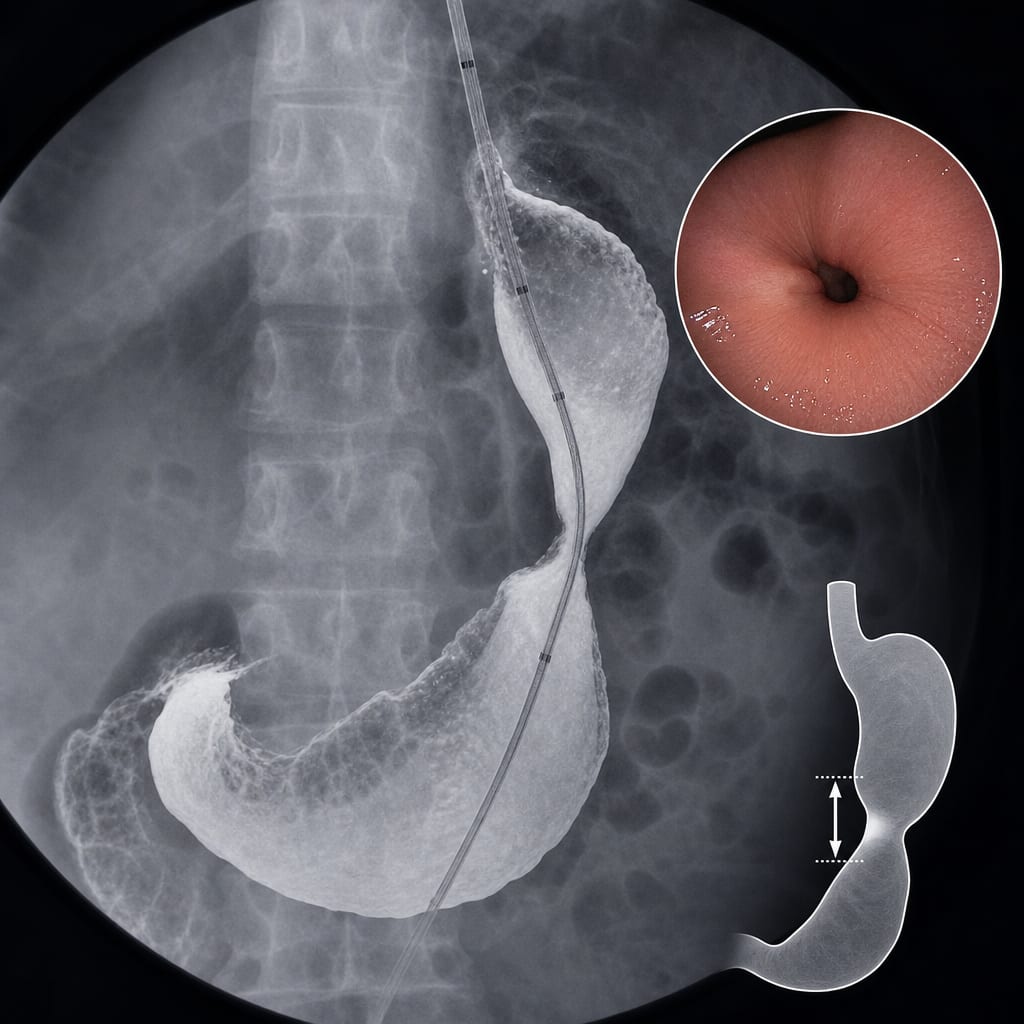
Conduct upper endoscopy and barium swallow studies to assess esophageal and gastric anatomy and detect hiatal hernias.
Management
Select LRYGB over LSG for patients with severe obesity and GERD due to superior reflux control.
Ensure surgical technique adherence: LSG with 38Fr bougie and stapling 2 cm from pylorus; LRYGB with small gastric pouch and Roux-en-Y reconstruction.
Monitor and address postoperative complications such as fistulas, strictures, or enlarged gastric pouches that may cause reflux after LRYGB.
Monitoring & Follow-up
Evaluate patients at 12 months post-surgery with GERD-HRQL questionnaire, endoscopy, barium swallow, MII-pH monitoring, and manometry.
Calculate percentage of excess weight loss (PEWL) and monitor BMI changes to correlate with symptom improvement.
Use statistical analysis to assess outcomes and guide individualized patient care.
Risks
LSG may lead to increased GERD due to anatomical and functional changes including LES weakening and hiatal hernia development.
De novo GERD can occur after LRYGB, though less frequently, often related to surgical complications.
Potential impact on esophageal motility and LES function necessitates careful preoperative evaluation and postoperative follow-up.
Patient & Prescribing Data
Severe obesity patients aged 18-65 undergoing bariatric surgery with or without GERD symptoms
LRYGB offers better GERD symptom control and esophageal function preservation compared to LSG; careful patient selection and monitoring optimize outcomes.
Clinical Best Practices
Discontinue anti-reflux medications at least 15 days before diagnostic reflux testing for accurate assessment.
Use validated questionnaires such as GERD-HRQL to quantify symptom burden pre- and post-operatively.
Perform comprehensive esophageal function testing including manometry and MII-pH monitoring to guide surgical decision-making.