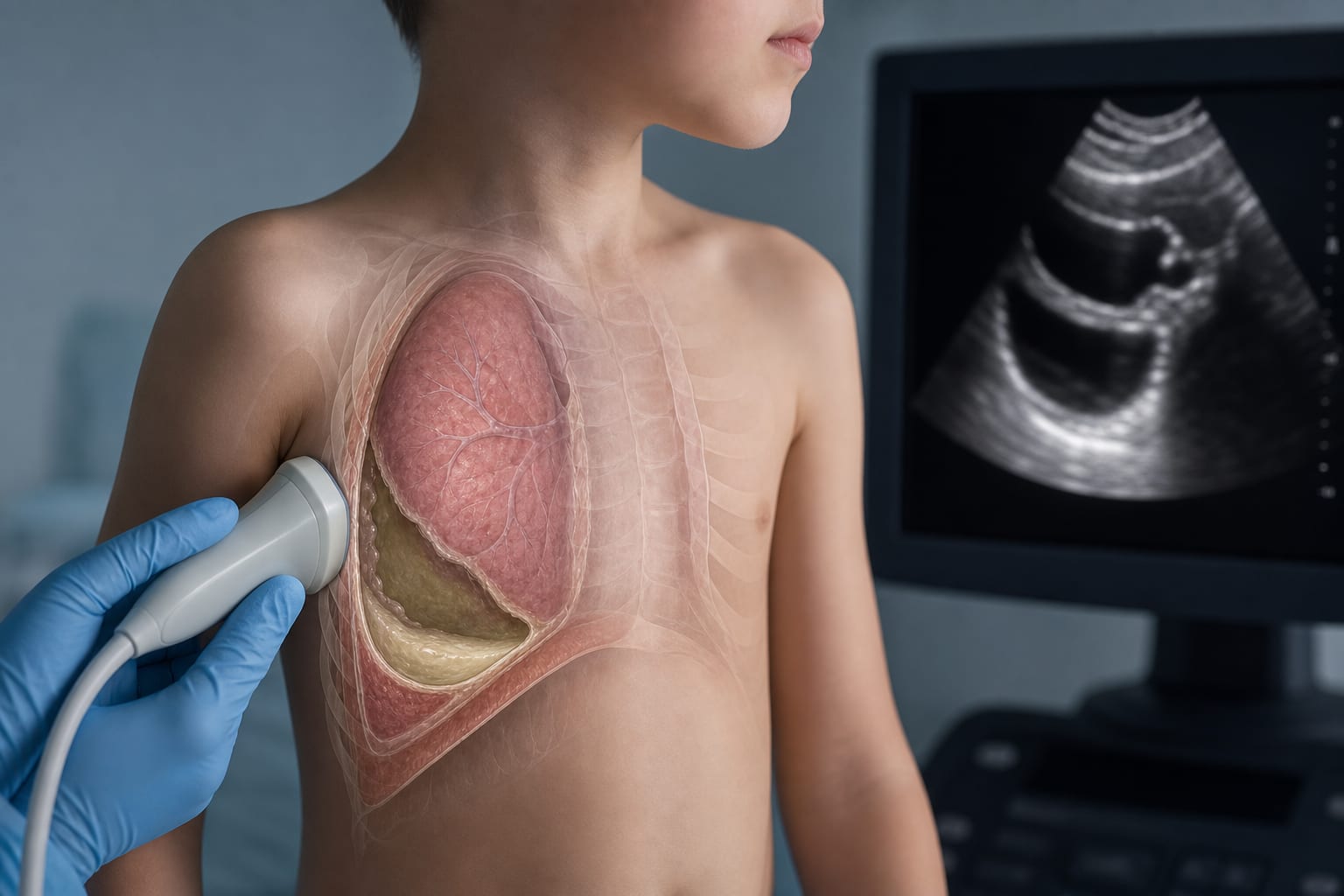
Pediatric pleural empyema - decision making beyond imaging - a retrospective cohort study
-
By
-
Alexandru-Ioan Ulmeanu
-
Andreia Ulmeanu
-
Elena-Roxana Matran
-
May 29, 2026
Clinical Scorecard: Management of Pediatric Pleural Empyema: Insights from a Retrospective Cohort Study Beyond Imaging Techniques
At a Glance
| Category | Detail |
|---|
| Condition | Pediatric Pleural Empyema |
| Key Mechanisms | Progression from parapneumonic pleural effusions to purulent collections due to infection and increased vascular permeability. |
| Target Population | Children diagnosed with parapneumonic pleural empyema. |
| Care Setting | Pulmonology Department of the 'Grigore Alexandrescu' Emergency Hospital for Children. |
Key Highlights
- Incidence of empyema is approximately 0.6% among pediatric pneumonia cases.
- Primary treatment often involves chest-tube drainage, with VATS preferred for complicated cases.
- Dyspnea is a strong predictor for selecting VATS as the initial treatment.
- Imaging findings did not significantly influence the choice of initial intervention.
- Median hospital stay for patients was 27 days.
Guideline-Based Recommendations
Diagnosis
- Chest radiography is the first-line tool for detecting pleural effusion.
- Thoracic ultrasound is essential for assessing effusion complexity and guiding interventions.
Management
- Initial treatment typically involves chest-tube drainage, with escalation to VATS based on clinical presentation.
Monitoring & Follow-up
- Hospitalization length is influenced by loculations and septations.
Risks
- Complications such as bronchopleural fistula and empyema necessitans can arise, particularly identified through CT imaging.
Patient & Prescribing Data
Children aged 3 to 8 years with parapneumonic pleural empyema.
Fibrinolytic therapy was not used; VATS was frequently employed in complicated cases.
Clinical Best Practices
- Utilize thoracic ultrasound for real-time assessment and guidance in pleural drainage decisions.
- Consider clinical presentation over imaging findings when deciding on initial treatment.
Related Resources & Content