Macrophage-mediated nutrient recycling: evolutionary insights into the metabolic role of professional phagocytes
-
By
-
Gabriela Krejčová
-
Adam Bajgar
-
June 24, 2026
-
Clinical Scorecard: Nutrient Recycling by Macrophages: Evolutionary Perspectives on the Metabolic Functions of Professional Phagocytes
At a Glance
| Category | Detail |
|---|
| Condition | Nutrient Recycling by Macrophages |
| Key Mechanisms | Engulfment and digestion of apoptotic cells, nutrient recycling, metabolic signaling. |
| Target Population | Multicellular organisms, including humans and invertebrates. |
| Care Setting | Research on macrophage functions in tissue homeostasis. |
Key Highlights
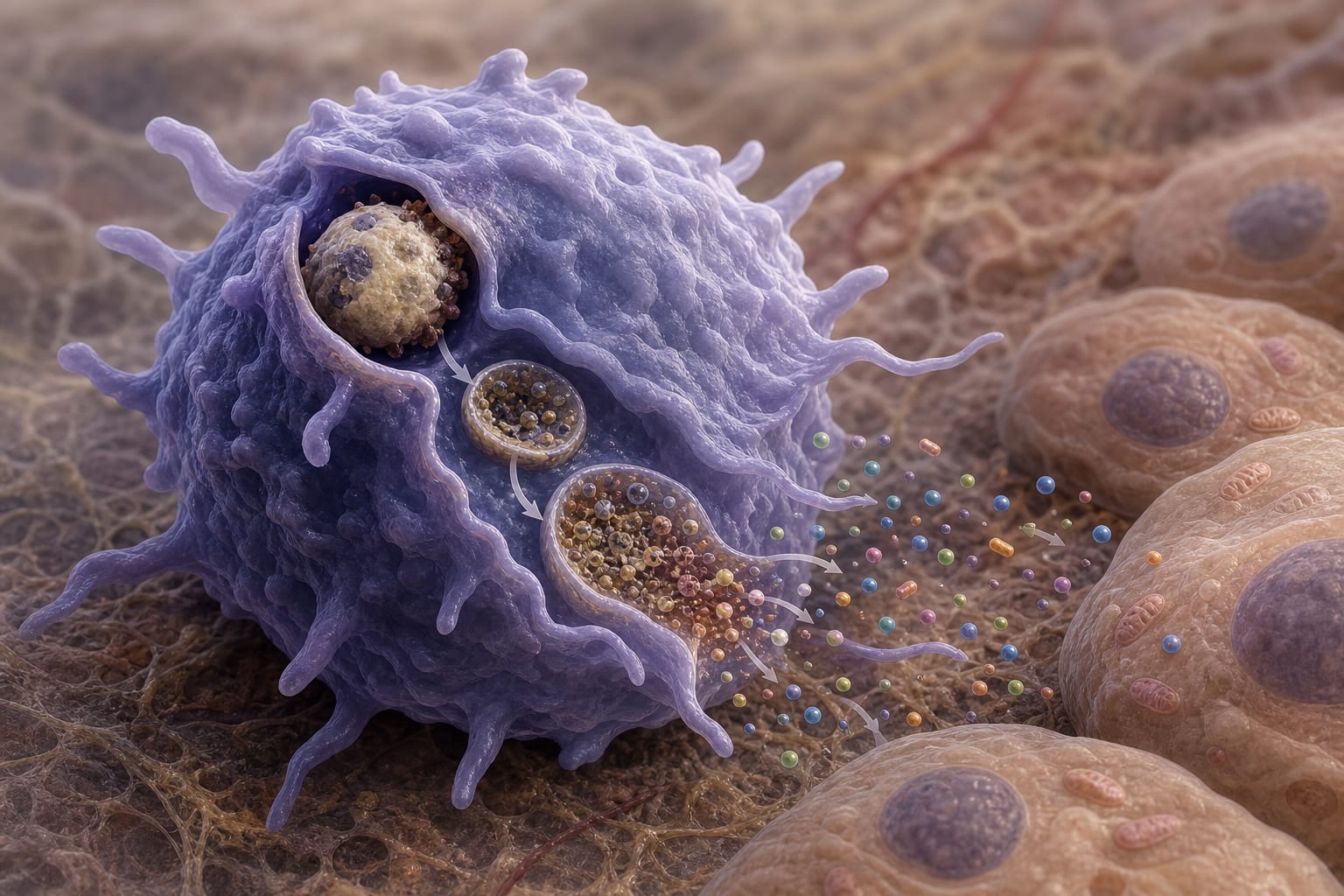
- Macrophages play a crucial role in the clearance of apoptotic cells and cellular debris.
- Nutrient recycling by macrophages contributes to tissue homeostasis and metabolic health.
- The process of cellular turnover involves significant metabolic flux, with approximately 3x10^11 cells turned over daily in humans.
- Macrophages exhibit evolutionary conservation of nutrient recycling functions across species.
- Disruption of macrophage-mediated nutrient recycling may contribute to metabolic diseases.
Guideline-Based Recommendations
Diagnosis
Management
Monitoring & Follow-up
Risks
Patient & Prescribing Data
Not specified; relevant to multicellular organisms undergoing cellular turnover.
Insights into macrophage functions may inform future therapeutic strategies for metabolic diseases.
Clinical Best Practices
- Recognize the importance of macrophages in tissue quality control and nutrient recycling.
- Consider the evolutionary context of macrophage functions in understanding metabolic processes.
Related Resources & Content