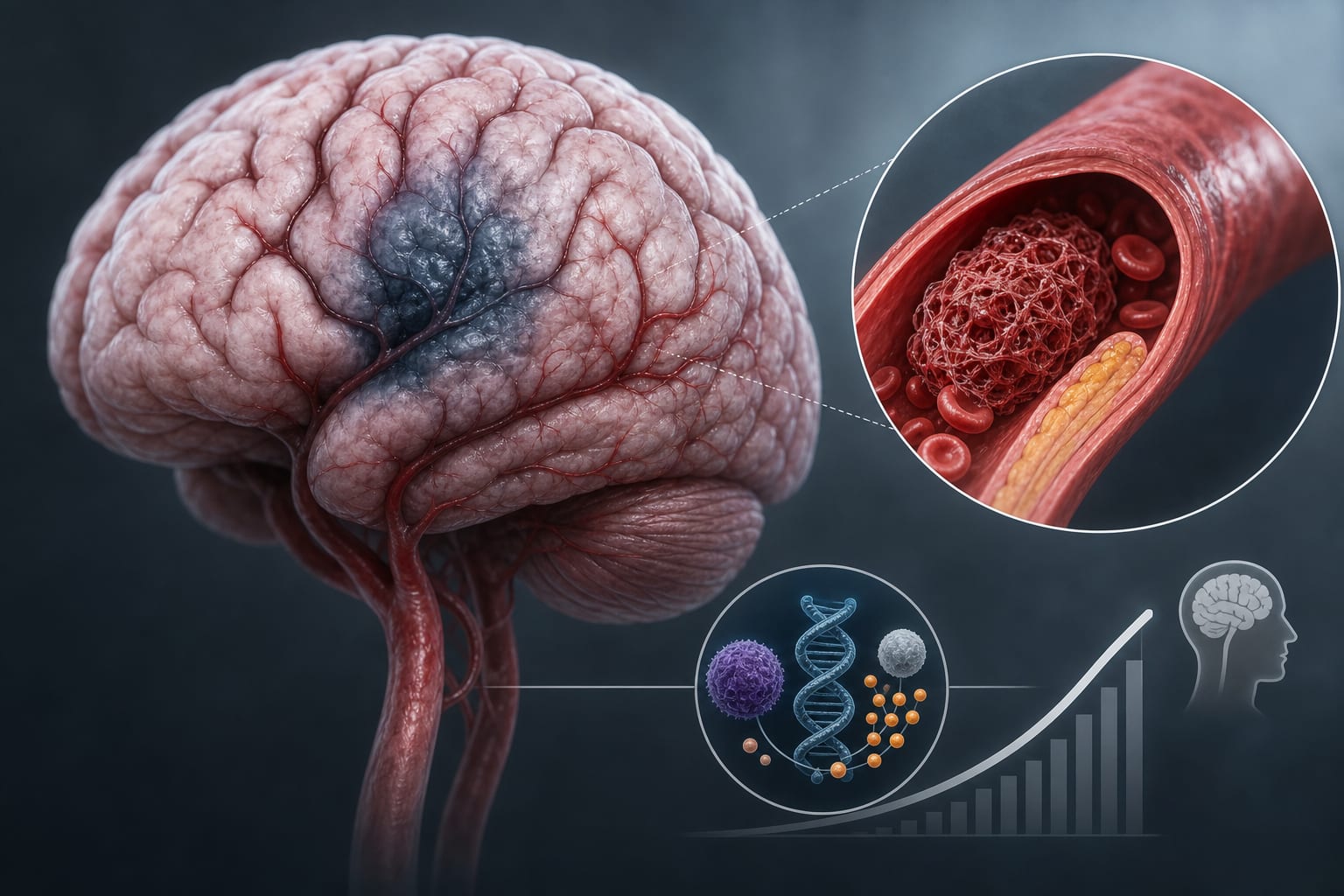
Suicidal ideation after stroke: why standardized screening is essential for community-based prediction models
-
By
-
Polona Rus Prelog
-
Matija Zupan
-
Senta Frol
-
June 11, 2026
-
Clinical Scorecard: The Importance of Standardized Screening for Predicting Suicidal Thoughts in Stroke Survivors within Community Settings
At a Glance
| Category | Detail |
|---|
| Condition | Suicidal ideation in stroke survivors |
| Key Mechanisms | Increased risk of suicidal thoughts and behaviors post-stroke due to clinical, socioeconomic, and contextual factors. |
| Target Population | Stroke survivors, particularly younger patients and those with shorter hospital stays. |
| Care Setting | Community-based settings, including primary care and rehabilitation services. |
Key Highlights
- Stroke survivors have a 1.7- to 3-fold higher risk of suicide compared to non-stroke individuals.
- Approximately 11%-12% of stroke survivors report suicidal ideation.
- Community-based prediction models can identify at-risk stroke survivors using routinely collected data.
- Standardized screening for suicidality is often lacking in follow-up care for stroke patients.
- Existing measurement tools for suicidality in stroke populations are not standardized.
Guideline-Based Recommendations
Diagnosis
- Utilize harmonized, validated suicidality measures specific to stroke populations.
Management
- Implement community-oriented prediction models that integrate clinical and sociodemographic data.
Monitoring & Follow-up
- Regularly assess suicidality during follow-up care using standardized tools.
Risks
- Consider clinical risk factors such as post-stroke depression and socioeconomic determinants.
Patient & Prescribing Data
Stroke survivors, particularly those at risk for depression and suicidality.
Community-based models can enhance identification and management of suicidality in stroke survivors.
Clinical Best Practices
- Adopt standardized approaches to suicidality assessment in stroke care.
- Integrate prediction models into electronic health records for ongoing risk assessment.
- Acknowledge limitations and ethical implications of screening tools.
Related Resources & Content